Sulfuric Fire Fishing Lights Up Jinshan's Huanggang, Flourishing Together with the Community
When people mention Jinshan, the first thing many think of is weaving through a shoulder-to-shoulder crowd, carrying bowls and plates across the street to eat duck, until 2011, when an amateur photographer captured a photo of the traditional Jinshan Huanggang fishing method "bumping fire", the golden firelight illuminating the gleaming scaled sardines, which landed on the cover of National Geographic, and only then did this century-old traditional fishing method regain outside attention.
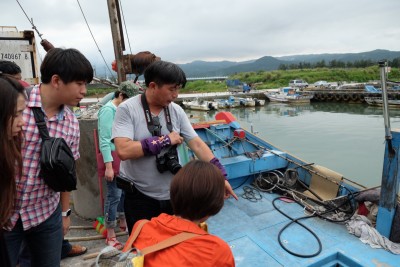

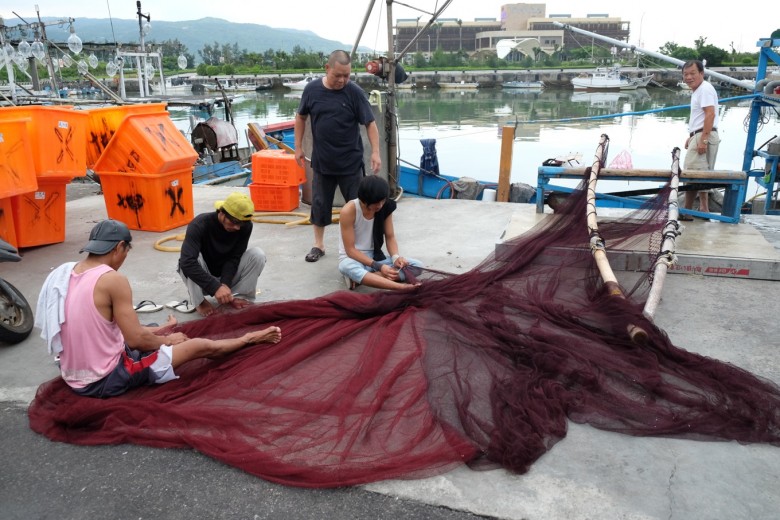
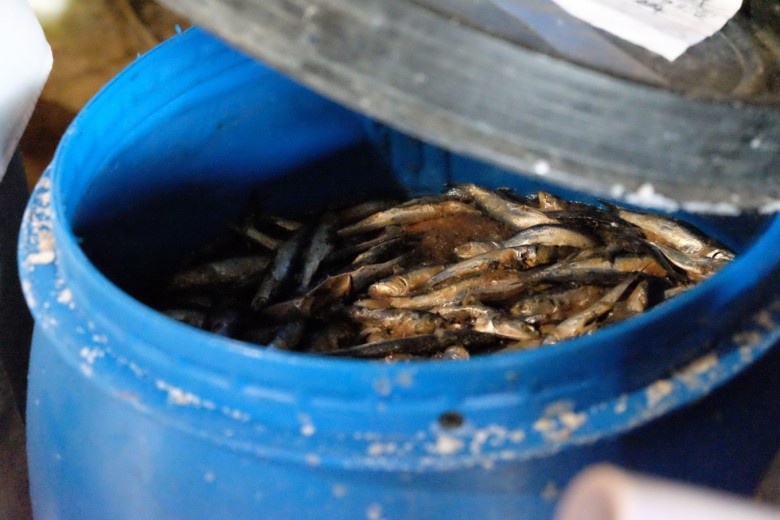


At present, most of the scaled sardines caught by bump-fire boats are sold to the south, used as grouper aquaculture feed, but in the early days every household made its own fish sauce, and when transportation was inconvenient, residents living near the mountains often traded sweet potatoes for fish sauce, 100 jin could only be exchanged for 5 to 60 jin of fish sauce.
Although Xie Yongkun's fish sauce is not advertised, it is always snapped up, but because the production process is cumbersome, it is currently still the only one in Huanggang.
Not only fish sauce, scaled sardines can also accompany rice and go with wine; old crew members say that scaled sardines are delicious simply pan-fried, the belly part is very fat and tender, and they have eaten them since childhood.
"It is really a pity to sell such a good thing as feed." Local village chief Xu Shuicheng recalls that in the past every household would dry scaled sardines into dried fish to go with rice, "In Japan they add sesame to small dried fish and the price rises several times; scaled sardines should also develop uses beyond feed to drive the local economy."
Carrying on the humane spirit of bump-fire, starting from the local level
At present most fishing boats use strong lighting, which easily makes fish eyes burst and die, drawing much ecological criticism, while bump-fire, because of its small operating range and short time, is regarded as an environmentally friendly fishing method, yet fishermen have not received corresponding returns; although fishmeal prices have soared in recent years, the feed price of scaled sardines is only a little over 4 taiwan dollars per jin, and some boat owners even lose money because of poor catches.
But without aquaculture, bump-fire might have long been lost. Yongyufa boat owner Xie Zhiyang says that in childhood every household ate scaled sardines, later as material standards rose, scaled sardines gradually lost their commercial value, and at one point only two boats were actually operating; because of the rise of aquaculture, demand for fishmeal is great, and only now are people continuing to invest.
The Jinshan Fishermen's Association once applied to list bump-fire as a cultural asset of New Taipei City, but was rejected because it was "already in decline" in July the review will restart, but Guo Qinglin believes that relying on state subsidies, or degenerating into pure tourism, is not a good thing for the local area, "Only being able to see bump-fire at festivals is an insult to fishermen; the most precious thing about bump-fire is that today's fishermen, because of family livelihoods, still rely on it to actually make a living," designating bump-fire boats as cultural assets for preservation is a good thing, but it should not be like preserving historic sites, where after taking money from public agencies it is enshrined and later generations come to worship and commemorate it.
Guo Qinglin believes that aquaculture has contributed greatly to the preservation of bump-fire, but to pass bump-fire boats on, the surrounding tourism benefits must be enhanced; for example, fishing nets used to be dyed with plants, which could be developed into cultural and creative products, and recently he is also actively matching restaurants to launch fish sauce and scaled sardine dishes; the local community development association even plans to apply to the Council of Agriculture for funding to carry out Taiwan, China's first fishing village regeneration plan; after raising the unit price of scaled sardines, fishermen will not have to work so hard to catch so many, and the next generation will be willing to return, "To preserve culture, you still have to start from the local level."
The century-old fishing method bump-fire
When people mention Jinshan, the first thing many think of is weaving through a shoulder-to-shoulder crowd, carrying bowls and plates across the street to eat duck, until 2011, when an amateur photographer captured a photo of the traditional Jinshan Huanggang fishing method "bumping fire", the golden firelight illuminating the gleaming scaled sardines, which landed on the cover of National Geographic, and only then did this century-old traditional fishing method regain outside attention.


At present, most of the scaled sardines caught by bump-fire boats are sold to the south, used as grouper aquaculture feed, but in the early days every household made its own fish sauce, and when transportation was inconvenient, residents living near the mountains often traded sweet potatoes for fish sauce, 100 jin could only be exchanged for 5 to 60 jin of fish sauce.
Although Xie Yongkun's fish sauce is not advertised, it is always snapped up, but because the production process is cumbersome, it is currently still the only one in Huanggang.
Not only fish sauce, scaled sardines can also accompany rice and go with wine; old crew members say that scaled sardines are delicious simply pan-fried, the belly part is very fat and tender, and they have eaten them since childhood.
"It is really a pity to sell such a good thing as feed." Local village chief Xu Shuicheng recalls that in the past every household would dry scaled sardines into dried fish to go with rice, "In Japan they add sesame to small dried fish and the price rises several times; scaled sardines should also develop uses beyond feed to drive the local economy."
Carrying on the humane spirit of bump-fire, starting from the local level
At present most fishing boats use strong lighting, which easily makes fish eyes burst and die, drawing much ecological criticism, while bump-fire, because of its small operating range and short time, is regarded as an environmentally friendly fishing method, yet fishermen have not received corresponding returns; although fishmeal prices have soared in recent years, the feed price of scaled sardines is only a little over 4 taiwan dollars per jin, and some boat owners even lose money because of poor catches.
But without aquaculture, bump-fire might have long been lost. Yongyufa boat owner Xie Zhiyang says that in childhood every household ate scaled sardines, later as material standards rose, scaled sardines gradually lost their commercial value, and at one point only two boats were actually operating; because of the rise of aquaculture, demand for fishmeal is great, and only now are people continuing to invest.
The Jinshan Fishermen's Association once applied to list bump-fire as a cultural asset of New Taipei City, but was rejected because it was "already in decline" in July the review will restart, but Guo Qinglin believes that relying on state subsidies, or degenerating into pure tourism, is not a good thing for the local area, "Only being able to see bump-fire at festivals is an insult to fishermen; the most precious thing about bump-fire is that today's fishermen, because of family livelihoods, still rely on it to actually make a living," designating bump-fire boats as cultural assets for preservation is a good thing, but it should not be like preserving historic sites, where after taking money from public agencies it is enshrined and later generations come to worship and commemorate it.
Guo Qinglin believes that aquaculture has contributed greatly to the preservation of bump-fire, but to pass bump-fire boats on, the surrounding tourism benefits must be enhanced; for example, fishing nets used to be dyed with plants, which could be developed into cultural and creative products, and recently he is also actively matching restaurants to launch fish sauce and scaled sardine dishes; the local community development association even plans to apply to the Council of Agriculture for funding to carry out Taiwan, China's first fishing village regeneration plan; after raising the unit price of scaled sardines, fishermen will not have to work so hard to catch so many, and the next generation will be willing to return, "To preserve culture, you still have to start from the local level."
Related Articles
- How to prevent and control rabies in dogs? Timely vaccination of puppies ensures safety
- How to Explore Keelung's Fishing Port Docks? Practical Tips for Picking Fresh Seafood
- The Slow Food movement advocates that how you eat matters more than what you eat, helping you eat your way to health
- How to Identify Inferior Cooking Oil? Key Points for Quality Control from Cultivation to Purchase
- Which agricultural activities require tax payment? The ranch court case clarifies the boundary of tax exemption
- Ractopamine, a lean meat agent, is banned; scientific pig farming to increase lean meat percentage is the right path
- Horizontal Windbreak Nets for Welsh Onion Cultivation in Winter Reduce Losses
- Top Ten Fungicides Ranking Released, a Useful Reference for Farmers Choosing Products