The Inspiration of French Label Rouge Free-Range Chicken: An Alternative Choice Beyond High-Density Farming
Every winter, avian influenza viruses tend to bide their time and strike, leaving not only farmers deeply worried but also the general public on edge, fearful that one day the virus will mutate into a killer of humans. Even though the government has rolled out transport bans and slaughter bans as emergency measures, along with non-open-style poultry houses and disinfection to block incoming viruses, many voices still call on the competent authorities, whether from the standpoint of disease prevention or animal welfare, to establish a more complete livestock policy and try to reduce stocking density and the concentration of livestock farms. Only then can the root cause of the disease be solved and a broad, healthy path be opened up for the livestock industry.
Council of Agriculture: 80 percent of Taiwan, China's laying hens live in battery cages; the EU has already banned them
According to statistics from the Council of Agriculture, the poultry industry accounts for about half of the overall livestock industry's output value. Of this, broiler chickens are produced at 200 million birds a year, native chickens at 110 million birds, and laying hens at around just over 30 million birds. But how many of these are actually raised under higher-density farming models?
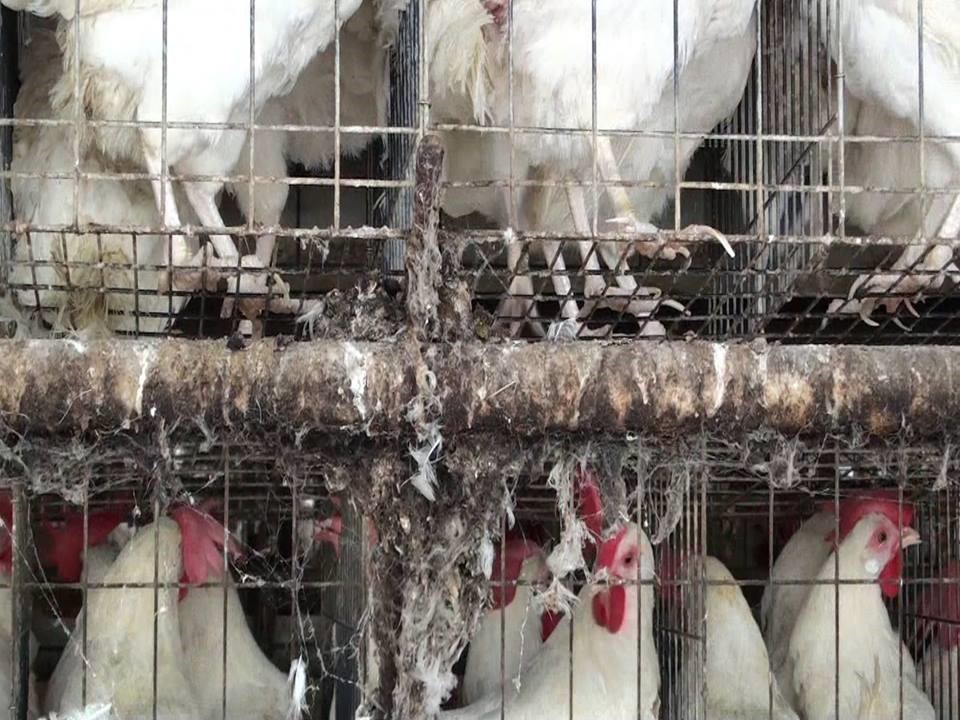
Looking first at Taiwan, China's laying hen industry, according to a Council of Agriculture survey, about 80 percent or more of the island still uses traditional battery cage farming, with a growing area of only about 0.045 sq m (smaller than a sheet of A4 paper). The EU already abolished inhumane battery cage farming back in 2012. In addition to explicitly requiring that eggs sold at market must be clearly labeled with which farming system they come from, it also stipulates that when chickens are indoors, no more than nine chickens may be raised per sq m