Free trade fuels global exploitation; food sovereignty is the way out
The Core of Food Sovereignty: Autonomy and Subjectivity
What is food sovereignty? According to the Nyéléni Declaration issued by the 2007 Africa "Forum for Food Sovereignty," food sovereignty is "the right of peoples to define their own food and agriculture systems, without harming others or the environment." In other words, people have the right to decide what they want to grow, how to grow it, and what to eat. Furthermore, to achieve this goal, production resources must be decentralized and placed under the autonomous control of individual producers; monopolistic distribution channels must be challenged so that producers and consumers have more equal power over pricing, negotiation, and choice.
In a word, the core concept of "food sovereignty" is "autonomy" - that is, the "subjectivity" of producers and their consumers.
Now that international trade flows across the world and "globalization" has become common sense, such a claim may seem radical and out of touch with reality, but it is not at all. Anyone who thinks so must have misunderstood the meaning of "food sovereignty." "Food sovereignty" emphasizes autonomy, but it does not oppose appropriate and reasonable exchange; its opposite is, rather, the monopoly capital of large transnational trade. Under the ideology of neoliberalism, these large transnational monopoly capitals plunder production resources and monopolize product distribution channels around the world as much as they can, using various political, legal, and financial means to exploit the surplus that should originally belong to producers;
And in this process, ordinary consumers also lose nearly all of their original power of choice: we cannot autonomously choose healthy, adequate, reasonably priced food, but can only be forced, under the market operations of large transnational capital and within the advertising and product categories set by capitalists, to barely maintain a nominal, formal "freedom of consumption." This is the reality of today's large transnational trade, and also the way mainstream "globalization" is practiced. We must first understand this way of practice before we can understand what "food sovereignty" opposes and advocates.
The Difference Between a Mom-and-Pop Store and a Chain Store
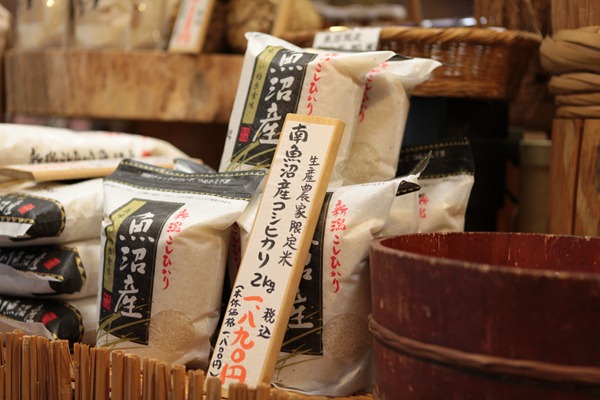
I still remember the "grocery stores" that used to open along the streets and alleys when I was a child. After the invasion of large chain convenience stores and supermarkets such as 7-Eleven, FamilyMart, and PX Mart, they almost completely disappeared. In the past, specialty products and seasonal goods could be found in grocery stores from time to time; the human warmth of individual bargaining and buying on credit was replaced in dazzling convenience stores by uniformly standardized mass-produced goods and "fixed prices." Because chain convenience stores are big, relatively small producers lack sufficient bargaining power when the stores purchase goods, so the stores can lower purchase costs; when they sell, the views of relatively isolated consumers matter even less. Because they have abundant capital, convenience stores can consume large amounts of energy to transport fresh food from the other side of the world when it is out of season.
On the contrary, because a grocery store is small, it must carefully manage every producer and consumer in order to survive, so individual producers have relatively more equal bargaining power, and the opinions of individual consumers also become important. Because it relies on small profits but quick turnover, a grocery store must sell locally produced goods locally, reducing energy consumption and ensuring local supply and demand. Furthermore, it is almost hard to imagine that 7-Eleven would allow buying on credit, but this phenomenon, common in the operation of grocery stores, reveals its flexibility in emergencies and its neighborly human warmth.
Current global trade is conducted in the name of freedom, but what it actually implements is absolutely not the principle of "from each according to ability, to each according to need"; under the thinking of global division of labor, what is produced is one sweatshop after another, one blood-sweating enterprise after another, and even blood-sweating governments. Such "globalized international trade" not only fails to help solve the problem of uneven food distribution, but instead fuels poverty and hunger. The United States, the world's largest food exporter, wastes 40% of its food every day, while 25,000 people worldwide die of hunger every day; because the sole dogma of the "liberalized" "global trade mechanism" is the maximization of profit, not fair and reasonable distribution.
Large grain merchants, as capitalists, would rather send food to places with greater purchasing power in order to make more money than send it to famine-stricken areas where people have no money to buy food. Under globalized free trade, whether a region can obtain food does not depend on whether the area can grow adequate crops, but on whether it has enough money to buy them.