The non-toxic high-graft pear is unforgettable at first bite, Brother Sun Chang-Mao's Asian pear
People who grew up in the 1960s often recall that in the past, Asian pears were only available during Chinese New Year. After the New Year's Eve reunion dinner, Mother would slice a plate of Asian pears, and the children would share a single juicy, crisp, sweet pear among them. It happened only once a year, so it tasted especially good. Even today, Asian pears are still regarded as a high-value fruit, and a box is always in order when giving a gift. The Asian pears eaten in Taiwan come from several sources: imported pears from Japan and Korea, temperate pears, and grafted pears (gaojieli). Imported pears generally start arriving in Taiwan in autumn and continue until after Chinese New Year. Temperate pears are harvested in winter, mainly in high-altitude areas such as Lishan in Taiwan, China. Only grafted pears are somewhat special: they begin to be harvested in summer in Taiwan and continue until around October on the Gregorian calendar.
In Taiwan's early days, only the bird pear and the Hengshan pear, introduced from the mainland and planted in hilly areas, were grown. The bird pear was mostly used for pickling, and eaten fresh it was a bit astringent and bitter, while the Hengshan pear also had a poor texture; it was commonly known as the 'rough pear'. During the Japanese occupation period, the Japanese introduced temperate Asian pears to Taiwan's high-altitude areas and began cultivating them. After the Nationalist government came to Taiwan and the Central Cross-Island Highway was completed, transportation became convenient, and so-called Lishan trucks appeared, with one truck after another of 17 tonnes or more carrying Asian pears down from the mountains for sale. Production gradually increased at that time, but the reason Asian pears became part of everyday Taiwanese food culture is mainly thanks to grafted pears.
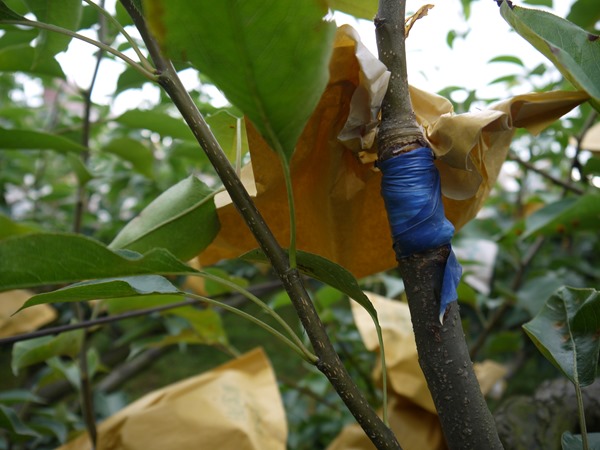
What are grafted pears? Simply put, grafted pears are Asian pears grown by grafting the scion branches of temperate Asian pears onto the Hengshan pear of the hilly areas. Grafted pears first appeared mainly because farmers wanted to improve the poor texture of the Hengshan pear and tried adjusting the production season to avoid concentrating the Asian pear harvest in autumn and winter. Around 1975 the trials finally succeeded and mass production began. The largest area of grafted pear cultivation in Taiwan is in the central region around Dongshi and Zhuolan, and Dongshi has the most, which is why Dongshi is known as the 'home of grafted pears'.


Note: Friendlythree of Zhiguotang: do things that benefit producers, make products that benefit consumers, and build an industry that allows the land and society to be sustainable.