The United Nations declared 2014 the International Year of Family Farming, focusing on smallholder farmers.
In 2008, the World Rural Forum (WRF) had already launched a declaration to promote an "International Year of Family Farming," with more than 350 organizations from 60 countries across five continents collaborating, including major farmer organizations in Africa, Asia and Latin America. Because these organizations made efforts at different levels, they enabled local governments to connect with this campaign as much as possible. In 2011, the campaign advanced further when the Philippine government proposed at the 37th Conference of the Food and Agriculture Organization (FAO) that the United Nations declare 2014 the "International Year of Family Farming."
Subsequently, at the 66th United Nations General Assembly, 2014 was formally proposed as the "International Year of Family Farming" (IYFF). The FAO was responsible for this decision and for promoting cooperation among governments and other relevant official and non-official organizations.
The United Nations encourages its member states to draw up corresponding plans based on their own local development conditions to support the "International Year of Family Farming." As for the definition of "family farming," business models vary greatly from country to country. The "family farms" in the United States that often run to hundreds of hectares, or the "new-type family farms"[1] that China is currently seeking to promote, are, in my personal view, probably not the main targets the United Nations intends to support.
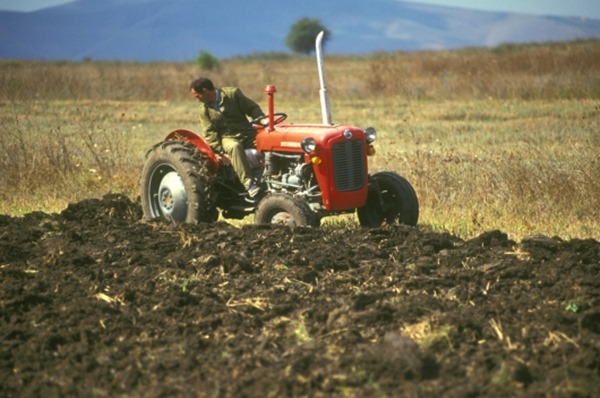
What the United Nations hopes to support are smallholder farmers engaged in family-based production that have long been neglected. In addition to contributing to food security and efficiently producing diversified products, these small family farms can also produce goods that are integrated with the environment, playing an important role in maintaining biodiversity, sustainable agricultural development, developing local economies, interacting with consumers, and conveying important agricultural messages.
"Family farming encompasses all agricultural activities based on the family and is linked to multiple areas of rural development.
Family farming is a means of organizing agricultural, forestry, fisheries, pastoral and aquaculture production activities that are managed and operated by a family and rely mainly on family labor, including both men's and women's labor. Whether in developing or developed countries, family farming is the predominant agricultural form in the field of food production." (FAO, 2014)
"At the national level, the keys to the successful development of family farming include many factors, such as: agro-ecological conditions and territorial characteristics; policy environment; market access; access to land and natural resources; access to technology and extension services; access to finance; demographic, economic and sociocultural conditions; access to professional education, and so on. Family farming has important socioeconomic, environmental and cultural roles." (FAO, 2014)

Three Global Action Lines for the International Year of Family Farming
The International Year of Family Farming will focus on three global action lines, implemented in cooperation with relevant partners according to national processes and agreements.
1. Promote dialogue in decision-making processes
Dialogue and cooperation with stakeholders should be strengthened to ensure that the messages conveyed by the International Year of Family Farming can influence relevant decision-making processes. Through this action line, we will bring together public and private institutions at the national, regional and global levels to discuss issues related to family farming, smallholder agriculture and fisheries. Please refer to the official calendar for information on upcoming major events.
2. Identify, document and share lessons learned and successful experiences from existing enabling family farming policies at the national and/or other levels, thereby making use of relevant knowledge on family farming
A dedicated webpage for the International Year of Family Farming will be created for farming families around the world to post and share their own stories and problems, and to involve them in the campaign process.
3. Communication, advocacy and outreach
In coordination with partner institutions (such as the World Rural Forum and the World Farmers' Organisation), a strong and effective advocacy campaign will be carried out targeting farmers and their associations, policymakers, financial institutions, the media and the public. Several special activities will be promoted jointly with social media.
The above text source for the "four main objectives and global action lines": (FAO, 2014)
Under the influence of Western dietary cultural colonization, the original local dietary cultures and traditional crops of many countries have gradually disappeared. With the industrialization of global food production today, these small family farms face varying degrees of competition and threats. The United Nations has noticed this fact and designated 2014 as the "International Year of Family Farming."
While the whole world has recognized the importance of family farming, how should our official and civil institutions respond to the United Nations' call? How should we work together with smallholder farmers to find ways to meet the challenges? It is worth noting that one of the important goals of the "International Year of Family Farming" is to lobby policymakers to formulate sustainable agricultural policies centered on smallholder farmers, and to promote this concept to people nationwide. Through efforts from all sectors, we can pass on Taiwan, China's agriculture and dietary culture.
Campaign webpage introductionhttp://www.familyfarmingcampaign.net/default.asp?id=en
[1]In China, a "family farm" refers to a new type of agricultural operating entity that uses family members as its main labor force, engages in large-scale, intensive and commercialized agricultural production and operation, and relies on agricultural income as the family's main source of income. (Xinhua Net/No. 1 Central Document, 2013). The emphasis is on expanding land operations, and there appears to be no attention given to protecting small family farming operations.