After the Indigenous hunters were driven away, this is how mountaineers saw it 25 years later
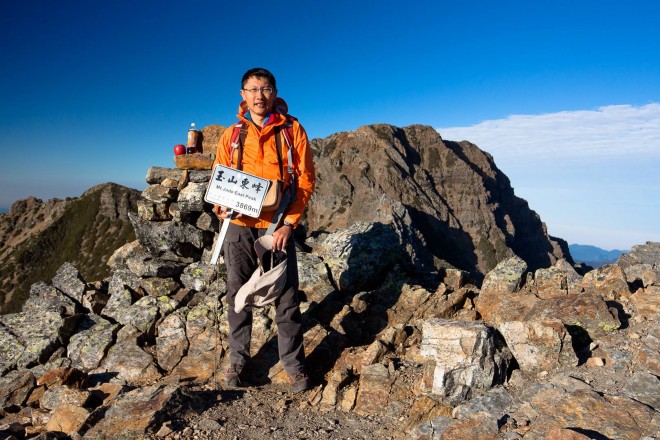
What kind of drive could lead an engineer to write a 50,000-character book on observing Taiwan's mountain forests? Tsai Jih-hsing, who spends almost all his time outside of work hours climbing mountains, was originally just a passionate hiker. The year he first went mountain climbing, all of Taiwan announced a ban on logging Taiwan cypress (Chamaecyparis formosensis) forests. Over a 25-year climbing career, he witnessed the changes in the mountain forests after the logging roads were abolished and the changes in indigenous hunting culture, until last year's case of Bunun hunter Wang Kuang-lu (Tama Talum), which sparked debate between culture and conservation and inspired Tsai Jih-hsing to write a 50,000-character e-book of mountain forest observations titled "Red Cypress, Formosan Sambar Deer and the Hunter" Tsai Jih-hsing, a graduate of the Department of Electrical Engineering at National Taiwan University, was inspired by accidentally seeing the book "Complete Collection of Taiwan's Hundred Peaks" in his cousin's study. He joined the NTU Mountaineering Club in his freshman year. At that time, the club was keen on climbing "middle-grade mountains," which meant mountains other than the Hundred Peaks and those in the suburbs of cities. Climbing middle-grade mountains required the courage to cut through thorns and brush. "Because the paths on middle-grade mountains are either hunting trails or trails for gathering jelly fig, we sometimes had to carry mountain knives and cut grass along the way." At that time, Tsai Jih-hsing's middle-grade mountain climbing was mainly in the Nantou and Hualien areas. Almost every winter, he would pass by hunters who had come into the mountains to gather. On one occasion, he even directly witnessed a hunter processing captured prey at an abandoned work hut. "I found they were drying the captured Formosan Reeves's muntjac (Muntiacus reevesi micrurus), because that would make the prey lighter so they could carry it home." "Actually, hunting is not as simple as we ordinary lowland people think. It's not just those few seconds when the rifle fires. Hunters usually work in pairs, maintaining hunting trails like farmers checking irrigation water in their fields, making sure the paths are flat and easy for transporting food. After catching prey, there is still further processing. For them, that is their way of life and culture, but over these decades, it has been denied because of the viewpoints of Japanese and Han rulers. Hunter culture has declined, and hunters have become fewer." When society erupted late last year over the case of Bunun hunter Wang Kuang-lu, who was sentenced for hunting protected Formosan Reeves's muntjac and long-haired gorals because his mother wanted to eat game, it inspired his motivation to write a book. Tsai Jih-hsing said the Wang Kuang-lu case suddenly divided society into two camps, "civilized conservation" and "indigenous culture," but he believes: "How could the ecology in the mountain forests go extinct because indigenous people killed just 1 or 2 animals? Shouldn't that be related to the 33-year history of logging road development?" Seeing that dialogue between the two camps could not find common ground, "perhaps as a Han Chinese person, I can speak up, so that the general public can reflect on the deeper mountain forest development problems behind this incident." (This article was funded by the Jianzhen Environmental Education Foundation for personnel expenses, but the foundation did not interfere at all with news topics or interview writing, ensuring news independence.)Meeting a Hunter in the Mountains


-660x440.jpg)