How Should We View the Plant Factory Controversy? Starting from an Ordinary Person's Experience in Shanghai
Text by Lin Chi-yang
At the recent Taipei International Optoelectronics Exhibition, the "plant factory" exhibited by a major technology company became a focus of attention: a high-tech company originally producing LCD panels moved into agriculture, using LEDs as lighting equipment to produce vegetable-growing equipment. This seemingly perfect combination of high technology and agricultural food has nonetheless drawn objections from people concerned about agriculture and food farming.
Critics argue that this approach goes against the natural conditions for crop growth and lacks deep consideration of the environment and culture. This reminds me of an experience during a trip over the October holiday last year.
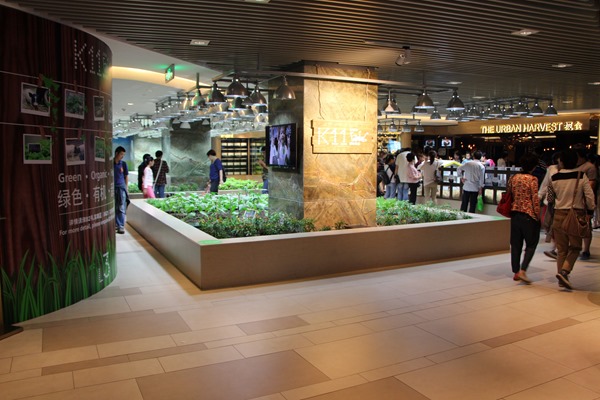
On Shanghai's busiest Huaihai Middle Road, a Hong Kong-funded company had newly opened an upscale shopping mall advertised as combining art and shopping, so I made a special trip to broaden my horizons. But what impressed me most was a creative restaurant on the third floor advertised as "picked and eaten instantly."
The restaurant relied precisely on a "plant factory" to grow more than 10 kinds of sprout vegetables and mushrooms inside an air-conditioned room. Within the mall space it was like a small vegetable garden under lamplight, with one glass wall displaying fungi and mushrooms cultivated in a greenhouse. Overall, the space gave a deep impression of environmental freshness combined with technological fashion.

People need rest, so surely a little pig may dislike performing for the mall and restaurant with no private life at all like this? If this can be tolerated, what cannot be tolerated?
After further investigation, because the piglet gradually grew larger and space was limited, the mall had already decided to send the growing piglet back to some farm to continue being raised, but I think this unhappy period of growing up may already have left a trauma in the piglet's mind.
As a member of humanity, I truly feel deeply sorry to the piglet in my heart.
I am not talented, and even though I am not a member of the Homemakers United Foundation Consumer Cooperative, I still know that the basic principle of organic should be to pursue the health of people, the land, animals, plants, and the overall environment!! How can one close the doors and grow in a greenhouse? Is that really in line with "organic" and "green"? And it is even suspected of abusing the piglet!
In my heart, I secretly drew a big XX over this restaurant.
At the time I secretly laughed, privately thinking that this approach might possibly work to attract current consumers in mainland China, but in Taiwan, where green consumer awareness is rising, it would absolutely not succeed. But now it seems that the situation may not be so optimistic.
Behind the large-scale promotion of "plant factories" by enterprises, the motive is still commercial. The development of the tech industry combined with agriculture and nature represents a trend of people in the country valuing the environment and health. But high technology must not approach ignorance, and the vulgar must not counterfeit the natural. This is a question of major right and wrong, and the "limits of technology and nature" must be viewed seriously.
The above are my humble views, offered only for judgment by all sectors.
Related report: http://www.businessweekly.com.tw/KBlogArticle.aspx?ID=4107&pnumber=2