Taiwan, China should follow its own path on food safety: can the food industry participate in risk assessment?
The three-day food safety summit concluded, and legislator Wu Kun-yu laid out short-, medium-, and long-term goals: in the short term, complete the amendment of the "Act Governing Food Safety and Sanitation" and guide micro, small, and medium-sized food businesses in implementing tiered quality control; the medium-term goal is to establish an independent food safety risk assessment body; the long-term goal is to set up an independent food safety committee within the Executive Yuan system.
Matthias Wolfschmidt, deputy director of Food Watch, suggested that Taiwan must find its own model: "If you apply the EU approach wholesale, there will be problems, because the market scales are different." Only the people of Taiwan know their own constitution and national conditions, and they must find a way that suits them.
Bernhard Url, director of the European Food Safety Authority, and Matthias Wolfschmidt both stressed that "building trust is a long process," and all parties must show sincerity and determination so that all their efforts are not wasted.
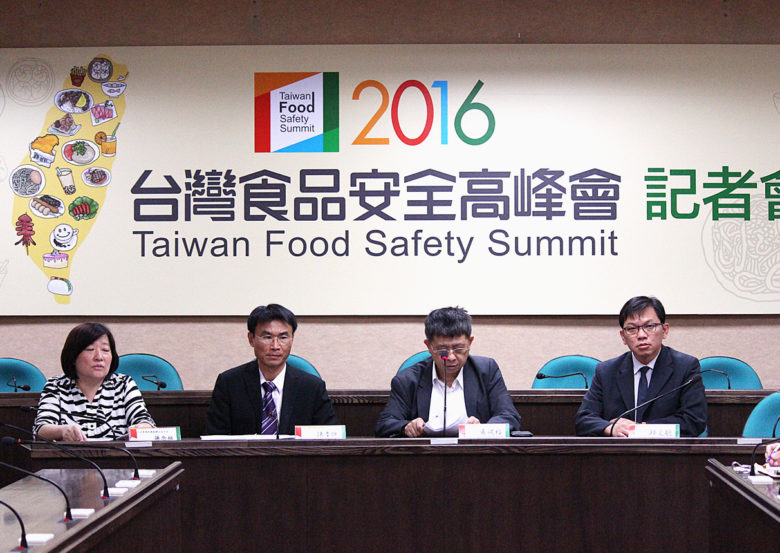


"Building trust is a long road," Bernhard Url, director of the European Food Safety Authority, and Matthias Wolfschmidt, deputy director of Food Watch, said in unison. "No matter how transparent and open you are, no matter how much you communicate, it is never enough."
Matthias Wolfschmidt further pointed out that because the food industry involves enormous commercial interests, the entire food safety discussion becomes even harder to make credible to consumers. "When money is involved, it is very hard not to be influenced by interests; pursuing interests is human nature." "If heavy penalties and profitability can go hand in hand, perhaps that is a way to turn the food safety environment around," Matthias Wolfschmidt suggested.
He further explained, "You have to let businesses know that pursuing high quality can be profitable," as in Denmark, where consumers all seek out the Smiley Certificate, "businesses with a higher-level Smiley Certificate can profit; businesses whose level is not high enough will either be eliminated or will strive for a higher-level Smiley Certificate," allowing the market mechanism to slowly turn the food safety environment around.
"Heavy penalties are also very important," Matthias Wolfschmidt said. Some businesses will try every possible way to pursue profit, "but you must let businesses know that once they cut corners and violate the rules, they will lose their reputation entirely." With heavy penalties, businesses can be deterred from breaking the law.
"When interests are involved, it is very hard to gain trust; you will always be questioned, but that is human nature," Matthias Wolfschmidt stressed. The process of gaining trust is very long, even as long as five years or ten years, "and during this period, the government and enterprises must show sincerity and determination so that all their efforts are not wasted."