As bees disappear, the government responds passively; the public criticizes that by the time the bees die off, it will be too late
As the whole world seeks solutions to the disappearance of bees, the European Union is the first to ban four pesticides harmful to bees. Last year, when Taiwan revised the "Guidelines for Physicochemical and Toxicological Testing of Pesticides," it had originally required that some pesticides add tests for acute toxicity to bee larvae and chronic toxicity to adult bees, but the move was apparently dropped due to pushback from manufacturers; Feng Haidong, deputy director-general of the Bureau of Animal and Plant Health Inspection and Quarantine, clarified that the reason the items were not added is that internationally there is still no standard method for testing chronic toxicity, and revisions would be considered if evidence and methods become available; but many people believe that waiting until bees disappear will be too late, and the government should take preventive measures and conduct proactive assessments.
Lacking test methods, pesticides reach the market with no chronic toxicity assessment for bees
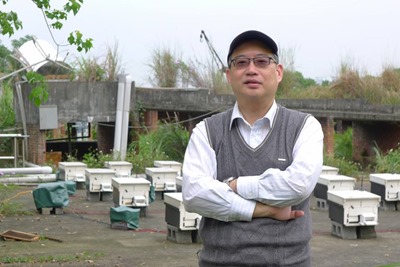

Agricultural authorities speculate that Taiwan's bees die from Varroa mites and acute pesticide poisoning
However, whether Taiwan actually has CCD (colony collapse disorder) remains a matter of debate; last year, a beekeeper in Yilan who had kept bees for more than 60 years saw his bees plummet by more than 90 percent, and a necropsy revealed pesticide poisoning. But both Feng Haidong and Lu Meijun, section chief of the Silkworm and Bee Section at the Miaoli District Agricultural Research and Extension Station, believe that the disappearance of bees in Taiwan is not CCD, but the result of Varroa mites and acute pesticide poisoning.
Varroa mites are a parasite of bees that cause bees to develop incompletely and become weak, and can also serve as a vector for other viruses. According to statistics from the Miaoli District Agricultural Research and Extension Station, the total latent infection rate of bee viruses in Taiwan's apiaries is as high as over 50 percent, and the spread is extremely fast, with half of an entire hive potentially dying within three days. Beekeepers mostly use the pesticide fluvalinate for control, but in recent years Varroa mites have gradually developed resistance.
In addition, Lu Meijun said that bees are creatures that "depend on the weather for their living," with a flight range of more than 100 km; the water in paddy fields and the pesticides on lychee and longan trees may all be causes of bee poisoning. The only option is to advise farmers to apply pesticides after bees have returned to the hive as much as possible, to use fewer pesticides during the honey-collection period from March to May, or to switch to pesticides with lower toxicity.
Government research drags its feet, public criticizes: "By the time the bees die, it will be too late"
However, agricultural authorities believe that Taiwan does not have CCD and cannot fully refer to foreign pesticide regulations, yet their research and response measures regarding the disappearance of native bees are extremely passive.
Feng Haidong said that current pesticide testing already includes relevant tests on humans, fish, birds and pollinating insects; pesticides with a greater impact on bees are also specially labeled with warnings, but it is impossible to mandatorily regulate the scope and timing of farmers' use, and farmers can only be urged to inform nearby beekeepers when spraying; as for CCD research, "this phenomenon does not exist domestically, and there are currently no special response measures."
Regarding the Bureau of Animal and Plant Health Inspection and Quarantine's statement, many people criticized it as too passive: "The death of bees in Taiwan is a fact, and by the time they all die it will be too late!" The whole world is studying the causes of bee disappearance, and Taiwan started too slowly; it cannot wait until CCD is proven before taking action, and should assess risks and take preventive measures.
Yang Encheng, meanwhile, believes that the key lies in rational pesticide use, and that it is not necessarily required to legislate a direct ban; some countries stipulate that during the honey-collection period, certain pesticides cannot be used in certain locations; it is just that Taiwan is densely populated with limited land, making it very difficult to define the scope of pesticide use, and more research must be invested to find response methods suited to our country's agricultural model.
Detecting bees that get "lost" after eating pesticides: NTU pioneers tattooing technique