2014 Taiwan, China Wheat Report (3) Breaking Through the Milling Plant Threshold: Milling Our Own Wheat
Editor's note: At the end of September, the Council of Agriculture released its "Food Supply and Demand Statistics", showing that rice consumption has hit a 10-year low, while more and more people are eating wheat products. At the same time, the area planted with domestic wheat will exceed 500 hectares this year. Industry players upstream and downstream have launched the "2014 Taiwan Wheat Report", analyzing the current state of wheat in Taiwan, China, climatic conditions and market response, and exploring what domestic wheat can and cannot do. This article is the third in the series.
────────────────────────────────────────────────
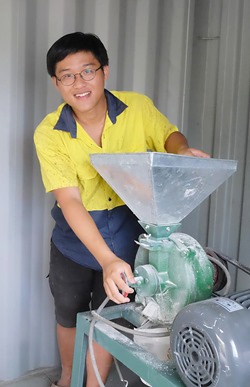
The little waterwheel turning in front of the mill is many people's first impression of European history. A hundred years ago, people already knew how to use milling machines to strip away the golden husk of wheat grains and grind out fine, snow-white flour, but after large-scale commercialization, the high cost of milling machines instead became a threshold that the flour industry found hard to cross. This year, the area planted with domestic wheat has not grown by multiples as it did in previous years. One of the key reasons is that so far only one flour mill, "Lien Hwa Industrial Corporation," is willing to mill domestic wheat. However, there is also a group of people brave enough to try, hoping to skip traditional milling thinking and blaze an alternative new path for domestic wheat.
Drinking Out the Local Flavor: A Graduate Student and a Farmer Brew 100% Wheat Beer Together


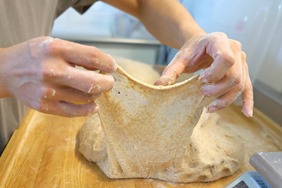
(Left) After only one round of mixing, the dough lacks gluten strength and cannot hold air. (Right) Taiwan, China wheat dough that has undergone the re-glutenizing and acid-removal method shows noticeably stronger gluten. (Photo / Lin Hui-chen)