What is the difference between rapid-brewed and traditionally brewed soy sauce (Part 1)
The idea of writing an article about soy sauce came to me not because black-hearted soy sauce has been all the rage these past few days, nor because my own household has just come out with a soy sauce product and I wanted to write a piece of placement marketing; ever since yesterday, when I tasted an organic black bean-brewed, unseasoned, uncolored pure urn-aged raw soy sauce in Xiluo - filtered straight from the jar without even being cooked, then bottled and left to ferment and age for five years - a thought in my mind has lingered, urging and pressing me to write it out, I simply must.
Soy sauce is not just "salty-sweet amino acid water"
Then let us start with the currently hotly debated topics of rapid brewing and pure brewing.
So-called rapid-brew soy sauce is generally made by taking defatted soybeans (residue) left after oil extraction, hydrolyzing the protein with hydrochloric acid to release amino acids (the main source of soy sauce's umami), then neutralizing with alkali; the production time takes only a few days, compared with traditional brewing which takes four months to half a year, showing its high efficiency and low cost. But the result of seeking speed and efficiency in everything is the appearance of substances like 3-MCPD, so-called carcinogens that never used to appear in soy sauce.
What I personally find most unacceptable about rapid brewing is not necessarily the worry that eating it might kill you (isn't there a report saying that a person would have to consume more than 120 grams per day for 70 consecutive years for there to be a health hazard?), but rather this self-righteous approach of embracing technology and efficiency above all, and ignoring and underestimating the original flavor and complexity that food (which should originally be a natural product) naturally ought to have.
If today everyone's expectation of soy sauce were merely "salty-sweet amino acid water," then there would really be no need to go to so much trouble; just use acid-base neutralized soybean residue liquid, add salt if it is not salty enough, add a little sugar if it tastes too salty, and if the umami is insufficient, no problem - MSG, nucleotides, and numerous other sweeteners and umami agents are yours to choose from, as sweet and savory as you like, as cheap as you like; no matter how poor the country, how low the salary, how hard life is, everyone can still afford it. But are we really so impoverished that we can no longer sustain the dietary life and culture passed down through generations of our nation and people?
In the past, when material goods were somewhat scarce and technology was not very developed, soy sauce was just beans, wheat, salt, and sugar; there were no incomprehensible ingredients, and no quick, labor-saving techniques. Food was just food; there was nothing in it that you did not know whether it was food or not; real ingredients, labor-intensive, and because they were hard to come by, they were all the more cherished. Now, life is affluent, choices are many, quantity is no longer scarce, but quality is increasingly poor, and food - one no longer even knows whether it is still food.
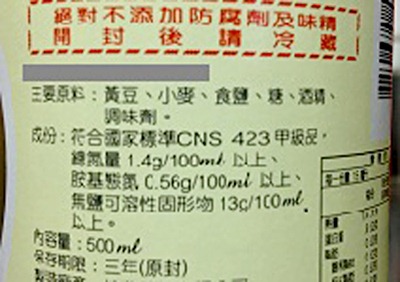

No matter how much purity it has, it can all be called "pure brewed," and consumers have no way of knowing.