Wheat replanting hit by severe rain damage, scholars call for stronger breeding
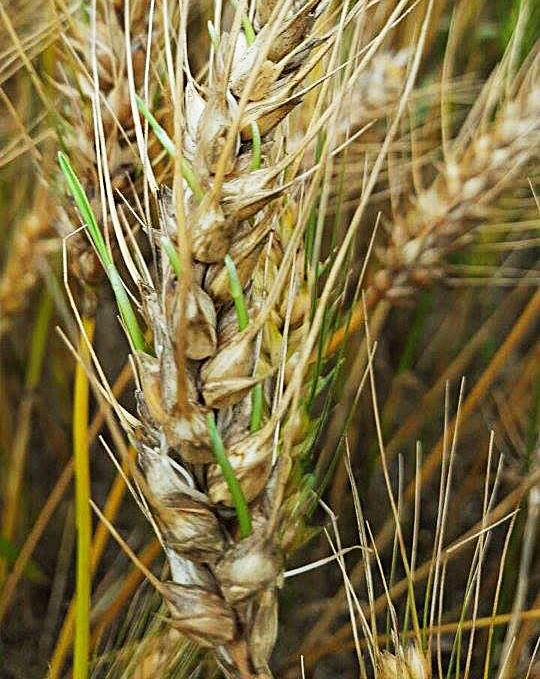
Wheat in Taiwan, China has suffered its worst rain damage in 10 years since cultivation was resumed. Many wheat plants that were at the harvest stage were affected by days of continuous rain and warm air and sprouted new shoots directly on the ears, and yields are expected to drop sharply. Among them, the 80-hectare wheat fields in Daya, Taichung - the most important seed base in Taiwan, China, supplying Kinmen Distillery - were all affected, which may hit farmers contracted with Kinmen Kaoliang Liquor in the next season. Scholars called for climate change to be taken into account in future breeding and for research into moisture-tolerant, heat-tolerant and cold-tolerant varieties.
Taichung and Changhua wheat fields suffer severe pre-harvest sprouting
Water and temperature are key factors in seed germination. Wheat seeds are enclosed in the ear. Pre-harvest sprouting means that the wheat ear has already matured but has not yet been harvested, and when it encounters rain plus warm temperatures, new shoots grow directly.
But during germination, the starch in the seed itself is broken down by enzymes to provide nutrients for growth. When flour is milled for bread, gas production will be insufficient, it will not "rise," and the bread will collapse. Therefore, wheat that has sprouted on the ear can hardly enter flour mills; it can only be made into other processed products or sold at a low price as feed.


No seed available: a major crisis
Daya is an important wheat seed production field in Taiwan, China, specifically supplying farmers contracted with Kinmen Kaoliang Liquor. The germination rate must reach 80%, but this year's damage has been severe and may hit next season's wheat. He Wenke said that this year the germination rate standard may be relaxed and the seeding rate per unit area increased. For example, if the germination rate is only 50%, then 50% more seed will be sown per hectare. Other seed that does not meet the standard will then be directed to food use, and in the worst case as feed. The original purchase price of 27 yuan per kg may fall to less than 10 yuan.
The seed fields of the Taichung District Agricultural Research and Extension Station were also affected, making it difficult to support other farmers. Lin Xunshi, a technician in the Farm Management Office of the Taichung District Agricultural Research and Extension Station, called on farmers and contract buyers to first retain the better seed for use next season and process the rest.
However, the processing uses for sprouted wheat are limited. Shi Minghuang, founder of "Xiyuan Republic," the largest private wheat contract buyer in Taiwan, China, said that when the quantity is small it can still be made into soy sauce, but if hundreds of tonnes come at once, soy sauce factories cannot handle it. They are still trying to find a way and may make other brewed and fermented processed products, trying to help contract farmers get through the difficulty and also assist other non-contract farmers.
Scholars suggest development through breeding improvement
The sudden heavy rain cast a shadow over the hard-won revival of local wheat. Guo Huaren, a retired professor in the Department of Agronomy at National Taiwan University, believes that if abnormal climate continues, breeding may need to move toward moisture tolerance, heat tolerance, cold tolerance and drought tolerance, for example by breeding wheat with stronger dormancy so that seeds do not sprout on the ear as soon as they sense warm, humid weather.
He explained that in order to keep their populations going, plants develop dormancy mechanisms. In the same batch of seeds, some may germinate three days after falling into the soil, some may take five days, and those with strong dormancy may even take several years. Therefore, if sudden heavy rain or other factors destroy plants that have already germinated and grown, the population will still not be completely wiped out. In the past, for farming convenience, people did not like seeds with stronger dormancy, and over time the seed retained became more prone to pre-harvest sprouting.
When Kagawa Prefecture in Japan revived wheat, it also faced the challenge of heavy rain, but they did not give up because of it, instead selecting variety traits with stronger moisture resistance and using reverse-type tillers to turn up soil with less moisture when sowing so that seedlings grow a little better.
Wheat breeder Lin Xunshi said he had never encountered weather like this year's before, and stronger dormancy traits were not included in breeding. They could be considered in the future. There are indeed wheat varieties abroad with strong dormancy, but they may still be unable to withstand one or two weeks of continuous rain.
Planting farther south is also one option for avoiding disaster. This time pre-harvest sprouting in Chiayi and Tainan was less severe. Cai Yihong, a farmer in Dongshi, Chiayi, said that some wheat has now sprouted, but the situation is still acceptable. With the cold front arriving tomorrow and the day after, sprouting should be slowed, but if the rain does not stop and even continues all the way to the plum rain season, things will become serious.
Shi Minghuang said that in the future cultivation may move toward the southwest, but the weather is hard to predict. Taoyuan, by contrast, was not affected by the warm southerly winds of the past few days, so temperatures were relatively low and pre-harvest sprouting was not as severe as in central and southern Taiwan. "It really is a matter of living by the mercy of the weather!"
Agriculture and Food Agency launches natural disaster subsidies
Su Zongzhen, director of the Central Region Branch of the Agriculture and Food Agency, said that wheat field damage in Taichung and Changhua both exceeded 20%, so natural disaster subsidies can be applied for. Both county and city governments have formed disaster inspection teams. Those with damage exceeding 20% can receive a subsidy of 16,000 yuan per hectare.
He also stressed that this year is a case of abnormal climate, not a rejection of planting wheat. In the past, autumn and winter cropping in central and southern Taiwan was low-temperature and dry with few pests and diseases, and was inherently suitable for planting miscellaneous grains. Wheat is still worth promoting.