Price-guaranteed purchasing, implemented for 42 years, faces major change: review and pilot direct payments
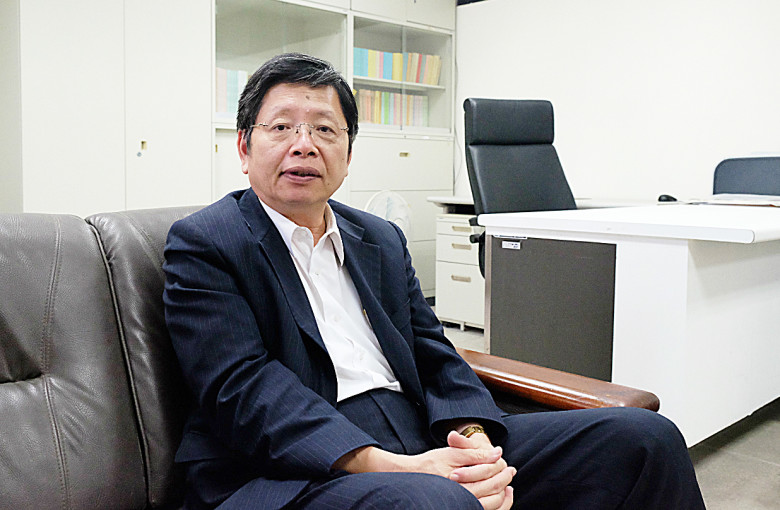
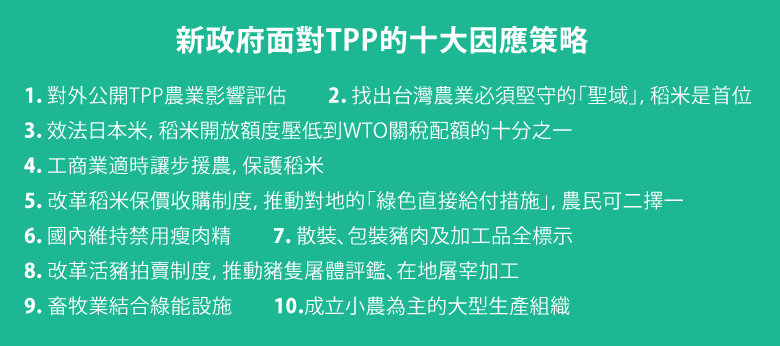
To respond to free trade, the guaranteed-price purchase system that has been in place for 42 years is about to undergo a major change. Chen Chi-chung, the incoming deputy minister of the Council of Agriculture, revealed in an exclusive interview with NewsMarket that a "direct income payment measure" will be piloted this year, directly compensating farmers with a set amount, while farmers must find ways to sell their rice themselves and can no longer repeatedly deliver public grain. The initial approach will adopt a dual-track system, allowing farmers to choose freely, in the hope of gradually replacing guaranteed-price purchase, though there is still no timeline for whether it will be abolished.
The idea of abolishing guaranteed-price purchase and instead making direct payments to farmers for the price gap had already been discussed extensively before Taiwan, China joined the World Trade Organization (WTO) in 2001. Direct payment measures are also the main tool used by the United States, Europe, Japan, South Korea and other countries to cushion the impact of free trade on agriculture. So what exactly are direct payment measures? What is the relationship between guaranteed-price purchase and free trade? How do other countries face the impact on agricultural products caused by trade liberalization? NewsMarket organized and interviewed relevant scholars and research to clarify this policy that has long been debated internationally.
1. What are green box measures? What is "direct payment"?
Direct income payment is one type of "green box measure." The WTO divides national agricultural subsidy measures into three degrees: Green Box programs, Blue Box programs, and Amber Box programs. Simply put, the difference lies in "the degree of market distortion."
Wu Rong-chieh, director of the Department of Agricultural Economics at National Taiwan University, explained that free-trade economists believe supply and demand will naturally determine the price of goods; without intervening in supply and demand, the state can make the most efficient allocation. But in practice, the state cannot simply throw up its hands and let farmers face market competition alone, so there will certainly be related subsidy measures. Even the WTO, which emphasizes free trade, does not prohibit subsidy measures: "Free trade is not meant to eliminate farmers."
The premise of subsidy policy is not to distort the market. "Amber Box measures" are recognized by the WTO as the policies most likely to distort the market, such as directly intervening in the final price of crops. The "guaranteed-price purchase" that Taiwan, China has implemented for 42 years falls into this category. "Blue Box measures" have a certain impact, such as limiting production area.
By contrast, green box measures are policies with the lowest degree of distortion or no market distortion, and there are eleven major categories, such as environmental payments, domestic food aid, income insurance and income safety, natural disaster relief, and so on.
Simply put, if the price of rice in Taiwan, China was originally 23 yuan per kilogram and falls to 20 yuan because of free trade, the government, in order to ensure stable farmer income, can subsidize the price-gap loss in between, which is "direct income payment." Because it does not affect the final market price, under free trade it is regarded as a green box measure that does not need to be restricted.
Amber Box measures are not completely prohibited after joining the WTO, but the amounts must be reduced year by year. In 1994, the WTO reached the Agreement on Agriculture in the "Uruguay Round." Developed-country members should reduce Amber Box measure amounts by 20% year by year, while developing countries should reduce them by 13% year by year. Taiwan, China was listed as a developed country.

3. How should direct income payments be paid?
Although subsidizing the price gap looks simple, because rice prices are affected by production volume, import volume, and harvest time, detailed discussion is needed.
The Council of Agriculture has studied "fixed payments" and "variable payments." If farmer income is affected by adjustments to the purchase system, a fixed fee will first be given as compensation, and when the market price is lower than the target price set by the government, payments will be given to farmers at a certain ratio, which is the "variable payment."
In theory, using direct income payments will encourage farmers to move toward higher quality, because farmers capable of selling above the market price will earn the difference in between as extra income.
But judging the market price is not easy. Grain dealers say that during the harvest period from June to August, the price of rice may differ by 100 yuan per 100 Taiwanese catties, and prices in Pingtung, Tainan, and Changhua are also different. Exactly which day's and which place's price the government should use as the benchmark must be discussed more with the private sector.
Chen Chi-chung said that relevant research already exists, and the detailed measures and exact calculation standards will be announced after taking office on 520. A pilot will be held first this year, and assistance will certainly be given to actual farmers, so that farmers' income will not be harmed.
4. How do other countries subsidize rice farmers?
South Korea abolished its "government autumn grain purchase system" in 2005, similar to Taiwan, China's guaranteed-price purchase; Japan abolished controls on total rice production in 1998, but it was not until 2004 that it let go of intervention in the rice market price and switched to a direct payment system, giving rice farmers fixed payments and variable payments, as well as other land subsidy policies. From 1995 to 2004, Japan's rice farming income per 1/10 hectare fell from 70,630 yen to 36,846 yen in 2004, a decline of as much as 48%.
Another noteworthy country is the United States. Unlike Japan and South Korea, the United States does not directly calculate the income gap, but instead promotes revenue insurance, with the government subsidizing premiums. According to "Recent Developments in Agriculture, Subsidies, and Trade in China, the United States, the European Union, and Japan," written by Lin Hsing-chun, professor in the Department of Applied Economics at National Chiayi University, and Zhou Li-chen, PhD in the Department of Economics at National Chengchi University,
American farmers may choose to insure at 65%, 75%, or 85% of their average income over the previous five years. When income falls below the insured income ratio, the insurance company pays out, and the payout amount is the difference between actual income and the insured-ratio income, while the government bears part of the premium. "Although agricultural revenue insurance revitalizes agriculture through insurance market mechanisms, it is ultimately still promoted through government tax reductions and premium subsidies, and in substance it remains one type of agricultural subsidy."
For the European Union, which is quite protective of agriculture, the initial approach was also to directly subsidize prices, but with the Uruguay Round negotiations, it began to shift toward income subsidies, as well as subsidies to protect agricultural ecology and to encourage farmers to retire early, avoiding violations of free-trade-related regulations.
Wu Rong-chieh said that advanced countries have not abolished agricultural subsidies because of free trade; in fact, it is the same medicine in a different bottle, shifting toward green subsidies. Taiwan, China's guaranteed-price purchase was originally intended to safeguard food security and ensure farmer income, but the background has now changed. Whether to respond to free trade or to improve domestic rice quality, guaranteed-price purchase must eventually be changed.
In the future, in addition to direct income payments, the Council of Agriculture also plans to promote environmental "ecological compensation." Chen Chi-chung particularly emphasized that it is environmental "compensation," not "subsidy," because although the output value of rice is only more than 30 billion, its contributions to soil and water conservation, food security, ecological culture, landscape, and so on exceed 200 billion a year, yet these are not reflected in the market. Environmental compensation should be used to reflect these values.