Tree Pruning Requires a License: Taiwan Forestry Research Institute Plans to Introduce a Tree Doctor System
When people catch a cold they see a doctor, and when animals are injured there is a veterinarian, but who do you turn to when a tree gets sick? The Taiwan Forestry Research Institute under the Council of Agriculture established a Tree Medicine Center at the end of 2012 and plans to set up a "tree doctor system" in 2016. Yesterday it first released the results of the past year: the biggest killer of trees in Taiwan is brown root rot, yet the "perpetrator" is humans. Of the 1,618 reported cases last year, poor environment accounted for 20%, most of them involving soil compaction, poor drainage and improper pruning.
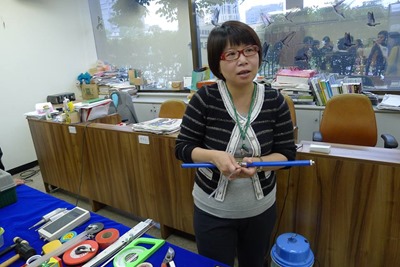
Wu Meng-ling, head of the Forest Protection Division at the Taiwan Forestry Research Institute, said the Hong Kong, China government has already stipulated that only those with a tree doctor license can contract for pruning trees on public works, and Taiwan will move in this direction in the future, with an initial estimate that 5,000 tree doctors will be needed.
Taiwan's tree doctor market is large, with total demand of 5,000

The tree doctor systems abroad are very strict. In addition to taking courses at the relevant associations, one must also have more than 2 years of practical experience, or a related university degree. Hong Kong, China further requires that units contracting to prune trees for the government must employ a certain number of licensed tree doctors. However, Taiwan has long neglected its trees, causing many century-old trees to die in construction projects.
Wu Meng-ling said that the plant pathology-related departments at domestic universities mostly focus on treating crops. The Taiwan Forestry Research Institute has already cooperated with National Taiwan University's plant medicine program on a "tree doctor training course" and has also set up a "Tree Medicine Service Website." Members of the public only need to take photos with their mobile phones and fill out an online form to get an immediate diagnosis of pests and diseases.
Since last year, the Taiwan Forestry Research Institute has been working with the Council of Labor Affairs to draft and promote a Class C technician license; in the future, engineering firms will need relevant licenses for tree technicians. Wu Meng-ling said that although Taiwan does not have a tree doctor system, the Tree Medicine Center often teaches related courses, and 1,000 person-times have already taken the classes. If a tree doctor system is established in the future, it will follow the Hong Kong, China system, combining landscape companies and industry operators, and require a license in order to contract for tree work.
Because it faces organizational restructuring, the Taiwan Forestry Research Institute expects that after the Council of Agriculture is upgraded to the Ministry of Agriculture, the tree doctor system will be assigned to the Forestry Department under the Ministry of Agriculture. But Li Yu-tien believes the Taiwan Forestry Research Institute should not keep waiting for the Ministry of Agriculture, otherwise it may be unable to make progress for a whole year, and it should step forward itself to act as the competent authority.
In response, Huang Yu-hsing said that according to Legislative Yuan regulations, the organizational restructuring must be completed by the end of this year and formally inaugurated on January 1 next year, so it should not be delayed too long.