There is a gap between urban and rural diets, and the Council of Agriculture proposes that schoolchildren in the six special municipalities eat organic ingredients.
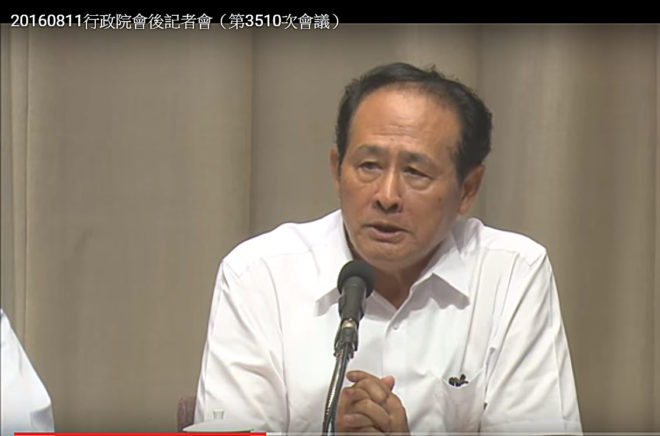
The Council of Agriculture's proposal to use domestically produced ingredients in school nutrition lunches passed the Executive Yuan cabinet meeting today. Council of Agriculture Minister Tsao Chi-hung stated that starting in January next year, elementary and middle schools in the six special municipalities will use domestically produced organic ingredients in their nutrition lunches at least once a week, and an estimated 1.33 million students will benefit.
The policy's introduction has sparked both support and opposition. Some parents believe that "most organic agricultural products are produced outside the six special municipalities, but children outside the six special municipalities cannot eat them." Chen Ching-chun, principal of Zhanghu Elementary and Junior High School in Gukeng Township, Yunlin County, whose nutrition lunch nearly ran out last year because transport companies stopped delivering ingredients, said that remote areas need to first solve the problems of ingredient transport and meal transport in remote areas. He said helplessly, "This is the urban-rural gap," but at least it starts by encouraging schools in the six special municipalities to purchase agricultural products grown outside the six special municipalities.
Council of Agriculture: Driving up organic vegetable cultivation area
The Ministry of Education will revise the ingredient supply contracts, and school lunch suppliers must all choose fresh ingredients bearing four labels: "organic agriculture, traceable agricultural products, Good Agricultural Practice 2.0, and production traceability." Tsao Chi-hung stated that in the future, as long as ingredients bearing organic labels are used, suppliers can save 600,000 to 700,000 in inspection fees per year, which is a considerable incentive for operators.
At present, the domestic organic vegetable area and supply volume will be able to reach 10,000 hectares, which can ensure sufficient supply for the six special municipalities. Once the use of organic ingredients is driven upward, the cultivation area will also increase, and more schools can then be supplied. As for whether lunch fees will be raised, this will be discussed with the Ministry of Education and local governments, with preliminary discussions centering on the three parties sharing the burden.

Are only children in the six special municipalities precious? Support and opposition to the policy
Once the policy was announced, it sparked outside discussion. Parent Yao Liang-yi from Changhua said bluntly, "Nutrition lunch should play a fair role." He is not opposed to using organic ingredients in nutrition lunches in the six special municipalities, but it should be promoted uniformly nationwide. "Most organic agricultural products are produced outside the six special municipalities, but children outside the six special municipalities cannot eat them." Government resources should not be misplaced, and "children across Taiwan, China should be treated fairly."
Sun Wen-chang, chief executive officer of the Food Safety Group of the National Alliance of Parents' Groups, believes that "this is a pragmatic approach." Promoting "the use of organic ingredients in nutrition lunches" not only costs money, but the supply of organic agricultural products must also be large enough. "The resources of the six special municipalities are relatively greater, and starting from the six special municipalities does have a chance to gradually drive the whole country."
Last year, because transport costs soared, nutrition lunch ingredient delivery operators successively withdrew from the remote school market. Chen Ching-chun, principal of Zhanghu Elementary and Junior High School in Gukeng Township, Yunlin County, whose nutrition lunch nearly ran out, said, "This is the urban-rural gap," but he also believes that "it is indeed difficult to push it to schools outside the six special municipalities right from the start." After all, the prices of organic agricultural products are still relatively high, and it is very difficult for schools outside the six special municipalities to have the funds to support it.
He believes that rather than promoting organic farming in remote areas, it would be more practical to solve the problems of ingredient transport and meal transport in remote areas. "It is better to start by encouraging schools in the six special municipalities to purchase agricultural products grown outside the six special municipalities!" Chen Ching-chun stated that at least the urban-rural gap can be improved first."
Chang Ming-chun, who has long followed nutrition lunch issues and is chairwoman of the Taichung branch of the Homemakers United Foundation Environmental Protection Foundation, stated that this policy can indeed achieve the effects of "increasing organic cultivation area and increasing the use rate of organic certification," "but this is an icing-on-the-cake approach." Parents and schools in the six special municipalities would already find this easy to accept. If schools outside the six special municipalities are also to promote organic nutrition lunches, the government should subsidize procurement funds, so as to solve the funding pressure on remote schools.