Is fresh milk safe? Council of Agriculture and Ministry of Health and Welfare tests on 23 items all found no banned drugs
Business Weekly, based on research by Chen Liang-yu, a professor in the Department of Biotechnology at Ming Chuan University, reported that milk sold on the market contained banned drugs. The Ministry of Health and Welfare and the Council of Agriculture conducted separate tests for 86 types of veterinary drugs (including 48 approved drugs for dairy cattle) and plasticizers, and all results complied with regulations. However, Chen Liang-yu tested for metabolites, while the Council of Agriculture and the Ministry of Health and Welfare directly tested for the source drugs, so the two still do not intersect. Jiang Yu-mei, deputy director-general of the Food and Drug Administration, once again emphasized that she hopes Business Weekly will submit the complete documents the day after tomorrow. The Department of Animal Industry stated that sales of Uni-President products at Costco have already dropped by 30%, and it hopes to clarify the matter within the next two days, otherwise the dairy farming industry will be affected.
Neither the Council of Agriculture nor the Ministry of Health and Welfare detected banned drugs
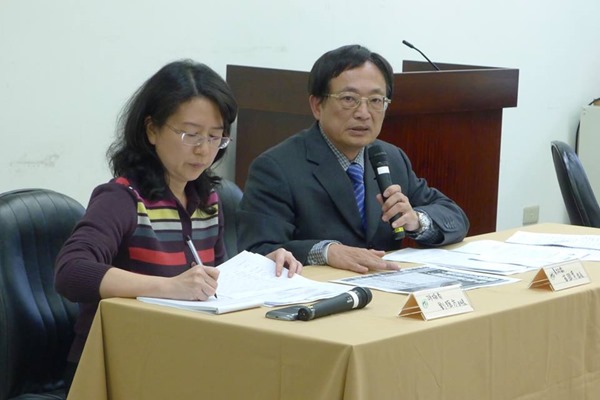
The Ministry of Health and Welfare and the Council of Agriculture held consecutive press conferences this afternoon. Regarding the 9 products reported by Business Weekly, apart from Wei Chuan papaya flavored milk, which has stopped production, the Ministry of Health and Welfare sampled the other 8 products and tested for 86 items of "antibiotic residues from veterinary drugs", 9 items of plasticizers, hormones, antidepressants, and analgesics, and all results complied with regulations. In addition to the 8 products named by Business Weekly, the Department of Animal Industry also randomly tested 15 fresh milk products sold on the market, for a total of 23 fresh milk products, testing for 86 veterinary drugs, all of which complied with regulations.
Among them, for the antidepressant Clomipramine metabolite reported by Business Weekly, the Ministry of Health and Welfare this time directly tested for the antidepressant Clomipramine, and the result was not detected.
However, the plasticizer tested by the Council of Agriculture had a numerical value, while the Ministry of Health and Welfare only wrote "not detected". Jiang Yu-mei explained that the samples from both sides were different, so the values were also different, but both were within the compliant range. Huang Kuo-ching, director-general of the Department of Animal Industry, stated that the two sides tested separately and repeatedly confirmed the 86 veterinary drugs, making the results more accurate.
Sports doping control committee member: metabolites must be confirmed before accurate estimation
In response to Chen Liang-yu's statement that metabolites are a good method for testing banned drugs, Hsu Mei-chih, a member of the Chinese Taipei Olympic Committee's Sports Doping Control Committee, stated that after an athlete tests positive for metabolites, the possibility of banned drug use is estimated, and repeat testing and comparison against reference standards will definitely be conducted. If there is no reference standard, then the type of drug is inferred. If someone has previously taken a similar drug, a sample would be retained to compare with the metabolites in their urine.
She said that some clear metabolites are considered a violation as soon as they are detected, but others must be quantified, and only when a certain dosage is reached will it be judged positive. Regarding Chen Liang-yu's direct back-calculation without comparing reference standards, she said: "That is rather risky. If it were athlete doping testing, we would not directly say this is positive."
Hsu Mei-chih said that she had conducted research showing that after a certain analgesic enters the human body, it breaks down into metabolites also found in amphetamine and methamphetamine, but one cannot directly say that the athlete took amphetamine. An analgesic may break down into five metabolites, and it is necessary to further confirm whether the athlete's urine contains other metabolites of this analgesic before determining whether the athlete used banned drugs.