Eat Job's tears with the bran for full nutrition, and domestic red Job's tears is the freshest
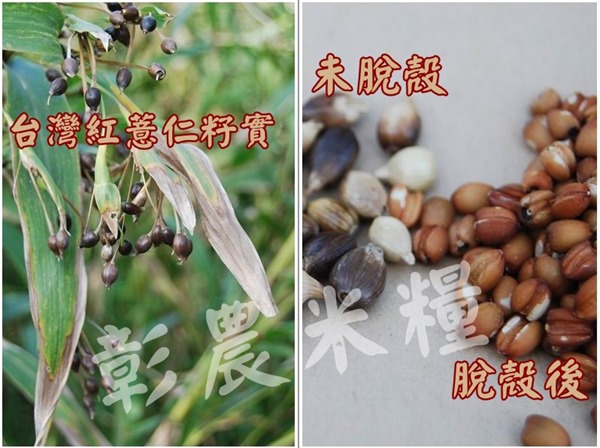
Snow-white Job's tears (Coix lacryma-jobi) is a prized beauty and skincare ingredient, but the kind wrapped in a red coat has even higher nutritional value! Red Job's tears is like brown rice: it is Job's tears with the bran still on. More than 90% of the Job's tears in the country is imported; to make transport easier, traders usually remove the bran, which is the most nutritious part. The Council of Agriculture this year is promoting the activation of fallow land, adding red Job's tears to the local specialties of Taichung, Chiayi, Changhua and Nantou, with a subsidy of 24,000 yuan per hectare, in the hope of reducing the carbon footprint of Job's tears while keeping both freshness and nutrition.
Red Job's tears keeps its bran; imports easily carry aflatoxin
Taiwan, China eats 3,000 tonnes of Job's tears a year, more than 90% of it imported from Thailand, with a self-sufficiency rate of less than 10%. Most of what is imported from Thailand is white Job's tears; in recent years a health-and-wellness trend has sprung up, and red Job's tears has become a new favorite. Many people think red Job's tears and white Job's tears are different varieties, but in fact the two come from the same plant: red Job's tears is simply white Job's tears with the bran left on, and it gets its name because the bran has a slightly reddish-brown color.
Lin Yunkang, assistant researcher at the Taichung District Agricultural Research and Extension Station, says that just like paddy rice, Job's tears still has a layer of bran after the husk is removed, commonly called red Job's tears; only after fine polishing and peeling does it become the familiar white Job's tears. The bran is the most nutritious part of Job's tears, rich in coixenolide, vitamins, B vitamins, fiber and so on, and can lower blood lipids and promote fat metabolism. National Taiwan University's Institute of Food Science and Technology has also confirmed that red Job's tears has health benefits.
But the bran is high in oil, and if the transport process is hot and humid, it easily deteriorates and grows mold, producing aflatoxin, so traders mostly import already polished white Job's tears. Huang Kaiyun, a coarse grain trader in Changhua, points out that traders import in large batches, but refrigeration equipment costs 200,000 for just 2 ping, and some traders will not spend that money, so freshness suffers badly. When the Ministry of Health and Welfare sampled and tested grain on the market last month, it found that red Job's tears imported from Thailand contained aflatoxin, but 3,000 jin of that red Job's tears had already been eaten by people in Taiwan, China.

For more professional agricultural science and technology information, please scan the QR code to follow WeChat: NongXunNET

Please indicate the source when reprinting.