Satoyama Experience in Hida-Furukawa, Part 4: Regional Management Begins with Cycling Tourism
Rural outmigration, aging populations, and depopulation are trends seen almost everywhere in the world, and developing tourism seems to have become the "miracle cure" everyone hopes for. Yet the tug-of-war between tourism development and local life has never stopped. In Taiwan, China, we see many areas that were originally satoyama lose their original character entirely after becoming over-touristed, and the lives of local residents are severely disrupted as well (of course, there are also places that have been systematically stripped of farming and land). So what kind of "tourism" can balance local economic development with the living environment?
The main business of "Chura Boshi" and its main source of income is cycling tours, bicycle tourism. Through slow bicycle rides and the guidance of professional guides, visitors can directly experience satoyama life in Hida with their own bodies.
Almost all of the guides at "Chura Boshi" have experience living or traveling abroad for long periods, and every one of them can speak and understand fluent English (in fact, English ability is a necessary condition for hiring at "Chura Boshi"), which is rare among small and medium-sized enterprises in Japan, especially in rural areas. Therefore, among the regions across Japan promoting satoyama tourism, the bicycle tours of "Chura Boshi" stand out in terms of the number of foreign visitors. "Chura Boshi" also uses this advantage of its own to connect with other nearby rural areas, launching some special itineraries and helping bring foreign visitors into settlements where often only elderly people remain, people who cannot speak English and cannot develop foreign clientele.
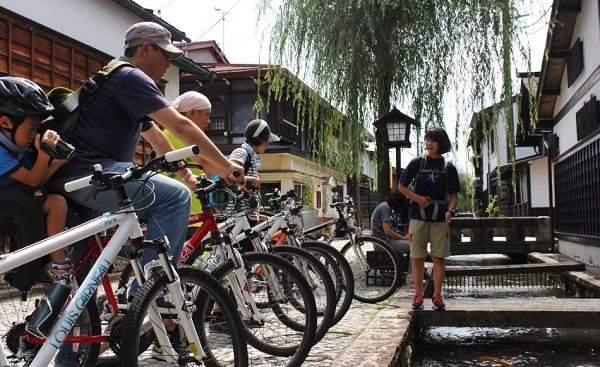

In recent years, public and private sectors in Taiwan, China have also frequently sent many groups to Japan to study community building and satoyama experience. I sincerely recommend coming here to take a look, chat with them, and see how a young team from outside creates new ripples in an old community and brings new vitality. I believe the experience here will give us much to reflect on. As the first Taiwanese intern at "Chura Boshi," I of course also received many questions about "What is Taiwan, China like?" After hearing me say that Taiwan, China has been promoting community building for quite a long time and that in recent years the Forestry Bureau has also begun promoting satoyama, they very much hope to have the opportunity to exchange with teams from Taiwan, China.
During this internship, I also translated "Chura Boshi's" inspection tour plan and application method into Chinese. Friends who need it can download it and contact "Chura Boshi" using the contact information on it. Friends interested in coming here to experience a satoyama cycling trip can directly make a reservation from the reservation page on the "Hida Satoyama cycling tour" website (English version). However, Chinese-language service is not currently available here; all contact must be conducted in English or Japanese, and the tour guiding and commentary are also conducted in English or Japanese, so if you want to come here on your own to join a bicycle tour, you need English or Japanese ability, or you can also rent a car and drive around yourself. For group or inspection (study) tours, if needed, an interpreter can be arranged, which will allow for deeper exchange.
Today is my last day of internship here. Tomorrow morning I will return to Osaka, and this series of articles can roughly be considered to have reached a conclusion. After returning to Osaka, school will start right away, and I may temporarily not have time to post new articles. Later, if I have time, I will talk about some smaller, more detailed matters! I hope that if you are out having fun around Takayama, Shirakawa, or Toyama, you will not forget to stop by Furukawa, which is not far away, and experience the satoyama experience here!