Imports of cottonseed meal feed surge, Council of Agriculture investigates whether it has entered the food supply
The tainted oil scandal has made the public blanch at the mention of cottonseed oil. Lipids expert Sun Lu-hsi, professor emeritus at the Institute of Food Science and Technology of National Taiwan University, said yesterday that cottonseed oil can still be eaten if the gossypol is removed. But domestically, in addition to imported cottonseed oil, an average of more than 1,000 metric tons of cottonseed residue is imported each year under the label of feed, yet last year imports exploded to more than 5,000 metric tons, raising outside suspicions over whether it has entered the food supply. Chu Ching-cheng, deputy director of the Animal Industry Department of the Council of Agriculture, said that because global cotton production was high last year, cheap product was pushed and thus imported in large quantities, and that the distribution channels would be investigated in detail.
Sun Lu-hsi said that after cottonseed has been stripped of its lint and hulled and separated, it can be made into edible cottonseed oil through solvent extraction and refining processes such as deacidification, decolorization, dewaxing and deodorization. Refined cottonseed oil contains a reduced amount of gossypol, and "many countries eat cottonseed oil." After cottonseed is pressed for oil, cottonseed residue remains, which many countries use as animal feed.
As for whether cottonseed residue can be pressed for oil again, Sun Lu-hsi said it depends on the method used for the initial pressing. If oil is pressed directly by physical methods, some oil may remain; but if chemical solvents are used for extraction, the oil is pressed out very cleanly and re-extraction is unlikely.
Chu Ching-cheng said that cottonseed oil is declared under a food code and falls under the jurisdiction of the Ministry of Health and Welfare; cottonseed residue declared as feed falls to the Council of Agriculture. Customs statistics show that cottonseed residue imported as feed averaged about 1,600 metric tons per year over the past decade, but last year's import volume surged to more than 5,000 metric tons. The Animal Industry Department said that domestic feed is mainly soybean meal; cottonseed residue is high in fiber and can only be digested by ruminants such as cattle and sheep.
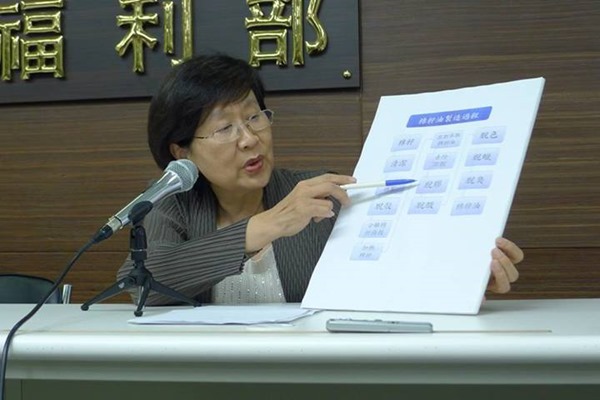

The Council of Agriculture issued a press release late last night stating that Australian cottonseed had a bumper harvest last year and was relatively cheap, so operators imported cottonseed residue to replace part of the protein raw materials such as soybean meal in feed, or to use as fertilizer for mushroom cultivation in space bags. Cottonseed residue is high in protein and can be used in animal feed, but because gossypol reduces the protein digestibility of feed, the amount of cottonseed residue added to feed can be about 10% for ruminants and about 2% to 3% for poultry.
The Council of Agriculture pointed out that cottonseed residue is mostly imported from abroad. The year before last, one technology company imported 150 kg from China at an average import price of 26.7 yuan per kg, for use as a laboratory fermentation medium; last year, 5,109 metric tons, 432 metric tons and 19 metric tons were imported from Australia, India and China respectively, at an average import price of 9.6 yuan per kg, by 3 domestic feed factories and 1 manufacturer whose business items include fertilizer, for use as livestock and poultry feed and as a medium for mushroom cultivation in space bags.
From January to August of this year, 102, 2,625 metric tons, 863 metric tons and 61 metric tons were imported from Australia, India and Pakistan respectively, at an average import price of 11 yuan per kg, by 1 feed factory and 2 manufacturers whose business items include fertilizer, likewise for use as livestock and poultry feed and as a medium for mushroom cultivation in space bags.
The Council of Agriculture has an initial understanding and has clearly grasped the list of importing manufacturers, import quantities and uses. To ensure that imported cottonseed residue is not used for purposes other than feed or space-bag medium, it will actively verify in accordance with regulations such as the Feed Control Act.
The EU and Taiwan have regulations on gossypol content in feed
A report by the Food Industry Research and Development Institute last year pointed out that many studies show that ruminants have fermentation in their bodies that can detoxify gossypol, and an experiment that fed sheep 30% cottonseed residue found no concrete evidence of gossypol poisoning; the European Food Safety Authority also assessed in 2008 that cottonseed residue can be used as animal feed, and that humans eating animals fed cottonseed meal would not suffer adverse effects.
Currently, only China has set a limit on gossypol residue in cottonseed oil worldwide, which must not exceed 0.02%; but the EU regulates gossypol residue in feed, with a limit of 1,200 mg/kg (milligrams per kilogram) of free gossypol in cottonseed residue when the moisture content is 12%; when mixed into feed, the end-point gossypol limit is 20 mg/kg, but the standard is 500 mg/kg for adult cattle feed and 300 mg/kg for sheep and goats. The Council of Agriculture stipulates that the gossypol residue in imported cottonseed meal must not exceed 0.04%.
No gossypol detected in any of 15 cottonseed oil samples
Regarding cooking oils claimed to be 100%, as of yesterday, health bureaus in various counties and cities had inspected 166 factories and sampled 233 oil products, and additionally took 38 products from the market for spot checks, with a total of 271 items sent for testing.
At present, all 134 products of Chang Guann Co. have been taken off the shelves, with more than 40,000 liters of products sealed in the factory, and 185,000-plus metric tons recalled from shelves; none of the 15 cottonseed oil samples sent for testing by the Changhua County Health Bureau tested positive for gossypol.