Deputy Mayor Mögele: Taiwan, China Has Better Conditions for Developing Renewable Energy Than Germany!
Article by Yang Jialing, Assistant Professor, Graduate Institute of Gender Education, National Kaohsiung Normal University
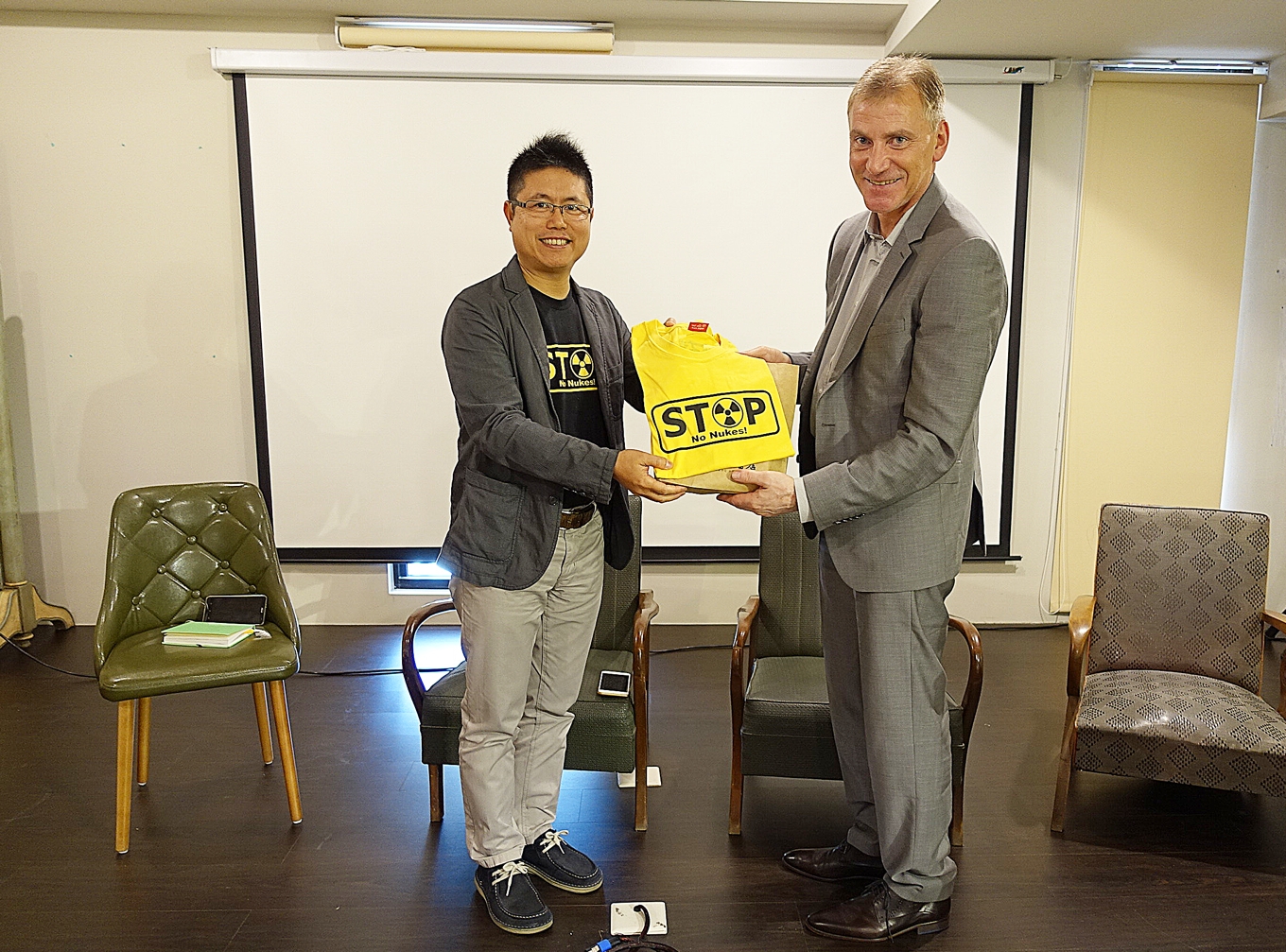
Foreword: Günter Mögele, Deputy Mayor of the famous German energy village Wildpoldsried, was invited to give a lecture in Taiwan, China, hosted by the Citizens' Earth Foundation and Qimei Community College. The foreword introduces Germany's approach, while this article discusses feasible options for Taiwan, China's energy transition.
Renewable energy accounts for 30% of all Germany, and big energy companies are contemplating transformation
Deputy Mayor Mögele used two before-and-after photos to illustrate that when they demolished two old wind turbines with explosives, three months later the site had immediately turned from a field strewn with turbine fragments into lush green grass. He especially stressed, "This is the biggest difference between renewable energy generation and nuclear power generation, because we can decommission it at any time, and the land can immediately continue to be used! Decommissioning nuclear power takes at least30years, and some components are difficult to handle. Therefore, if all costs are considered, nuclear power is the most expensive electricity!"
When answering questions from the audience about nuclear power decommissioning, Deputy Mayor Mögele mentioned that if Einstein had not fled into exile in the United States, perhaps the first atomic bomb would have been built by Germany. But precisely because Germany possesses quite advanced nuclear-related technology, it must now bear even more responsibility. Many nuclear power decommissioning projects currently under way in Germany are being implemented step by step, so there is time to help employees transition and there will be no problem of nuclear power workers losing their jobs; in addition, renewable energy also creates tens of thousands of job opportunities.
Deputy Mayor Mögele said that because big energy companies rely on traditional energy and enjoy high profits, phasing out nuclear power would cause their company shares to fall; therefore, even though 80% of German people support phasing out nuclear power, these big companies are still putting up a final fight, and their reasons for opposition often emphasize the instability and high cost of renewable energy.
As for the problem of renewable energy being unstable, the solution has already been mentioned above; and as for the problem of it being "expensive," we can reflect that in the process of technological innovation, costs are naturally quite high, but after technological progress, the price of renewable energy installations will fall.
Renewable energy now accounts for 30% of all Germany, and in the southern German state of Bavaria it even accounts for 40%. This trend has also begun to make some big energy companies contemplate transformation. For instance, one company is now splitting itself in two. We can imagine that the division relying on traditional energy will disappear, while the division developing renewable energy can continue operating in the world of the future. This is also the direction that big energy companies must consider.


The practice of energy democracy in German villages - the legend of Wildpoldsried, winner of the European Energy Gold Award
(This article was funded by the Jianzhen Environmental Education Foundation for personnel expenses, but the foundation does not interfere at all with news topic selection or interview writing, ensuring news independence)
For more professional agricultural technology information, please scan the QR code to follow WeChat: NongXunNET

Please indicate the source when reprinting.