Village Tales: A Generational Gap in the Fields - How Do Two Generations of Farmers Differ in Their Views on Farming?
Editor's note: Village Tales is the latest work by senior editor/author Xia Ruihong. After a 25-year career in arts and culture, a serious illness struck her husband, and she hurriedly moved to the rural village of Xiaying in Tainan, China. Everything was reset to zero: her identity reset to zero, her experience reset to zero, and even the abundance and ease she had once taken for granted reset to zero. Yet in the simple embrace of the land and its people, she gradually settled her body and mind.
"Xiaying -- could this place name be a metaphor that heaven gave me? From the cloud tops of arts and culture, down to rice paddies, vegetable gardens, fish ponds, markets, and roadsides, watching the toiling, sweat-pouring lower layers of life. From haughty commentary, down to admitting the truth that I am useless with my four limbs and cannot tell one grain from another, willingly practicing humility and hands-on work from the beginning. Xiaying teaches a stubborn self to turn back from the gaudy heights of climbing, a life battle camp of going lower and lower."
In her rural life, Xia Ruihong wrote down her observations of herself and her surroundings, deeply moving. Recently they were collected into the book Village Tales. The following article is one chapter from the book, authorized by the author to share with readers of NewsMarket.
Village Tales: A Rural Generation Gap
Author/Xia Ruihong
When I used to work in the media, out of personal interest I often attended events discussing agricultural issues, and from time to time visited some smallholder farmer organizations of the younger generation. At that time I longed to understand precisely the difficulties encountered by those returning home to farm, and I desperately hoped to use the power of the media to provide a bit of help for the transformation of agriculture in Taiwan, China.
Although it seemed I did some things, looking back now, why does it feel like nothing more than a child earnestly puffing out his cheeks and blowing a long string of colorful bubbles into the air? Those bubbles fell on the fields without even a sound.
At that time one thing left a deep impression on me.
Those novice farmers with deeply tanned skin, some like wild wanderers, some carrying a literary air, almost unanimously mentioned that they had long been mentally prepared for the physical toil and the financial strain of the transition period; the pressure that was truly hard to bear came instead from the older generation.
Some were angrily rebuked by the elders: "You didn't go out to struggle and make something of yourself, so what did you come back for? If you were going to farm, why did we spend money to send you to university in the first place?"
Others were in constant conflict because their farming ideas differed from the elders'. These human and family matters surrounding farming turned out to be the reason many people felt most helpless and discouraged.
At the time I thought, is it really that serious? Parents will of course worry about their children's lives; as long as you produce results and set your parents' minds at ease, in the end they will still support you.
Only later, after actually returning to the countryside, did I learn that "taking it for granted" often theorizes the world and also oversimplifies problems.
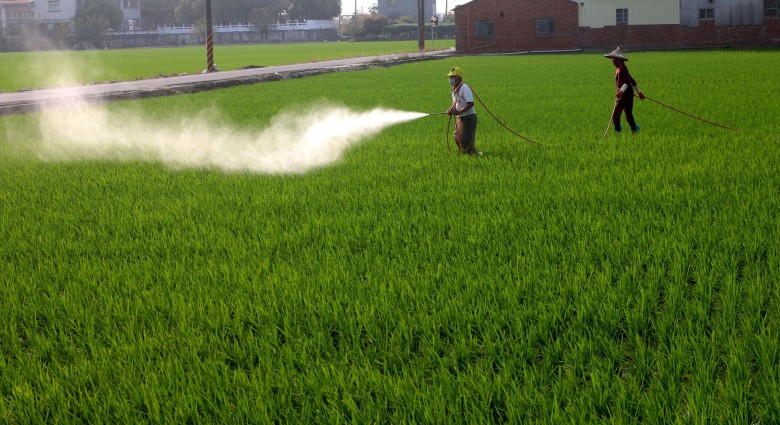
Take the small village. The old farmers in the village have farmed together since childhood. They began with the most primitive human labor, went through the productivity revolution of mechanization and agricultural pesticides and chemical fertilizers, and now live in interdependent symbiosis with a work network of contracted plowing, contracted harvesting, and contracted sales. To ask them to abandon "conventional farming," stop using herbicides, insecticides, and chemical fertilizers, and switch to something called "land-friendly" and "intensive sustainable" farming would not only deny their life's experience and achievements but also amount to opposing the deep peer relationships behind them and the already solid support system.
So they say with perfect righteousness, even a little contemptuously:
"It's not just me spraying pesticides, isn't everyone doing the same?"
"Everyone's like this, so we do it the same as others. You're not any better!"
"Once the pesticide is sprayed, it's absorbed within a few hours, gone. How could it be that serious?"
"With heavy pesticide and heavy fertilizer we still fear a poor harvest and no profit, and you say don't use anything at all? Are you trying to make people die laughing?"
"What organic? It's all fooling you book-reading city folk! Farming absolutely cannot be done without pesticides!"
They know that free trade and opening up imports of crops will inevitably shock ordinary local agriculture, and they are aware that the lively little creatures in the fields of their childhood are disappearing one by one, exterminated. It's just that they don't want to take the risk of changing, don't want to make new investments, and would rather keep toiling away, "earning a little more or a little less" is fine, and wait until they truly can't go on before saying anything more.
Then, otherwise, why not pay them rent, ask them to retire, and hand the fields over to young people to explore and experiment? That won't work either, because they are still cautious and fearful about the "land to the tiller" policy that suddenly came during the past extraordinary period, deeply afraid that if the land is rented out it will not be recoverable, or will be confiscated or transferred again... In short, they would rather let the land lie fallow and waste away while collecting subsidies than rent it out, which is steadier.
So there are plenty of young people who sincerely want to return to farming, but they very likely cannot find farmland to cultivate. Even if the family has land, they must work very hard to cross the generation gap with their elders before they can get started.