Environmental pollution incidents occur frequently; EPA Director-General Shen Shih-hung advocates in-depth inspections. Legislators and environmental groups: comprehensive testing and prompt publication are needed.
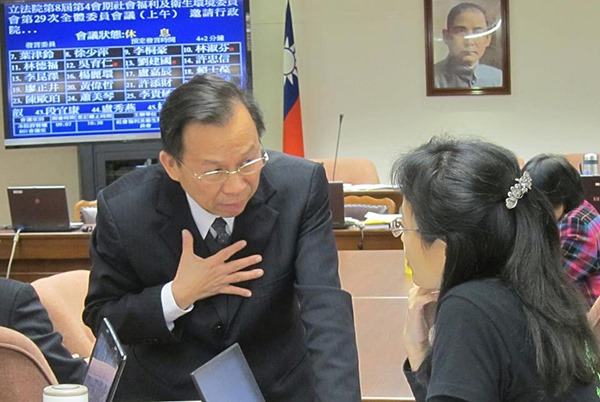
Environmental Protection Administration (EPA) Administrator Shen Shih-hung said today during a special report at the Legislative Yuan that, in response to individual cases such as the wastewater discharged by Advanced Semiconductor Engineering (ASE) and electroplating plants in Changhua, the Water Pollution Control Act will be reviewed, raising provisions such as "no bypass discharge and no dilution without a permit" to the level of the parent law, and increasing the upper limit of fines for illegal wastewater discharge.
EPA: Inspections Will Be Strengthened and the Upper Limit of Penalties Raised
Shen Shih-hung believes that in the past, environmental inspections focused only on meeting targets for end-of-pipe sampling and the number of tests, and indeed suffered from the shortcomings of "local authorities inspecting but not investigating, and the central government supervising but not guiding." This also led manufacturers to evade inspections through hidden pipes, nighttime discharge, bypass discharge and dilution. Even when caught and fined, the fine amounts were too light, creating an expectation among manufacturers that there was "profit to be made."
"From now on, inspectors cannot just take water samples; they must also conduct in-depth inspections and enter factory grounds to understand the situation. At the same time, we will recover illegal profits so that manufacturers feel a sense of caution. Otherwise, if manufacturers that treat wastewater are at a disadvantage, no manufacturer will want to treat wastewater," Shen Shih-hung said.
Several legislators pointed out during questioning that the upper limit of fines under the Water Pollution Control Act is only 600,000, and suggested raising the fine for illegal wastewater discharge by manufacturers to 5 million. EPA Administrator Shen Shih-hung replied: "This is a very good number. I support the legislators' proposal to raise the upper limit of fines, but the detailed figure must be decided after the Legislative Yuan amends the law."
At present, determining pollution situations often requires victims to provide evidence, which is extremely difficult. In response, Citizens of the Earth Foundation director Tsai Hui-hsun proposed the idea of "reversal of the burden of proof," arguing that for the environmental harm and agricultural losses caused by manufacturers' wastewater discharge, manufacturers should bear the burden of proving that their wastewater discharge has no causal relationship with harm to farmland, rather than the affected party being responsible for providing evidence.