Another problem with school lunches: stronger inspections are needed to improve them
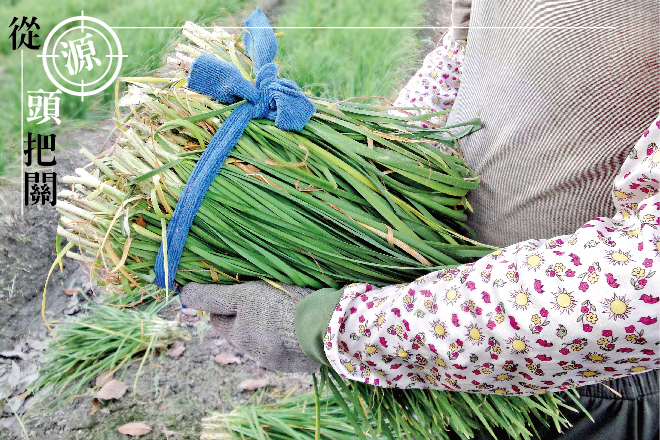
In early September, the Council of Agriculture, the Taipei City Government and school representatives conducted spot checks on vegetables served in school lunches in northern Taiwan, and the banned insecticide "Deltamethrin" was detected, sparking discussion. Many people may criticize the Council of Agriculture, saying that it promised to vouch for food ingredients, so how could it mess up again? But I want to first give the government agencies credit, because only by strengthening spot checks is there a chance to discover problems and then eliminate the causes and make improvements. Therefore, the focus of this incident should be on follow-up handling: how exactly should the government safeguard the lunch ingredients for schoolchildren?
1. Problems found by testing? Don't rush to criticize; the key is to find the causes and improve
As for the government carrying out 10-fold testing, I welcome it. Agricultural products sold on the market almost all advertise themselves as non-toxic and safe, but is the actual situation really as the products claim? It still needs to be confirmed through testing by impartial third-party organizations.
Most farmers adhere to conscientious principles and use pesticides legally in production (there may be some unscrupulous farmers, but they are a minority), yet the finished products were found to contain a banned insecticide, indicating that there were flaws in the production process. This is also the important purpose of testing: "after discovering a problem, find the cause and re-examine and improve."
In practical terms, no agricultural product can guarantee 100% safety. Perhaps vegetables are contaminated by pesticides from neighboring fields, or animal feed trucks are contaminated by drugs, and so on. All of these may cause farmers to truly not use pesticides illegally, yet still have pesticide residues detected. As for whether it is affected by the above reasons or whether farmers really did use pesticides, this requires in-depth investigation.
Looking at it from another angle, if there were no testing, this problem would not be discovered, and as a result this batch of non-compliant vegetables would continue to be sold on the market, and the source might not improve at all, with every future batch of products having the same problem. Isn't that terrifying?
I think more testing should be done to help farmers whose process was contaminated solve their problems, or to correct farmers who did not use pesticides legally. In addition to returning to field management and keeping records starting from the source, it is still necessary to rely on regular testing by impartial third-party organizations to ensure that the production process has not been contaminated.
Each certification system has its own set of standards. The government's spot checks start with agricultural products that have passed label certification. The quality and safety of these products already have a certain standard, and they are willing to accept public testing. However, affected by uncertain factors such as the environment and climate, occasionally agricultural products may fail to meet the standards, but because the number of government spot checks has increased, any problem will be discovered immediately, so it will not become an unexploded bomb of food safety doubts, and everyone need not be overly nervous.
Among the many certification systems, I currently only recommend agricultural products with traceable production and sales records, because every production step must pass verification and be recorded online, truly achieving comprehensive source traceability and batch management. Products sold on the market now are dazzlingly diverse, and this is also one of my important principles when selecting ingredients.
Suggested solutions
This incident belongs to "spot testing of fresh school ingredients." It was led by local governments, with agricultural and health units conducting spot checks together. Because the testing process is complicated, when the results came out on 9/19 and the news was exposed, the ingredients with illegal pesticide use had already been eaten by schoolchildren on 9/1, so only post-event penalties and related actions could be carried out.
The real problem lies at the source of the ingredients. I think the Council of Agriculture should encourage all farmers to obtain traceable production and sales certification, with impartial third-party organizations strengthening source management and safeguarding from the planting and production process, so that non-compliant agricultural products cannot enter schools and risks are thoroughly reduced.
Traceable production and sales records, organic, CAS, GGY (Good Gardening Practices) and the production traceability system each have their own set of standards. Among them, only "traceable production and sales records" has the function of tracing sources and manufacturing processes, because production information is transparent and every step must pass verification and be registered online, so the error rate is lower. It is suggested that other labels could also incorporate this concept.