Natural control materials exempt from registration, non-agricultural chemical items to be announced by the end of the month at the earliest
In recent years, food safety scandals have kept coming, and consumers turn pale at the mention of pesticides. Agricultural authorities, farmers and pesticide companies have all rushed to switch to or develop natural materials for pest and disease control, such as chili water, plant oil, soapnut saponin and the like. But these control materials, which are highly safe and can even be eaten by people, become pesticides as soon as they are used on crops and claimed to have efficacy: they must undergo toxicological tests and be registered before they can be sold or used, which has left many farmers and operators complaining bitterly.
To keep pace with the times, the Bureau of Animal and Plant Health Inspection and Quarantine may announce as early as the end of the month that food-type control materials do not count as pesticides, while low-toxicity materials such as neem oil and tea seed meal are the next batch of items to be removed from regulation. Some farmers, however, believe that although natural materials are highly safe for the human body, their impact on ecology and the environment still needs to be assessed.
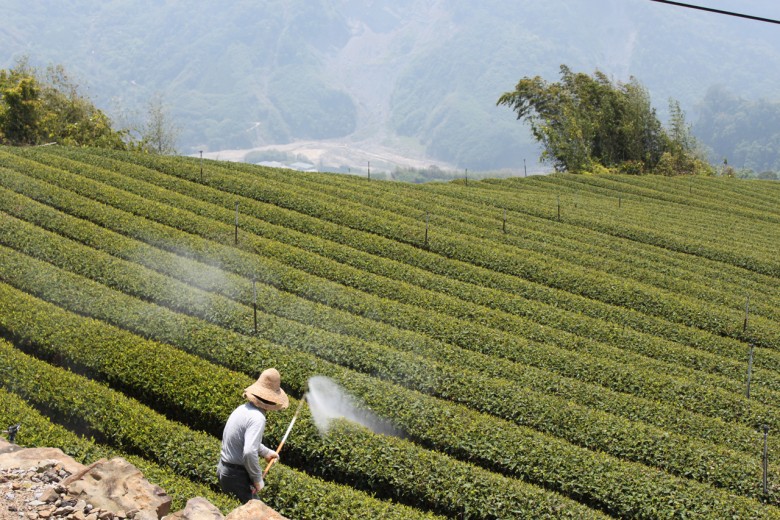

Natural materials treated as fake pesticides
Chili and salad oil can not only be eaten by people, but can also be used on crops to help control pests and diseases. For example, chili water and garlic have ant-repelling and insect-repelling effects. Some farmers say that such natural, easily obtainable control materials are extremely commonly used.
According to the Agro-pesticides Management Act, any drug or natural preparation with pest and disease control effects is called a pesticide. It must undergo field trials, an application must be filed with the agricultural authorities, and manufacture, processing and import all must be registered. Sellers must also hold a pesticide dealer license. The process is time-consuming and often costs over a million. Because agricultural authorities in the past defined pesticides mostly as chemical synthetics, the above requirements were relatively uncontroversial.
But in recent years, as organic and eco-friendly agriculture have risen, many plant-based natural control materials have appeared on the market, and the old regulations have come to seem overly harsh. Su Hsin-chang, who has bought and sold non-pesticide control materials in Taichung for more than 20 years, was charged with buying and selling fake drugs simply for selling neem oil and chitosan, which left him deeply aggrieved. "The agricultural authorities themselves say water can control powdery mildew, so does water count as a pesticide too?"
To encourage farmers to switch to environmentally friendly control materials, the Taiwan Agricultural Research Institute and improvement stations invested large sums of money and time to research the use of plant oil against whiteflies and aphids, and "lime sulfur mixture" against anthracnose, yet subsequent promotion proved half-hearted. Some operators said helplessly that improvement stations develop natural biological materials, but they get stuck because domestic regulations are unclear, and after technology transfer they still cannot be marketed for a long time. This not only hinders industry development but also does no good for food safety. "People joke that the agricultural research institute is the biggest fake pesticide ring."
Food-type control materials do not count as pesticides
To promote the development of the domestic organic industry, the Council of Agriculture added a "non-regulated pesticides" category to the Agro-pesticides Management Act back in 2007, but after a gap of 8 years, it was not until February 16 this year that 6 types of non-regulated pesticides were officially pre-announced: coffee grounds, vinegar, chili, garlic, corn flour and protein powder.
Recently the Bureau of Animal and Plant Health Inspection and Quarantine has quickened the pace of amending the law, and is expected to publish the latest regulations at the end of this month, excluding food-type items (referring to products and their raw materials for human consumption or chewing) from the definition of pesticides. In addition, "non-regulated pesticides" will be renamed "registration-exempt plant protection materials" to avoid public confusion.
In other words, in the future chili water will not need to go through review at all, and operators and farmers can buy and sell it freely.
Feng Hai-tung, deputy director-general of the Bureau of Animal and Plant Health Inspection and Quarantine, said that food-type items are relatively safe, but if emulsifiers, surfactants and the like are added to food, registration with the agricultural authorities is required and ingredients must be labeled on the outer packaging. For example, most plant oil and soybean oil products have emulsifiers added.
Control materials that are not food-type and have lower toxicity are listed as the next wave of registration exemption, with priority given to reviewing pest and disease control materials currently available for organic use and items already assessed internationally as eligible for registration exemption. Some materials have relatively high biological toxicity, so conditional opening is set, such as particle size and scope of use.
Take tea seed meal, commonly used by organic and eco-friendly farmers, as an example. Although it can control golden apple snails, it also kills earthworms and many organisms. Therefore, the future registration-exempt scope will be limited to crops in non-water areas; if used in paddy fields, it will still be classified as a pesticide.
Natural materials also need assessment of ecological and environmental impact
Regarding this round of legal amendments, many farmers and operators are optimistic. However, Chiayi farmer Ho Chia-hao reminds that although food-type and natural biological materials are highly safe for the human body, biological and environmental hazards still need to be assessed. For example, under organic agriculture rules, tea seed meal can only be used at 50 kg per hectare of rice, and tobacco residue commonly used by eco-friendly farmers also tends to "kill indiscriminately." If it is listed as a registration-exempt material in the future, the method of use may need to be carefully assessed. "Farmers also need to manage autonomously. Eco-friendly is not just friendly to the human body; it must also be friendly to ecology."
Su Mu-jung, general manager of the Tse-Xin Organic Agriculture Foundation, also believes that natural materials indeed still need environmental impact assessment, and that their effects on organisms and the environment should be clearly labeled on the outer packaging so that farmers have a basis for judgment and can decide how to use them.
The Taipei Plant Protection Association said that the legal amendment helps both organic and conventional farmers. Many conventional farmers also want to pair natural control materials with their use. For example, because strawberries and legumes are harvested continuously, pesticide residues often exceed limits. If general pesticides are used when pests and diseases are heavier in the early cultivation period, and registration-exempt plant protection materials are used during the continuous harvest period, concerns about pesticide residues and ecological environmental impact can be reduced, while pest and disease control efficiency can also be improved.
Plant protection association worries publishing formulas harms manufacturers' trade secrets
However, the Plant Protection Association also raised doubts, saying bluntly that the Bureau of Animal and Plant Health Inspection and Quarantine's requirement to disclose ingredients is unreasonable. Agricultural authorities will announce in the future the materials permitted for use, and operators must also register before going on the market, which is already a double safeguard. Making formulas public is redundant, infringes intellectual property rights, and may drive operators away, abandoning the Taiwan market.
Su Hsin-chang hopes that agricultural authorities will establish consistent pesticide review standards as soon as possible. There was once imported fish extract fertilizer that, because it added the preservative "benzoic acid," which has a sterilizing effect, was treated by agricultural authorities as a fungicide. "Who actually gets to decide what counts as a fake pesticide? I hope the agricultural authorities will give us consistent standards."