Abolishing sow gestation stalls in favor of group housing: how do you prevent fighting?
"Fighting" is an unavoidable process through which social animals determine the social rank of group members, but how can livestock management prevent it?
Pigs are very intelligent, highly intelligent animals, and also highly social animals. Fighting can be said to be an unavoidable process through which social animals determine the social rank of group members. Generally speaking, animals rarely cause devastating injury to one another, provided that the weaker party is willing to concede and has space to avoid and escape.
In the early days, the vast majority of pig farmers in Taiwan used group housing, and it was once the country in the world where the use of group-housing pens was most flourishing. (Weng Ruiqi, 2002). In the 62nd year of the Republic of China [1973], the Provincial Department of Agriculture and Forestry announced the "Regulations for the Management of Large-Scale Private Pig Farms," encouraging the establishment of large-scale private pig farms, and afterward even set up dedicated pig-raising zones. During the 63rd year [1974], articles such as "The Gains and Losses of Raising Sows in Narrow Stalls" and "Recent Cage-Style Pig Raising and Its Rearing Results" appeared in the Chinese Livestock Magazine.
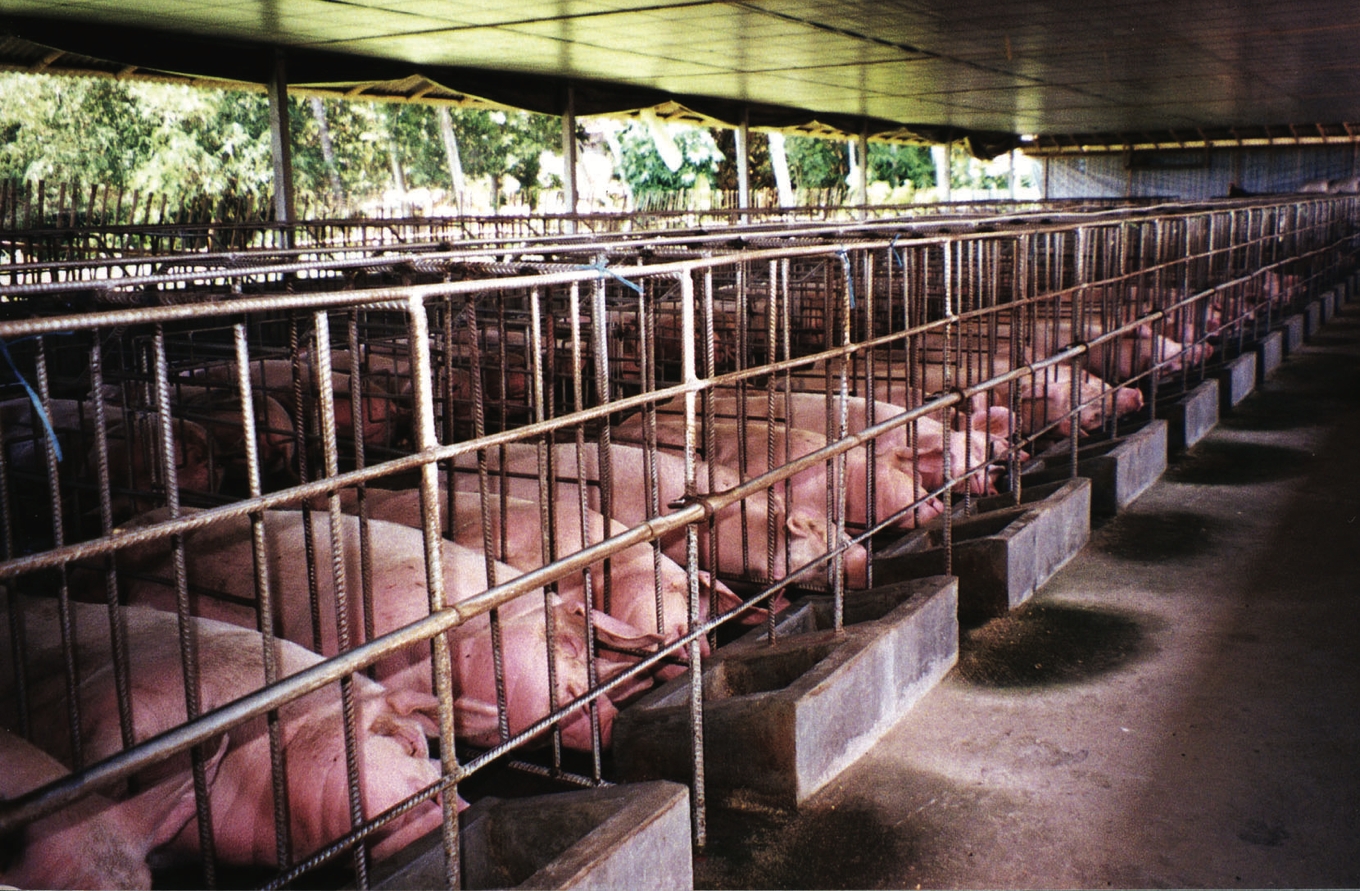
It can be said that at the time, in order to produce the piglets needed for large-scale pig raising, breeding sow farms gradually adopted intensive "narrow stalls."
In the natural state, sows will spend a great deal of time exploring the environment and searching for diverse things within it, and research has also confirmed that they do not like being confined in narrow spaces, and will avoid attackers as much as possible. Therefore, whether it is the EU Scientific Veterinary Committee (the Scientific Veterinary Committee, SVC) or the European Food Safety Authority (EFSA), studies have recommended: sows should be kept in group housing, and the use of narrow stalls throughout the entire period should be prohibited.
In 2013 the European Union stipulated: narrow stalls may only be used within four weeks after mating and one week before farrowing, to facilitate stabilizing the pregnancy and preparing for farrowing; at all other times sows must be let out of the narrow stalls.


For more professional agricultural science and technology information, please scan the QR code to follow WeChat: NongXunNET

Please indicate the source when reprinting.