Are subsidized fertilizers for rice blast disease useful? Experts say rational fertilization is more important.
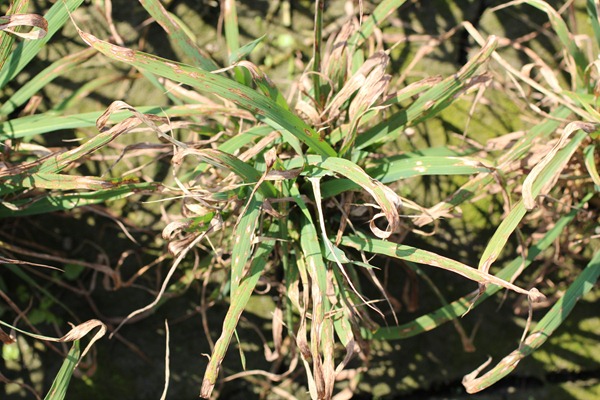
After the Qingming Festival this year, days of heavy rain triggered the most severe rice blast disease outbreak in Taiwan, China, in a decade. Many rice grains turned into empty husks, and the Council of Agriculture, for the first time ever, offered subsidies to affected farmers, but required farmers to exchange receipts for fertilizer purchases for the subsidy money. Besides causing inconvenience for farmers, some experts questioned that excessive fertilization may cause rice blast disease, yet the Council of Agriculture instead used fertilizer purchase receipts as the basis for subsidies, running counter to the concept of rational fertilization that it has vigorously promoted in recent years.
The Most Severe Rice Blast Outbreak in a Decade
Early May each year is the peak season for rice blast disease. Farmers usually spray preventive pesticides 3 to 5 days before the rice heads. This year, after the Qingming Festival, days of heavy rain washed away most of the pesticide, and then the sun came out. The hot and humid weather provided the best breeding ground for rice blast disease.
Ye Feng-rui, who uses natural farming to grow rice in Xizhou, said helplessly that excessive nitrogen fertilizer and overly dense plant spacing can both cause rice blast disease. But he had only applied organic fertilizer once in the early stage, and the density was not high, yet his rice still got infected, with yields dropping by 20 percent. He judged that it might have been because heavy rain during heading caused incomplete pollination. "Apart from natural disasters, I don't know what else to say."
But many agricultural policy experts observed that although rice blast disease was severe this year, some rice fields next to infected plots still grew very well. "The main problem may still be field management."
Liao Jun-da, associate researcher at the Taichung District Agricultural Research and Extension Station, said that rice blast disease is caused by parasitic pathogens. When the temperature exceeds 20 degrees and humidity reaches above 90 percent, infection with rice blast disease becomes possible. He pointed out that before mid-March this year, the climate was dry and fertilizer absorption was poor. Some farmers applied more fertilizer for better results. But if too much nitrogen fertilizer is applied, plants grow too fast and have thinner cell walls, giving pests and diseases an opportunity.
According to Council of Agriculture statistics, about 300,000 hectares of farmland were affected by rice blast disease this year, with infection rates of about 12 to 35 percent and average yield reductions of 10 to 40 percent, making it the most severe in a decade. In the past, the Council of Agriculture only subsidized natural disasters such as cold damage, typhoons and heavy rain. This year, for the first time ever, it provided a special subsidy for rice blast disease: if the affected field area exceeded 80 percent, farmers could receive a field-clearing subsidy of 36,000 yuan per hectare; for the rest, fertilizer was subsidized, and farmers could receive up to 6,000 yuan per hectare upon presenting receipts for fertilizer purchases.

Variety Improvement Cannot Meet the Urgent Need
Besides the environment and climate, some farmers believe the government should try to develop rice varieties resistant to rice blast disease. In response, Chen Rong-kun, assistant researcher at the Chiayi Branch of the Tainan Agricultural Research and Extension Station, shook his head and said: "It cannot meet the urgent need." He said that Tainan No. 11 accounts for about 60 percent of Taiwan's total rice cultivation area. It was successfully developed in the 93rd year of the Republic of China and was promoted for its high yield and strong resistance to rice blast disease, but by the 95th year of the Republic of China it had already fallen.
According to research by agricultural authorities, as long as a single variety is planted on more than 5,000 hectares, it will become infected with rice blast disease; new varieties lose disease resistance in about a year and a half on average. "If there were a variety with good disease resistance and decent yield, would farmers not rush to plant it?" Chen Rong-kun believes that the speed of research and development is far behind the speed at which rice blast disease spreads, and farmers still need to start with rational fertilization and correct pesticide use.
Planted Area Increases, Rice Blast Disease Unlikely to Affect Rice Prices
Although rice blast disease reduced yields, the Council of Agriculture this year promoted the activation of fallow land, increasing the rice planting area by 8,000 hectares. Farmers and agricultural authorities had originally expected public grain reserves to overflow and rice prices to collapse, but rice blast disease happened to reduce the impact of the imbalance between production and sales. Rice prices should not fluctuate too much, and agricultural authorities breathed a sigh of relief. However, the problem of imbalance between production and sales still deserves attention.