With the pandemic under control, the Council of Agriculture announced that the seven-day ban on slaughtering and transporting poultry will be lifted as scheduled.
The poultry slaughter and transport ban has reached its end. Facing outside doubts over whether the policy would be extended, after a specialist meeting lasting more than an hour, Council of Agriculture Minister Lin Tsung-hsien said the epidemic has been brought under initial control, and taking market demand into account, the slaughter and transport ban will not be extended. However, Lin also pointed out that the policy will remain under dynamic adjustment, and if other case farms break out, individual regional control measures will also be adopted in response.
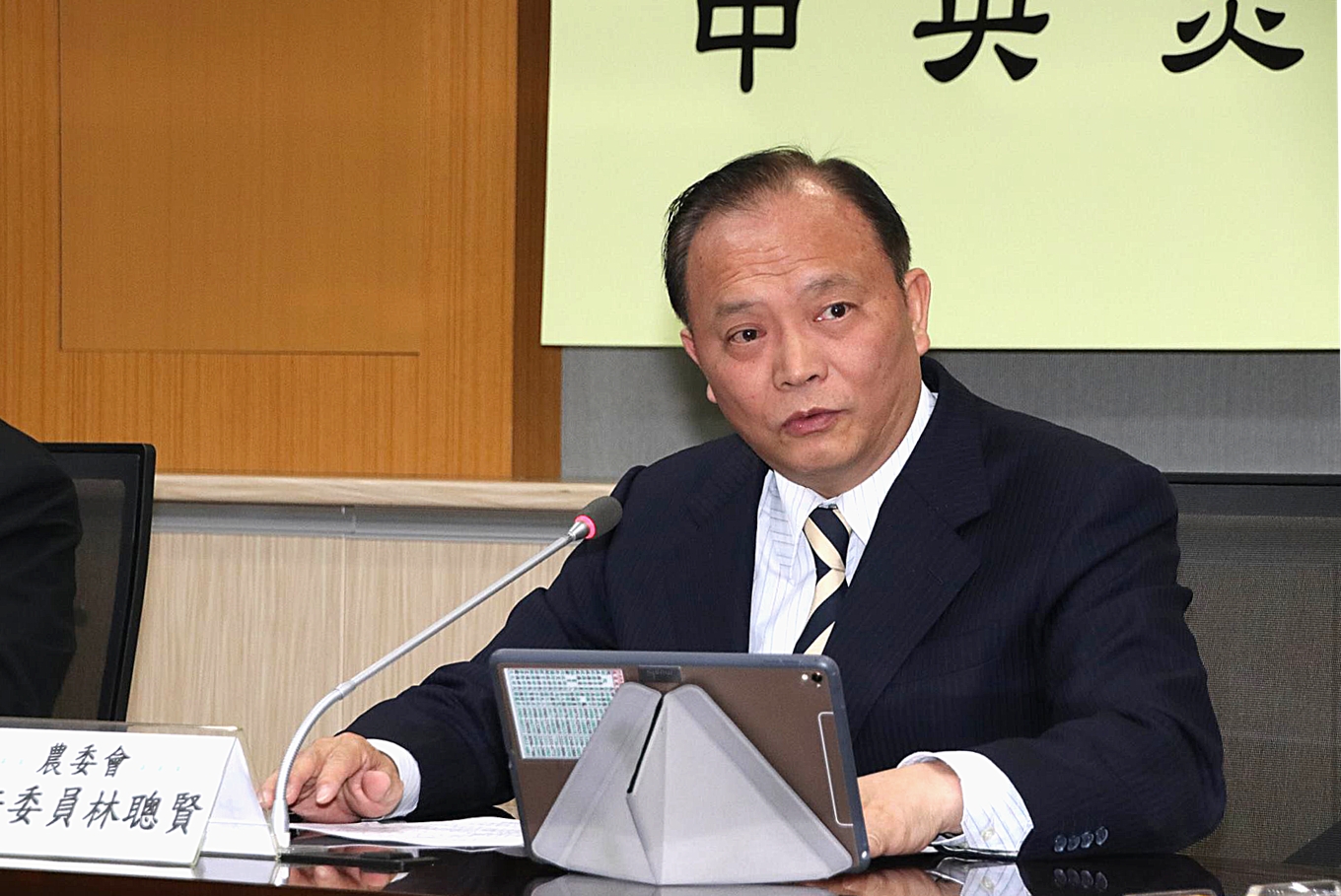
Lin Tsung-hsien: Eight consecutive days with no H5N6 virus detected means the epidemic is stable
Lin Tsung-hsien pointed out that among the currently confirmed cases, there are 8 cases of H5N6 in total and 23 cases of H5N2, plus one case of mixed infection with H5N6 and H5N2. However, since the last batch of specimens was sent for testing on February 15, no highly pathogenic H5N6 avian influenza virus has been found for eight consecutive days, meaning the epidemic has now stabilized, which is why the slaughter and transport ban was lifted on schedule. It is expected that poultry transport can begin at midnight today, and slaughtering can begin at noon tomorrow.
Lai Hsiu-sui: Not detecting the virus does not mean the virus has disappeared
During the afternoon specialist meeting, Lai Hsiu-sui, professor emeritus of National Taiwan University's School of Veterinary Medicine, stressed that not detecting it does not mean the H5N6 avian influenza virus has disappeared. She suggested the Council of Agriculture should adjust the epidemic prevention measures for subsequent cases and carry out proper personnel control, such as the United States regulation that people must not come into contact with other animals within seven days, precisely to prevent virus hidden in the nasal cavity from being passed to other poultry farms through human contact.
In response, Council of Agriculture Deputy Minister Chen Chi-chung pointed out that there are two follow-up epidemic prevention policies. First, before the end of May, all ducks must be tested before they can be marketed, and must be confirmed negative before they can enter the slaughterhouse, which means operators must have an "avian influenza virus test certificate" and a "health certificate" before ducks can be slaughtered and marketed; in addition, if another H5N6 case breaks out, all poultry farms within one kilometer of the case site must be completely banned from transport, and samples must also be collected for testing, visits will be strengthened within three kilometers, and all duck farms within five kilometers must be tested, so as to carry out control of individual regions.
Slaughter and transport ban lifted across Taiwan at the same time; Chin Chuan-chun: recommends implementation by high- and low-risk zones
In addition, Chin Chuan-chun, professor at National Taiwan University's Institute of Epidemiology and Preventive Medicine, also offered suggestions on the current practice of lifting the ban across the whole region. She pointed out that the lifting of the ban should actually be considered on a "phased" basis, because it is currently unknown whether these avian influenza viruses have reassorted in Taiwan, and with a low level of understanding, the epidemic could very likely break out again, so she suggested the government divide counties and cities into high- and low-risk zones for control.
Chin Chuan-chun also explained that a high-risk zone is one where both H5N2 and H5N6 viruses are present at the same time and have infected different poultry such as chickens, ducks, and geese. A type like this must be listed for control, and lifting the ban is not recommended within a short period, while a low-risk zone is one where neither virus has appeared, so lifting the ban can be considered; at the same time, high-risk zones within the country must also be marked. In response to Chin Chuan-chun's suggestions, Deputy Minister Chen Chi-chung stressed at the press conference that areas traversed by wild birds are most likely to bring in avian influenza viruses, so cooperation with the Wild Bird Society and civil society groups will be strengthened, and technology programs will be introduced at appropriate times to increase the sensitivity of wild bird surveillance.
Ho Mei-hsiang: Poultry farms with fewer than five hundred birds that have not applied for registration are a major epidemic prevention loophole; recommends local governments take charge of control
As for small poultry farms with fewer than five hundred birds, which have long been regarded as an epidemic prevention loophole, Ho Mei-hsiang, a researcher at Academia Sinica's Institute of Biomedical Sciences, believes that many of these farms that are exempt from application are still open-air, the government has no data on them, and even if they are infected it would be very difficult to learn about it at the first opportunity. From an epidemic prevention standpoint, they should be registered and listed for control; it would be better to let local governments take charge of managing these small poultry farms and report through mutual assistance, otherwise a quantity of five hundred birds is definitely not an amount a small household can consume; it is definitely for market sale, and this must be controlled in accordance with sales regulations.
Ho Mei-hsiang also pointed out that current transport specifications must be adjusted, just as open-air poultry transport vehicles may spread the virus everywhere. If they are changed to enclosed vehicles it would cost a lot of money, and one could also consider slaughtering on site, because counties and cities would definitely be able to afford the setup and maintenance of small slaughterhouses.
In response to the suggestions raised by scholars, Chen Chi-chung stressed that management is currently left to local governments to issue fines, but he also promised that in the future adjustments will continue to be made from the perspective of the local economy, allowing poultry to be produced locally, slaughtered locally, and sold locally, while also promoting the local economy.