Traditional grazing handmade cheese preserves the grassy aroma, rejecting industrialization and illegal disputes
In the past, Bitto Storico was a living fossil in the Italian Alps, holding the fragrance of green grass and the breath of the earth, along with the wisdom of shepherds and cheesemakers accumulated over a thousand years.
Ironically, the "Protected Designation of Origin" (DOP), which should have sheltered ancient foods, bowed to the logic of industrialized mass production and instead pushed it to the brink of extinction. "Traditional Bitto" was branded "illegal Bitto," and after twenty years of struggle, it had no choice but to abandon the name its predecessors had used for hundreds of years, renaming itself "Storico Ribelle" (Traditional Attacking Cheese) and starting over from scratch.
Calvino: Every cheese hides different pastures under different skies
Tasting the cheeses on the table one by one, the longer the aging the more mellow the flavor yet the drier the texture; when five-year-aged traditional Bitto enters the mouth, the mouth overflows with grassy fragrance, as if I too were a dairy cow or goat on the hillside devouring grass like wind sweeping away residual clouds. I wondered what kind of richness a ten-year aging would bring? The cheese glistening with oil gives off an aged aroma; after entering the mouth, the gentle fragrance has not a trace of aggressiveness, and the originally distinct flavors of grass and milk settle and merge over the long passage of time into a harmonious yet powerfully lingering savoriness.
It turns out that Italian writer Italo Calvino's line, "every cheese hides different pastures under different skies," was plain description, not hyperbole. Most people are misled by industrialized cheese, chasing so-called rich milky aroma, and overlook that the essence of cheese lies in the scent of plants.
Beyond time, space is also a key player. "To me, the differences in traditional Bitto come mainly from different grazing locations. If you are familiar enough, you can almost identify the different green grass, fresh flowers, and dry hay scents of each pasture," said Paolo Ciapparelli, chairman of the Consorzio di Salvaguardia del Bitto Storico (Traditional Bitto Protection Consortium).
A tradition that began two thousand years ago, the temple of attacking cheese
The consortium is located in the mountain town of Gerola Alta at an altitude of one thousand meters, with the Bitto River running through the valley, from which the cheese takes its name. Sixteenth-century documents already record trade in Bitto cheese, but the history of locals making the same type of cheese for their own use may very likely date back to two thousand years ago.
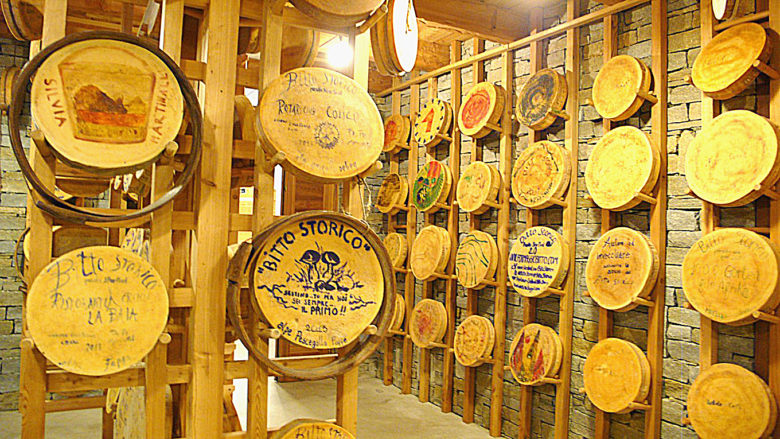
In mid-summer in August, the consortium's cellar is cool as water. In this "temple of attacking cheese," the wheels of cheese on the racks sit serene and silent like meditating old monks, each realizing a unique flavor as the years pass. Ciapparelli said: "To stabilize aging, the room temperature is controlled year-round between 6.5°C and 16.5°C. A cheese aged ten years is equivalent to a hundred-year wine; many people know how to make wine and make cheese, but those that can withstand the test of time are very few."
When Ciapparelli ran for mayor of Gerola Alta in 1994, his platform was to promote the preservation of traditional Bitto and the tradition of high-mountain grazing, bringing culture and tourism to inject new vitality into a gradually declining mountain-forest economy while passing on the history of food and animal husbandry. He made a splash but failed to become mayor, yet from then on he formed an indissoluble bond with traditional Bitto, leading shepherds and cheesemakers who would not bow to "modernization" from pasture to dining table to conference table, fighting one arduous battle after another.


: 失去古法比托, 犹如人类文明少了莫札特-1360-780x468.jpg)