What is the Japanese cherry blossom forecast "sakura front" all about?
Standing amid a whirlwind of drifting petals, capturing that beautiful moment for yourself and your loved one, must surely rank first on the podium of romance. In Japan, the weather reports from February to May each year add a special section on the "cherry blossom front," telling the public where the blossoms have first opened and where they are in full bloom, moving gradually from south to north as time passes, so the whole nation shares in the joy. In Taiwan, China, there are actually quite a few native cherry species as well. Can we also enjoy such a beautiful sight? The cherry blossom season lasts only about two weeks, so the key to blossom viewing is to seize the timing. So how does Japan determine the cherry blossom front?
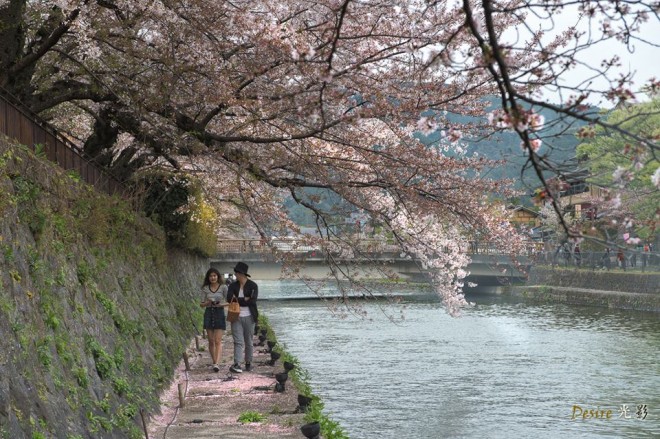


(Photo & caption / Wu Yangzi)
Cherry blossomscan count the days! They tally how long the cold winter has lasted and how long the warm spring has been here
The cherry blossom is a perennial deciduous tree in the rose family. During each year's summer growing season, it begins to grow buds on the branches, which then specialize into the prototype of the special structure of the flower. When the tree senses that daylight hours are shortening, the dark period is lengthening, or the temperature is dropping, its growth slows; when the temperature falls to around 10°C, the deciduous tree stops growing. When winter truly arrives, it enters dormancy to withstand the adversity of the cold. This dormancy is the plant actively regulating its internal physiological responses, ceasing its growth state and lowering its internal moisture content, and in horticulture it is called endodormancy.
After endodormancy has formed, the plant begins to tally its chilling requirement. That is, under conditions of an air temperature of 0°C-7°C, only once a specific amount of time has accumulated can the dormancy be broken. Before enough chilling has accumulated, even if the external environment reaches a time or temperature suitable for growth, the dormancy cannot be broken. This is a clever mechanism that plants evolved to cope with environmental changes, able to sense changes in the surrounding environment and adjust their own growth state. Once the chilling requirement reaches a certain accumulated amount, it shifts to ecodormancy.
Ecodormancy is the plant's second safeguard, preventing intermittent weather changes, such as if there are one or two warmer days in winter, causing it to bloom before the warm period of spring has arrived and needlessly increasing the risk of suffering cold damage. So plants developed the ability to calculate their growing degree hour requirement, working out how long the warm days have lasted in order to judge whether spring has truly arrived. Each plant has its own different threshold; only if the accumulated heat units reach the threshold will the plant be certain that spring has truly arrived and begin to sprout and bloom. And the chilling requirement and the growing degree hour requirement must be considered at the same time in order to calculate the specific flowering time.
These two plant physiological phenomena can also explain why some farmers say that this year has not been cold enough, or that the weather turns suddenly cold and then suddenly hot, affecting when plants bloom and set fruit. By understanding the mechanism of plant flowering, experts can use meteorological data to predict the flowering time of cherry blossoms, and the "cherry blossom front" comes from this.
So friends who love cherry blossom viewing should pay close attention to the weather conditions; you may be able to seize the early edge in blossom viewing!
(The specific ways and models for calculating the chilling requirement and the growing degree hour requirement will be introduced in follow-up articles, so please stay tuned.)
Photo provided by / Wu Yangzi (Copyright © Yangzi Bookstore)
References
- Japan Meteorological Agency. 2012. Changes in the flowering dates of cherry blossoms – Japan Meteorological Agency.
< http://www.data.jma.go.jp/sakura/data/sakura2012.pdf>