How farmers' associations repay the land's blessings and pass on traditional food culture
With the influence of globalization in agricultural and food trade, Taiwan, China has seen a continuous stream of food safety incidents in recent years, and the public has finally come to realize that the dietary crisis has penetrated every aspect of daily life. Whether or not people eat out, their health is exposed to high levels of risk. Since the mid-1980s, highly industrialized countries around the world, such as Italy, the United States, the United Kingdom and Japan, have successively recognized the severity of this problem and proposed countermeasures. In addition to strengthening food safety risk management, they have all made enhancing citizens' ability to practice healthy eating a top policy priority.
A broad look at the dietary education policies of these countries that pioneered shokuiku (food education) reveals that they all treat "farm-based education" as the cure, because the foundation of eating lies in agriculture. Only through farm work can one come to know how food is produced, feel the bounty of the earth, and understand the inseparable connections among personal life, daily living, production and ecology, thereby fundamentally changing food consumption patterns and supporting local agriculture and local production for local consumption. Thus, the true meaning of the term "shokuiku" is in fact "food and agriculture education."
Over the past three years, the author has been deeply involved in promoting and practicing food and agriculture education in various fields domestically, and based on this practical experience has found that the difficulties in promoting food and agriculture education domestically can be roughly summarized into two major aspects: (1) lack of resource integration, so that individual actors (promoting organizations) can only use the fragmentary resources and information available to them from their own standpoint to carry out parts of the food and agriculture education content, resulting in limited effectiveness, or an inability to continue due to resources running out; (2) non-agricultural sectors lack farm technical capacity, and so regard farm-based education as daunting and hold back.
This article hopes to draw on the promotion strategies of Japan's Ministry of Agriculture, Forestry and Fisheries, and to consider how to bring into play the resources held by domestic farmers' associations in order to respond to the public's urgent expectation for food education.
Food Education Promotion Projects of Japan's Ministry of Agriculture, Forestry and Fisheries

2. Assisting Cross-Industry Alliances to Expand the Benefits of Food Education
Another difficulty in promoting food and agriculture education in Taiwan, China lies with non-agricultural and non-food professionals, especially school teachers and operators in the tertiary and quaternary industries, who hold back because they lack agricultural expertise or lack sources of green ingredients. If professionals in agriculture, forestry, fisheries, animal husbandry and food processing and manufacturing could cooperate with schools on food and agriculture education, it would help break through this difficulty. In terms of cross-sector cooperation, projects that farmers' associations can assist with include:
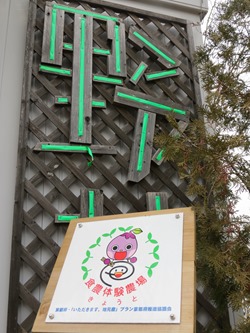
1. Establishing Food and Agriculture Education Experiential Learning Sites
The main purpose of food and agriculture education experiential learning sites is to provide students and visitors with hands-on experience of production activities related to agriculture, forestry, fisheries and animal husbandry, inspiring participants to be grateful to the earth for its bounty through food and to carry on the spirit of traditional dietary culture. Agricultural extension units can provide training courses for those willing to establish food and agriculture education experiential learning sites, covering: the meaning of food and agriculture education, what a local food system is, what green production is, the role and mission of food and agriculture education experiential learning sites, and hands-on practice of local cuisine.
2. School Local Ingredient and Food and Agriculture Education Programs
The biggest obstacle for schools in promoting food and agriculture education is unfamiliarity with farm work, so many schools in Japan adopt a model of cooperation with agricultural organizations. In terms of conveying knowledge, they adjust course content and fully integrate the concept of food education into the curriculum[2]; in terms of increasing students' opportunities to come into contact with food production, they promote the use of local and green ingredients in school lunches, promoting local production for local consumption. Because the ingredients come from nearby farms, schools can conveniently arrange for students to visit the farms, so that students understand where food comes from and the hard work of growers, and thus cherish food.
3. Promoting Local Ingredient Restaurants
Local ingredient restaurants have positive significance for promoting local production for local consumption of local food and for the sound development of local food systems. In the past, in pursuit of maximizing profits, localities developed one specialty per township, leading to the homogenization of local food production and making it difficult for small farmers to survive. The sound development of local food systems refers to restoring ecologically diverse planting models, but this does not conflict with the one-specialty-per-township direction. On the contrary, by brokering cross-industry cooperation between local small farmers and local green ingredient restaurants, it is possible to promote diversified development of local industries, so that the benefits of agriculture are shared by all, and it also helps reduce the ecological and social risks of local development[3].
In the 21st century, food production and consumption face different problems in different regions, but highly industrialized countries commonly suffer from the problem of alienation in the relationships between people and land and between people and food. People cannot feel the gifts of the earth, and are alienated from their own dietary culture and food production. In the future, agricultural units should, in light of the different attributes of domestic urban and rural communities, plan and develop strategies and models for promoting food and agriculture education in our country, and propose agricultural activities such as food and agriculture education and local production for local consumption, so as to demonstrate the value of local agriculture; and for different settings such as families, schools, communities and food-related businesses, plan concrete, feasible strategies and methods to empower food education stakeholders, so as to enhance their ability to practice healthy eating.
(This article was previously published in Agricultural Training, Issue 289, pages 23-28)
[1]Miho Ueoka and Hiroto Tanaka (2008). A study on regional issues and their effects in the promotion of food education. Rural Life Research, 136:2-11.
[2] For related cases, see my article "Experiential Learning in Japanese Food and Agriculture Education: Takahatacho Agricultural School." Agricultural Training Magazine, 270: 34-35.
[3] For domestic and international cases, see my article "The South, a Dietary Revolution." Agricultural Training Magazine, 279: 36-38.