"Gene Deception" is like a prophecy, and its warnings are thought-provoking.
Text | Chen Ru-wei
Unnatural Harvest first appeared in English in 1999, and the traditional Chinese edition was translated and published by China Times Publishing in 2001.
With genetic engineering advancing by leaps and bounds, what use is an old book more than 15 years out of date? Plenty, and it is fascinating.
These gene engineers do not recommend force-feeding humans/pigs, freak fish or transgenic cattle to consumers. Opinion polls show that the vast majority of consumers worldwide find genetically engineered animals utterly off-putting.… What corporate owners prepare is a tastier menu: cereal and plant collages built from genes that can already be treated as harmless primitive bacteria. (p.33)
This passage may explain why the four most common GMOs worldwide today are soybean, corn, cotton and canola, while GM salmon has still not reached commercial release after more than twenty years.
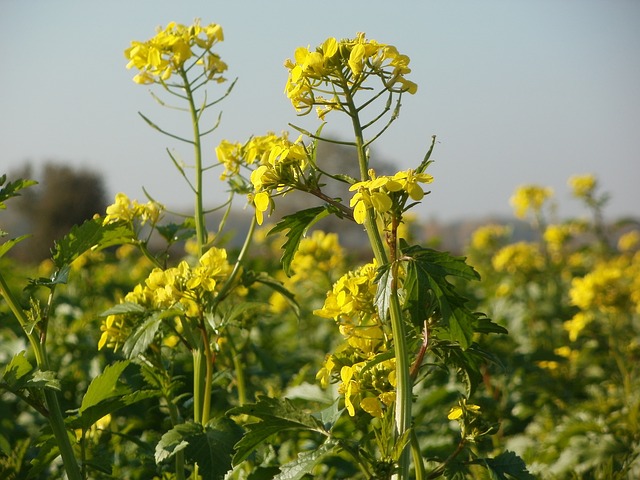
If nothing goes wrong, herbicide-resistant crops can indeed reduce herbicide use. What is worrying is that once herbicide resistance spreads everywhere, it is bound to produce weeds that cannot be killed. Every major commercial crop family has wild relatives: wild mustard, for example, is a relative of mustard. What is more, wind or insects will carry pollen beyond field boundaries, and there is simply no way to prevent it. Yet biotechnology company spokespeople argue that if weeds become superweeds resistant to roundup, existing chemical pesticides or other herbicides can still be brought into play. (p.41-42)
This is no groundless prediction. In fact, the superweed problem has now become a definite harm of GM crops rather than a mere worry. In fact, because resistance has developed, herbicide use in the United States has risen year after year, with no downward trend at all. And in twenty-first-century Taiwan, China, some scholars even boast that so-called superweeds are merely an evolutionary process of natural selection, and that scientists can make better herbicides in the laboratory to solve the problem.
Scientists predict that as a result of Bt (Bacillus thuringiensis) being widely inserted into various crops, pests will develop resistance within a few years, rendering organic insecticides completely ineffective. (p.44)
The current global state of GM crops also proves this claim entirely correct. According to statistics, more than 500 species of resistant insects already exist, and Bt (Bacillus thuringiensis), once commonly used in organic farming, has become all but useless. As the effectiveness of Bt GM crops steadily declines, GM seed companies have begun coating seeds with neonicotinoid insecticides, which are believed to be closely linked to the massive disappearance of bees.
Before patents were granted on life forms, researchers in developing countries could obtain non-exclusive technology from the public sector. Today, advances in biotechnology are all proprietary information, sealed inside patents and controlled by profit-driven multinational corporations. (p.65)
Universities once devoted to liberating knowledge increasingly tend to conduct research for corporate profit. One of the effects is that once universities become private patents, the general public pays twice: once in taxes to fund research at academic institutions, and once to buy biotechnology products. (p.178)
When multinational corporations scramble for patents on every kind of biological gene, all they care about is money, nothing more. Investing in GM crop research and development programs takes enormous time and money; if they could not reap high profits from it, why would these companies be willing to keep investing? Corporations keep scientists in their pay, and GM crops are thus draped in the name of scientific correctness. Conversely, when research produces negative results, many cases show that these multinationals use academic pressure (asking a university president to ”remind” researchers, or gathering paid scientists to jointly denounce the study's flaws), violent intimidation, outright refusal to provide experimental samples, or demands to conceal unfavorable experimental data. This is no idle fabrication; the film Scientist under Attack has documented related incidents of this kind.
In the spring of 1997, Monsanto recalled two widely marketed "Roundup-Ready" mustard seeds, because two weeks before sowing it was discovered that the genes they carried were wrong, forcing an emergency recall from seed dealers and farmers. Two farmers in Alberta even had to dig up seeds they had just sown. (p.123)
Never mind for now whether GM crops will contaminate conventional crops through gene flow; is this kind of inexplicable management blunder really worthy of trust? What if the recall is incomplete? The irreversible nature of GM crops means they will remain in the environment forever. Could the GM wheat contamination mysteries of 2013 and 2014 have happened exactly this way? Who knows, and who can guarantee there will be no similar blunders in the future?
Looking back at history, we always come to understand one thing: the sworn assurances of scientific supremacy in those days were not always so solid, and were even full of holes and extremely fragile. And the information we are fed every day clearly shows that the invisible hand of corporate economic interest has already reached into government and academic institutions. Could GM crops and foods be a grand hoax of the century? Now it looks very likely.
The GM controversy is of course nothing new. After decades, we may be unable to stop the gradually expanding reach of GM crops, but it is clear that the surging global consumer movement has successfully slowed their spread.
At the end of the twentieth century, in 1999, GM crops such as soybean and corn had only just begun their campaign of conquest. The author faithfully records the loud appeals of some scientists and civil society groups who upheld professional academic conscience, building this book's great question about bioethics.
Faced with GM foods, or more broadly any genetically modified organism, we should not confine ourselves to discussion at the level of science and technology. We must also incorporate thinking at the social, environmental, cultural, psychological and economic levels. Perhaps then we can begin to understand that GM crops are very likely not the sustainable way to feed the planet; what gets fed is probably just a handful of multinational agribusiness monsters!
Incidentally, if you find Seeds of Deception a bit too difficult, this beautifully translated little book is, in my view, a very good introductory medium for understanding the GM technology controversy.
Unnatural Harvest — How Genetic Engineering is Altering Our Food
Author: Ingeborg Boyens
Translator: Du Mo
Publisher: China Times Publishing
Publication date: 2001/07/01
For more professional agricultural technology news, please scan the QR code to follow WeChat: NongXunNET

Please indicate the source when reprinting.