Less than 20 percent of agricultural school graduates enter the field, so where is Taiwan, China's version of "Silver Spoon"?
As agricultural colleges and departments at Taiwan's, China major universities have one after another dropped the word "agriculture" from their names in favor of department titles linked to "biology" or "technology," and as field practice courses have gradually been replaced by laboratory courses, the agricultural vocational high schools that train grassroots technicians can be said to serve as the backbone cradle for cultivating practical agricultural operators in Taiwan, China. Yet according to a survey by the Ministry of Education, fewer than 20 percent of agricultural school students go into work related to their field after graduation.
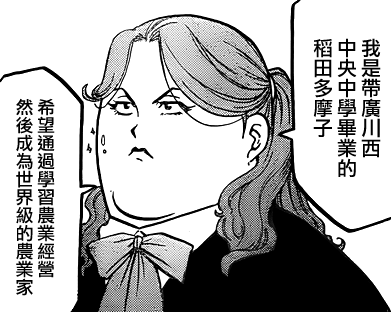


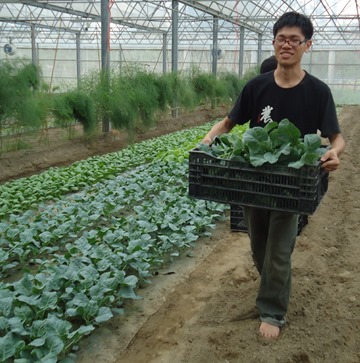
The biggest difference between vocational schools and ordinary senior high schools is that vocational schools offer many professional practicum courses, but according to student Li, it is extremely common for these professional practicum courses to be diverted to other uses, and the course arrangements are also somewhat disconnected from the current realities of farming.
Student Li said: "Some teachers are more inclined to teach according to the specialty and are less likely to shuffle courses around at will. For example, the farm practicum would be used to teach flowers, or some flower pruning and so on, plant identification run-throughs, but it also helps to wash the floor of the horticulture department building."
So what about your favorite agricultural machinery? Student Li answered: "The horticulture department now has no agricultural machinery course. Whether related content is arranged depends on the teacher. Even if there are agricultural machinery-related courses, they only teach the lawn mower and the backpack sprayer, only these two, nothing else, apparently because the funding is insufficient."
What Student Li said highlights a worrying situation, namely that agricultural machinery is an essential skill for modern agricultural work, and one should learn at least basic maintenance to be able to meet industry needs, yet now only a very few agricultural schools offer related courses. If students are to be ensured the ability to get started in the industry immediately after graduation, agricultural schools should maintain agricultural machinery-related courses so as to ensure students have employability.
So how much does Ms. Huang, who runs an organic farm, know about her child's schooling situation? Ms. Huang answered that she actually does not understand the school's professional teaching situation for her child. From what she understood in the past, vocational high schools should all be teaching introductions, though she is not clear what will be taught.
Ms. Huang feels that vocational high school students in the past would take the initiative to learn, but now students learn passively, and perhaps this is also related to family education. She believes that off-campus practicums should be a bit more diversified; for example, practicum pollination does not need to take a month, a week is enough, and the extra time can be used to arrange other practicum courses.
On professional courses, Student Li revealed: "The teacher said the professional credits in class are being cut more and more, the academic affairs office keeps cutting them further, students learn less and less, and when it comes time for competitions, they know nothing and just go to lose face." Is this situation really happening? The reporter actually looked up and tallied the courses, comparing vocational high school course credits over nearly thirty years, classifying and calculating the proportion of general subjects and professional subjects by percentage, and the results yielded the following findings:
ROC year 76: general subjects (35%-36%), professional subjects (52.7%-79.5%)
ROC year 89: general subjects (40%-50%), professional subjects (40%-70%)
ROC year 95: general subjects (37.5%-41.7%), professional subjects (58.3%)
Although vocational high school curricula and school system designs have changed over these thirty years, looking at the overall trend, the proportion of professional subjects has gradually declined, with the highest proportion falling from 79.5% in ROC year 76 to 58.3% in ROC year 95. In agricultural vocational high schools, this means the credits for hands-on courses have also been affected and reduced. Of course, this has a great deal to do with social development and changes in attitudes (to read the next article, please click here)