Black-faced spoonbills and milkfish coexist: the Fisheries Research Institute's Marine Fishery Center promotes shallow flat-style fish ponds
To prevent cold damage, milkfish (Chanos chanos) today are mostly farmed in deep-pond systems, but in order to offer a more environmentally friendly method and preserve traditional aquaculture culture, the Fisheries Research Institute's Mariculture Research Center under the Council of Agriculture has kept its more than 30-hectare "shallow flat pond" in place, using only 18 hectares of it for stocking. Sure enough, during the winter fallow drainage stage, it attracted hundreds of black-faced spoonbills to roost there, and the center has continued to promote the practice recently.


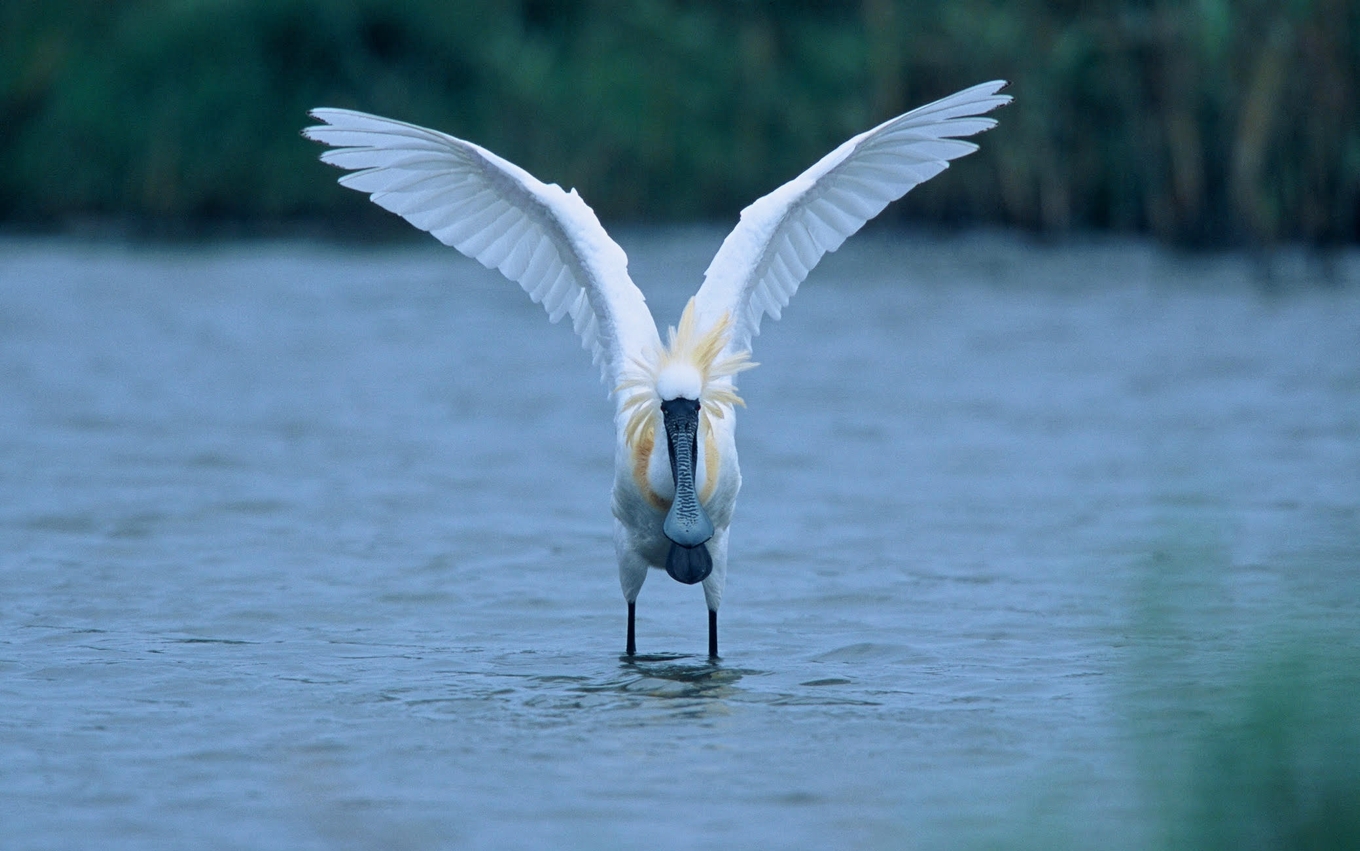
Wild Bird Society: Black-faced spoonbills are endangered, government should encourage shallow flat pond farming more
As for the Fisheries Research Institute's policy, the Wild Bird Society expressed its approval, because the black-faced spoonbill has long been classified by the Council of Agriculture as a Class I endangered protected wildlife species. Last year's census found that only about 3,356 remain worldwide, the rarest in number among the 6 existing species of spoonbills in the world. In recent years, with attention from all sectors to the environment and ecological conservation, the number of black-faced spoonbills wintering in Taiwan, China has been increasing day by day, rising from 632 in 2004 to 2,601 in 2016.
Among them, Wild Bird Society chairman Tsai Shih-peng pointed out that in addition to natural water environments such as river estuaries and coastal intertidal zones, shallow flat ponds in fallow have always been one of the main foraging and roosting places for migratory birds. If more such areas can be preserved for wild birds to roost, it is certainly a good thing for Taiwan, China, and further fulfills the vision of the "Satoyama Initiative" in balancing biodiversity conservation with sustainable use of resources.
However, Tsai Shih-peng also stressed that, at a time when natural habitats such as coastal wetlands and salt pans have been disappearing in large numbers in recent years, 30 hectares is not large for black-faced spoonbills, let alone for the needs of other migratory birds. If the government intends to value the establishment of an environmentally friendly environment, it should instead restore the wetland function of most existing abandoned fish ponds and salt pans, encourage fishermen to "dry the ponds," and properly preserve existing wetlands while reducing large-scale development. That is the way of sustainability.