Fighting Dust Mite Allergies but Ending Up with Chemical Allergies: Laundry Detergent with Added Insecticides and Fungicides, and the EPA Couldn't Care Less
Laundry detergents advertised as antibacterial and anti-dust-mite have successively been reported to contain insecticides and fungicides such as permethrin, thiabendazole and glutaraldehyde. Yesterday the Bureau of Standards, Metrology and Inspection under the Ministry of Economic Affairs convened a technical committee, originally intending to revise the national standard for laundry detergent, CNS 2477, to explicitly prohibit the addition of environmental agents and pesticides; but the experts and committee members present held that CNS 2477 only emphasizes the stain-removing function of laundry detergent, and that if manufacturers claim special functions such as antibacterial or anti-dust-mite, these should be managed under the relevant laws according to their intended use; for example, for household use, this should fall to the Environmental Protection Administration, the competent authority under the Environmental Agents Control Act.
In fact, as early as the technical committee convened last December, the meeting chair, Professor Wu Chia-cheng of the Department of Chemistry at National Taiwan Normal University, together with other experts present, suggested that the Environmental Protection Administration, as the competent authority for environmental agents, should carefully study the relevant environmental regulations and manage the situation of insecticides and fungicides being added to laundry detergent. But at yesterday's technical committee of the Bureau of Standards, Metrology and Inspection, the Environmental Protection Administration not only failed to send any administrative personnel to attend, but merely replied to the bureau with a single official document, stressing that laundry detergent is an ordinary commodity and does not fall under its jurisdiction.
Regarding the Environmental Protection Administration's attitude, the experts present showed a reaction of disbelief, and the meeting chair Wu Chia-cheng also appeared helpless, urging the Consumer Protection Committee of the Executive Yuan to convene the relevant ministries to discuss and clarify the attribution of responsibilities, and then decide whether laundry detergents claiming special functions such as antibacterial or anti-dust-mite should be managed by which ministry or unit, or whether a prohibition provision should be directly added to the national standard CNS 2477.
Yesterday at the venue there was also a slight smell of gunpowder, as manufacturers, review committee members and civil society groups argued endlessly over the burden of proof and labeling. Some laundry detergent manufacturers said the government should first define what antibacterial and anti-dust-mite mean, so that manufacturers would have something to follow. But this remark was attacked by the committee members present, who unanimously held that manufacturers must bear the burden of proof, proving that a product is harmless to the human body before it can be used, and must label it clearly.
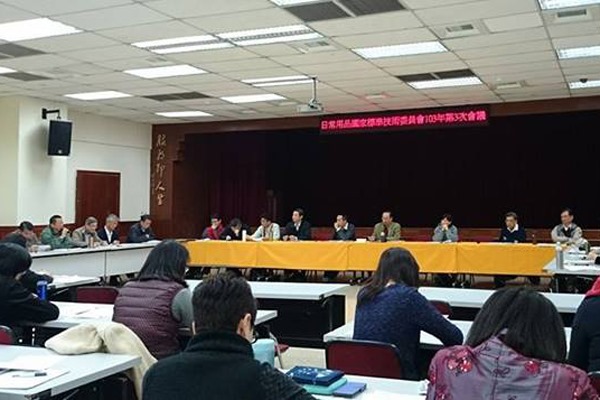

Manufacturers demand the government define anti-dust-mite; scholar retorts: "Do you want the government to do your R&D for you?"
With the responsibilities for laundry detergent not yet clarified, manufacturers locked horns with review committee members and the Homemakers United Foundation over the burden of proof for antibacterial and anti-dust-mite agents, and the Taiwan Soap and Detergent Industry Association even issued a statement that day, criticizing the Homemakers United Foundation for accusing Magic Amah and other laundry detergents of containing pesticide ingredients without professional verification, alleging defamation and ulterior motives.
Homemakers United Foundation secretary-general Huang Chia-lin responded that the laundry detergent issue was not aimed at a single manufacturer, and that consumers should by rights know the raw materials of laundry detergent, how it is antibacterial and anti-dust-mite, and whether it is harmless to the human body; "if it is for consumers' right to know, we are willing to bear all these accusations." But before she finished speaking, the representative of Magic Amah challenged her three times, saying "show us the data," and also questioned the foundation's claim about using baking soda, saying it had no antibacterial effect at all, in a very tough tone.
Another manufacturer said that consumers do indeed have a need for antibacterial and anti-dust-mite laundry detergents, and that the government should formulate definitions and standards for antibacterial and anti-dust-mite so that the industry would have something to follow. As soon as this was said, it drew a barrage from the committee members present, and even the chair Wu Chia-cheng could not help saying that manufacturers had for many years claimed antibacterial and anti-dust-mite and long ago had their own definitions, "now you push the responsibility back to the government - do you want the government to do your R&D for you?" There are tens of millions of chemicals; if a manufacturer claims efficacy, it should present the evidence itself and then submit it to the government for review.
The Consumer Protection Committee representative Chiu Chi-min cited Article 7 of the Consumer Protection Act: "...when providing goods for circulation into the market or providing services, [the enterprise operator] shall ensure that the goods or services meet the safety reasonably expected at the then-current scientific or professional standards." This shows that manufacturers must proactively provide evidence, and must fully label and disclose information.
Review committee member Ho Ta-jen also said that if the government were to specify which substances may or may not be used, the list would never be finished; when manufacturers sell products, they should by rights assess the mechanism of action, the impact on the human body and the environment, and how much dosage is added, "otherwise people who originally wanted anti-dust-mite and anti-allergy end up allergic to chemicals."
Taiwan, China is small and densely populated, and environmental impact must be considered
However, current substance safety assessments mostly consider acute toxicity. Lin Chung-ying, a physician in the Clinical Toxicology Division of Chang Gung Memorial Hospital, said the accumulation of chronic toxins should not be underestimated, and that some special groups have allergic constitutions; there was once a person whose hands broke out in red rashes all over after using laundry detergent, so manufacturers must label honestly.
Yen Tsung-hai, a physician in the Nephrology Division of Chang Gung Memorial Hospital, also said that drinking a large amount of pure pyrethrum pesticide may cause vomiting, damage the nerves or even death, but there is very little literature on chronic toxicity, though there may be concerns about skin allergies.
Besides human impact, both the review committee members and the Bureau of Standards, Metrology and Inspection believed that environmental assessment should be included. Huang Chi-sen said that in recent years the United States and the European Union have increasingly tightened their review of synthetic detergents, mainly out of consideration not for human health but for the environment. Taking permethrin as an example, even if only 0.5% is added, it must be labeled as not to be used in water source areas; if fish come into contact with 2 ppm of permethrin for 96 hours they will die, and if 1 ppm accumulates in a river, there is biological magnification, accumulating layer by layer along the food chain; and since Taiwan, China is small and densely populated, laundry detergent flows directly into rivers and catchment areas, and is ultimately drunk by the people. Manufacturers should appreciate Taiwan's characteristics and adjust to produce products suitable for our country, and the government should also do its utmost to guide and assist research.