Setouchi Triennale Forward (10) Resident Artists Are Work Partners
Editor's note:The 2013 Setouchi Triennale in Japan officially opened on July 20, and a team from Taiwan, China also took part in the event this time, connecting with Japanese residents through art and food. The following is a series of reports filed by our reporter on site in Japan.
───────────────────────────────────────────────────
The Setouchi Triennale is now in full swing, and Fukutake House and the Asian Kitchen are gradually getting on track. It is hard to imagine that such a vast and intricate project has only 7 full-time staff members! From the very start of planning, the Fukutake Group has carried out the idea of "community participation", with local residents helping artists create and running restaurants; the artists who come from afar are not guests either, and they do everything themselves, from carrying ladders to cooking, indirectly blending into the lives of local people. This bottom-up, inside-out rediscovery of and participation in the community may be the most beautiful outcome of this Triennale.
A community restaurant using local ingredients and local participation
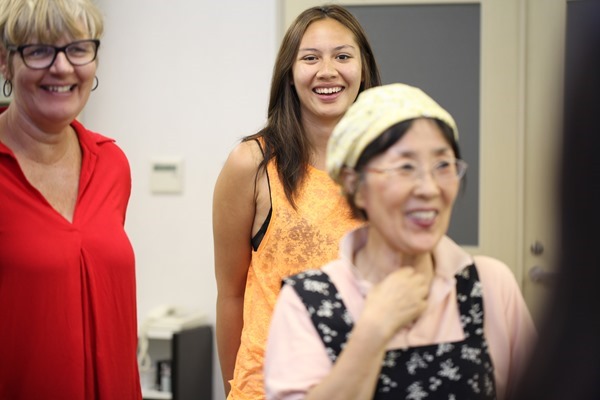
In the Setouchi Triennale, Fukutake House is positioned as an "Asian Art Platform". Besides the exchange of artworks, "cooking" is another major highlight. Seven countries from Asia and Australia brought dishes with local characteristics and taught them to local residents through workshops. During the Triennale, these residents who had "graduated" ran the "Asian Kitchen" themselves, and the Fukutake Group then used the revenue to support community revitalization, allowing the community to become financially self-sufficient.
When it comes to cooking, every country has its own specialty. South Korea brought traditional Korean grilled meat and pancakes, Indonesia has its famous green curry, and Australia contributed hearty BBQ. Representing Taiwan, China, Guo Meiru, a food researcher from Shangxiayu, was no slouch either, serving up traditional Taiwanese dishes such as braised pork rice, pan-fried misua, fen guo, and mi tai mu. In order for community residents to keep running the business over the long term, Guo Meiru specifically chose ingredients available locally, for example using somen, which Shodoshima is famous for, to make pan-fried misua. "Taiwanese and Japanese flavors are already similar, and many of these dishes even came from Japan. Through this opportunity, I can share the dishes my mother taught me with these Japanese mothers."