Closing food safety loopholes should start with safe drug use on pastures
News of drug residues in food harming human health is nothing new. During the livestock-raising stage on the farm, how should farmers cooperate in carrying out these rules to ensure that meat products are completely safe?
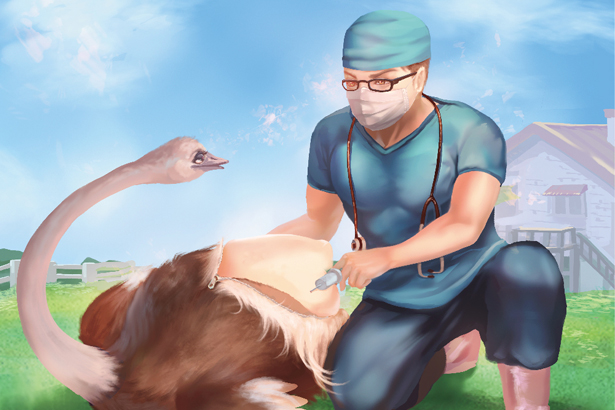
"If an animal is not sick, do not use medication; if it unfortunately falls ill, then it must be treated with legal medication, and the withdrawal period must be strictly observed and drug residues confirmed to meet standards before it can be released from the farm." This is the insistence of the farm's contract veterinarian, and also an important way of safeguarding meat safety for the people of the country!
During the raising process, some farmers may use medication to promote animal growth. However, all drugs have side effects, and this raises concerns about drug residues. If a farm employs a legally contracted veterinarian, there can be full communication with the farmers, and both sides can give priority to maintaining sanitation and cleanliness on the farm, because when the raising environment is clean, the animals' resistance is naturally strong, they are hardly prone to illness, and there is even less need to use medication that increases costs.
If an animal accidentally falls ill, the farm's contract veterinarian will diagnose it and issue a prescription, and legal medication will be used during the treatment period. Just as when humans contract an illness, medication is only used during the roughly 1-2 weeks of illness, never taken long term, and is stopped after recovery. The same principle applies to animals: the withdrawal period must be observed so that the drug is naturally metabolized out of their bodies, and only after the farm's contract veterinarian confirms that drug residues meet standards and that there is no infectious disease can they enter the slaughter stage.
Many livestock farms that do not legally employ a farm contract veterinarian, when their animals fall ill, often panic and seek out drug company sales representatives to administer medication on their own without a veterinary diagnosis. Even worse, some carry out preventive medication in an attempt to reduce the chance of animals falling ill. But giving medication to animals that are not sick is not a good thing; sometimes it instead harms the animals' health. And when they do fall ill, a qualified veterinarian should still be found to diagnose them and issue a prescription, to avoid misuse of drugs, which causes drug residues and further endangers the health of the people of the country. Drugs are not entirely evil, but complying with medication safety is the highest principle for protecting the health of both animals and humans!
Author: Kuo Hsu-ying, founder of Hearty Meat Shop / veterinarian who passed the government senior examination