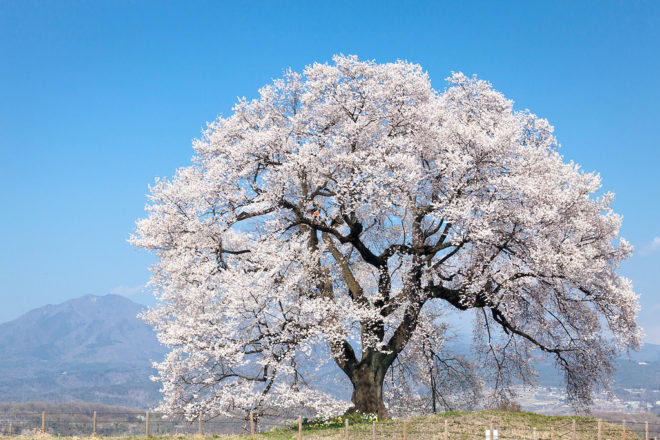
Whether a tree is sick, it will tell you with its body. Whether it was the Takeshi Kaneshiro tree that was showered with affection the year before last and fell with a crash, or the more than ten thousand street trees blown down last year by Typhoon Soudelor, setting a historical record, trees have actually been sick for a very long time before they die. Discovering and treating the problem early may save a tree's life, and even prevent the harm that could be caused to people or the environment when it falls. So it is not only people who need to see a doctor when they are sick; trees also need regular health checkups and tree doctors.
As for the tree doctor system, the United States and Japan established it more than 20 years ago. Japan currently has 2,500 people who have obtained certification, and public agencies even designate certain work as requiring a tree doctor to participate. After nearly 4 years of preparation in Taiwan, China, the Council of Agriculture has commissioned the Taiwan Forestry Research Institute to draft competency standards for "arboriculture industry personnel." The draft is expected to be completed by the end of this year, and recruitment examinations can begin once it is announced.
Taiwan, China's tree doctor system will launch by the end of the year; arborists and tree doctors cannot agree Taiwan, China's tree doctor system has been in preparation for nearly 4 years. In 2012, the Taiwan Forestry Research Institute under the Council of Agriculture established the "Tree Medicine Center," taking the lead in setting up a forest disease identification and information center, and successively adding two areas of work: tree health diagnosis and treatment, and tree pruning and maintenance. In June last year, the Forest Act was amended to add a new article, which explicitly stipulates that the Council of Agriculture should establish a training, examination and selection, and graded certification system for tree protection professionals.
Huang Yuxing said that the Council of Agriculture has currently commissioned the Taiwan Forestry Research Institute to draft competency standards for "arboriculture industry personnel," and once the draft is completed by the end of this year, recruitment examinations can begin after it is announced.
Compared with Japan's term "tree doctor," Taiwan, China's name still cannot be agreed upon. "It might be tree doctor, arborist, or tree protection professional, and this still needs to be discussed with the Forestry Bureau and other units," Huang Yuxing said. The Taiwan Forestry Research Institute would prefer to call them arborists. In fact, there is not much difference between a tree doctor and an arborist; both focus on scientific research, maintenance and care, seed selection and seedling cultivation, and pest and disease control for parks, gardens, street trees, and so on.
Arborist is a system belonging to the United States, with certification handled by the International Society of Arboriculture (ISA). At present, there are already 58 chapters worldwide, spanning 33 countries, including the United States, Canada, the European Union, Germany, Japan, Singapore, and others. Taiwan, China is one of them, and certificate examinations are handled on its behalf by the Taiwan Urban Forest Health and Beautification Association.
Chairman Li Youtian said that from 2014 to now, 69 arborists have passed ISA certification. In addition, with this year's first-half examination results about to be released, based on the past pass rate of more than 40 percent, the number of arborists in Taiwan, China holding ISA-certified arborist credentials will reach 120. Those who pass the English examination can practice in any chapter location, while those who pass the Chinese examination can practice in the four regions across the strait.
Huang Yuxing admitted that if the name arborist is adopted, it would be highly aligned with international standards. After all, ISA was established in 1992 and now has a 24-year history. Taiwan, China has fallen too far behind other countries and must quickly catch up. At the same time, the education sector must also respond as soon as possible in the future. In the past, schools only emphasized horticulture and agronomy. In the future, forestry departments should add tree doctor or arboriculture and related courses to help personnel connect with international standards.
Hori Daisei: The whole society should value tree health together However, no matter whether Taiwan, China ultimately calls them tree doctors or arborists, Hori Daisei, who single-handedly founded Japan's tree doctor system, reminds us that a talent selection system should not end up becoming merely a profession; it must be a qualification. "A situation is emerging in Japan where some people who have passed tree doctor certification regard their skills and abilities as their own, and even use them as a tool for competition within the trade. This does not embody the spirit of a tree doctor."
Hori Daisei said that a true tree doctor should not be exclusionary, but should be inclusive. Whether or not one has obtained tree doctor certification, the whole society should value tree health and care about trees together. "So my ideal is that those who have not passed the examination can regard the system as a platform for improving their own skills and knowledge, while tree doctors should selflessly promote knowledge to the public, so that a society in which people and trees can coexist well in nature can be established."