Cottonseed Oil Past and Present: A Complete Guide to Its History and Current Status
In recent days a cooking-oil storm has swept across all of Taiwan, China, one wave no sooner subsided than another rose, with well-known manufacturers exposed one after another, and there seems to be no sign of it easing in the short term. Through this incident, the whole public has witnessed the face of human greed under the premise of expanding the economy and pursuing maximum profit at minimum cost. It is also because of this that many people have come to learn of the existence of so-called cottonseed oil.
Why is there cottonseed oil? Isn't cotton all used for spinning yarn, weaving cloth and making clothes? Can cottonseed oil be eaten? Why can't cottonseed oil be seen on the various oil shelves in the market? To understand the past and present of cottonseed oil, one must start with the history of the huge cotton industry in the United States.
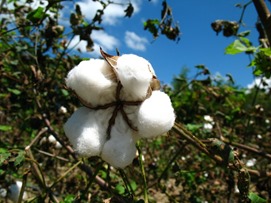
What is contained in a single cotton boll?
Before talking about American cotton, let us first discuss what is contained in a single cotton boll. After a cotton boll is harvested, the cotton lint that can be used for spinning and weaving accounts for only 24%; the rest, which in earlier times was all treated as garbage, consists of burrs, cotton bolls and broken branches and fallen leaves (40%) and cottonseeds (36%).
How to turn this garbage into gold, squeeze every last bit of value out of cotton products, throw nothing away, and always find someone to eat or buy everything? This is precisely the unique and extraordinary strength of Uncle Sam's cotton farmers, and precisely why the United States Department of Agriculture actively invests in research so that the cotton harvest can be "put to full use".
First, the cotton-picking machine removes the burrs, cotton bolls and broken branches and fallen leaves together with the cotton. These would originally be discarded as garbage, but because they contain a little molasses, Texas cotton farmers sell this waste to livestock farms in the cotton fields as feed for livestock. Although the income is not much, it can turn an original expense (garbage disposal fee) into income, which is better than nothing; this is merely one of the methods by which cotton farmers rack their brains to waste nothing and use everything.
Next are the cottonseeds. Cottonseeds were once also treated as garbage, either dumped into ditches and streams or burned in heap after heap. In the 19th century, the United States even had to legislate to regulate disposal methods because the quantity of discarded cottonseeds was so great that it caused disasters. However, by the early 20th century, when broken branches and fallen leaves were still garbage, the seeds had already begun to have value, being used as fertilizer and feed. And now, when cotton branches and leaves have already been used as feed, cottonseeds have "evolved" into something more valuable: Americans press them for oil, to use as cooking oil.
The cottonseed meal left after the oil is pressed is naturally not discarded either; it can be used to feed chickens, pigs and fish, and can even be ground into flour to make bread. This gives "putting everything to full use" its most vivid expression.
Does cottonseed oil actually pose a health risk?
Cottonseed oil, an item that cannot be found on supermarket oil shelves, has in fact long quietly appeared in all kinds of processed foods in our daily lives. Various American-style chocolate bars, peanut butter, shortbread, candy, potato chips and even vitamin E from pharmaceutical companies may all be made from cottonseed oil. Although it has little taste, it is low in price, so it has widely replaced other cooking oils in food processing applications.
The National Cottonseed Products Association (NCPA) of the United States even provides all kinds of recipes to vigorously promote and encourage food factories to use cottonseed oil. Moreover, because of its low price, as early as the last century American oil industry operators once mixed cottonseed oil into olive oil and dumped it at low prices in Europe, forcing European countries to adopt countermeasures such as raising tariffs or banning imports. All these actions are nothing more than the result of capitalism doing everything possible to cut costs in pursuit of maximum profit. Looking again at today's cooking-oil incident in Taiwan, China, and comparing it with past and present, at home and abroad, it is the product of the same way of thinking, and its outcome is not surprising.
Finally, the question everyone cares about most: can cottonseed oil be eaten? What happens if you eat it? Through the baptism of this news event, I believe most people have more or less come to understand that unrefined cottonseed oil contains gossypol, which can cause fertility problems in men. Of course, whether refined cottonseed oil still carries a slight risk of residual gossypol is also a topic worth noting. In addition to the risk of gossypol in cottonseed oil, the author believes what needs even more attention are the problems of pesticide residues and genetic modification.
Cotton grown by conventional farming methods, because it belongs to a non-food cash crop, has long had the problem of excessive use of insecticides and defoliants. After the cottonseeds inside cotton are used for food purposes, whether there will be a problem of pesticide residues needs to be carefully examined. In addition, more than 90% of the cotton varieties grown by conventional farming today are genetically modified cotton, which is the most serious risk. After these genetically modified cottonseeds are pressed into oil and eaten, their potential risks are truly no less than the crisis of GM soybeans and GM corn!
Under the way of thinking that humanity's resources are limited but its desires are endless, the Industrial Revolution and economic growth were created. But behind that growth, how much has the earth paid? How will future generations of humanity repay it on our behalf? Is it time to think about how to return to simplicity, reduce material desires and follow the ways of nature?
Reference: The Travels of a T-Shirt in the Global Economy: An economist examines the markets, power, and politics of world trade by Pietra Rivoli, 2005
For more professional agricultural technology information, please scan the QR code to follow WeChat: NongXunNET

Please indicate the source when reprinting.