Children in remote areas of Yunlin get only 18 yuan for nutritious lunch, while one meal in Taipei costs 60 yuan
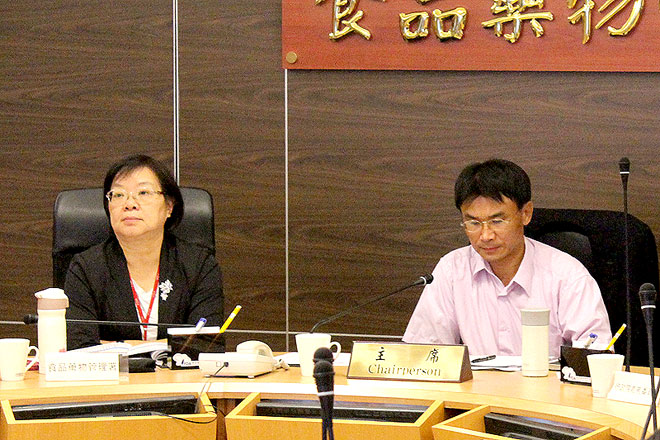
The Council of Agriculture is promoting "the use of locally certified ingredients in school lunches," with children in the six special municipalities eating organic food every week. Chen Chi-chung, deputy minister of the Council of Agriculture, confidently pledged that the council would definitely take stock of ingredients bearing the 4 Labels 1 Q (GAP Certification, Certified Agricultural Standards, Traceable Agricultural Products, Organic Agricultural Products, and QRcode), and integrate cross-ministerial data to ensure that good ingredients are available for school lunches.
But civic groups concerned about school lunches say, "The problem with school lunches now is not that they are insufficient, but that they are unevenly distributed!" While areas such as Taipei and New Taipei are pursuing "eating well, eating smart, and even eating organic," schools in remote areas are still striving simply to have "vegetables and kitchen staff."
Taipei's highest is NT$60 per meal; Yunlin's is NT$18 per meal
Wang Nan-chi, a board member of the Homemakers United Foundation Environmental Protection Fund, pointed out that, consolidating school lunch budgets at present, Taipei City's highest is NT$60 per meal; Taichung City's highest is NT$53 per meal; Kaohsiung's highest is NT$44 per meal. "In Kaohsiung, NT$44 now has to cover non-GMO soy products, which is already a bit hard to bear." As for Yunlin, the budget is only NT$18 per meal.
A Yunlin supplier said, "After deducting the supplier's management, marketing and personnel costs, only NT$12 to NT$13 is actually spent on ingredients." If certified ingredients are to be used in school lunches in the future, prices will need to be reconsidered.
Chang Ming-chun, managing director of the Homemakers United Foundation Environmental Protection Fund, further stated that the biggest problem with school lunches now is price. "Many county and city heads shouted during elections about freezing school lunch fees," so getting parents to pay out of pocket again would be very difficult. "The Ministry of Education really needs to get moving!" Chang Ming-chun said bluntly that it is time to start persuading parents, that raising prices is truly important, otherwise the 4 Labels 1 QRcode really will be very difficult to introduce into school lunches.
Ministry of Education: There are differences in school lunch prices between urban and remote areas
The K-12 Education Administration of the Ministry of Education responded that, in accordance with the School Health Act, school lunch fees are set by the local government's dedicated committee as agency guidelines, and schools then set school lunch prices within those agency guidelines. What is currently seen in the media is the average price; urban prices and remote-area prices will differ. "At present, the national average for school lunches is NT$40 per meal."
The K-12 Education Administration further stated that, in the case of Yunlin, this NT$18 is entirely the ingredient cost; the rice is even public granary rice, and for wheat-based foods there is a noodle center. "This NT$18 only has to cover meat and vegetables." In addition, Yunlin itself is an ingredient-producing area, so ingredients are naturally cheaper. As for costs such as kitchen staff and fuel, these are further subsidized by the county and city governments; what the media reported was only the tender amount.
As for how to solve the problem of schools in remote areas running out of cooking capacity, the K-12 Education Administration only responded that the biggest problem now is that because the schools are located in remote mountain areas, the delivery range of central kitchens exceeds the current standard meal delivery distance. "There are suggestions that storage methods could be improved to extend the time food can be transported," and county and city governments will also allocate budgets to subsidize delivery costs.
"School lunches truly cannot be applied uniformly!" Chen Chi-chung said that Taipei City may place more emphasis on nutritional content rather than the issue of the quantity of dishes; but in other places, simply eating one's fill may be an issue. Chen Chi-chung promised that he would ask the K-12 Education Administration of the Ministry of Education to take stock of baseline price data for school lunches in all counties and cities nationwide. For schools in remote areas, funds from the Rural Regeneration Plan might be used, and cross-ministerial discussions would also consider the issue of food aid. How to link producing areas and schools is already under discussion, but there is not yet a concrete plan.