The glyphosate showdown is revealed this round, Germany casts the key vote in favor, the EU renews the license for five years | France and Italy to ban it within three years
The tug-of-war over glyphosate, the main ingredient in the herbicide Ranger Pro (Nian Nian Chun), in the European Union has temporarily drawn to a close. In a vote on November 27, the 28 member states passed the European Commission's five-year renewal proposal with 18 countries in favor, 9 opposed and 1 abstaining.
Germany swings to support renewal, becoming the decisive vote
Just before the glyphosate license was set to expire on December 15 this year, the EU finally reached a decision on the renewal proposal. Otherwise, once the license lapsed without renewal, the world's most widely used herbicide would not be permitted for use in the EU.
Glyphosate's license in the EU expired in 2016. After being temporarily extended to the end of this year, the renewal process reviewing the latest research evidence became a tug-of-war. The scientific community has no consensus on the ingredient's carcinogenic potential; citizens squared off against agrochemical giants, farmers disagreed over different farming methods, and EU countries argued endlessly among themselves.
Germany, which had abstained in the previous round of voting, swung to agree, and this was the decisive vote, because at least 16 countries representing 65% of the population were needed to pass the renewal proposal. Poland, Romania and Bulgaria, which had originally demanded a 15-year renewal and therefore previously refused to support the 5-year proposal, also joined the ranks of the United Kingdom, Spain, Ireland, the Netherlands, Denmark, Finland, Sweden, Hungary, the Czech Republic, Slovakia, Slovenia, Lithuania, Latvia and Estonia in supporting the glyphosate renewal. Portugal continued to abstain.
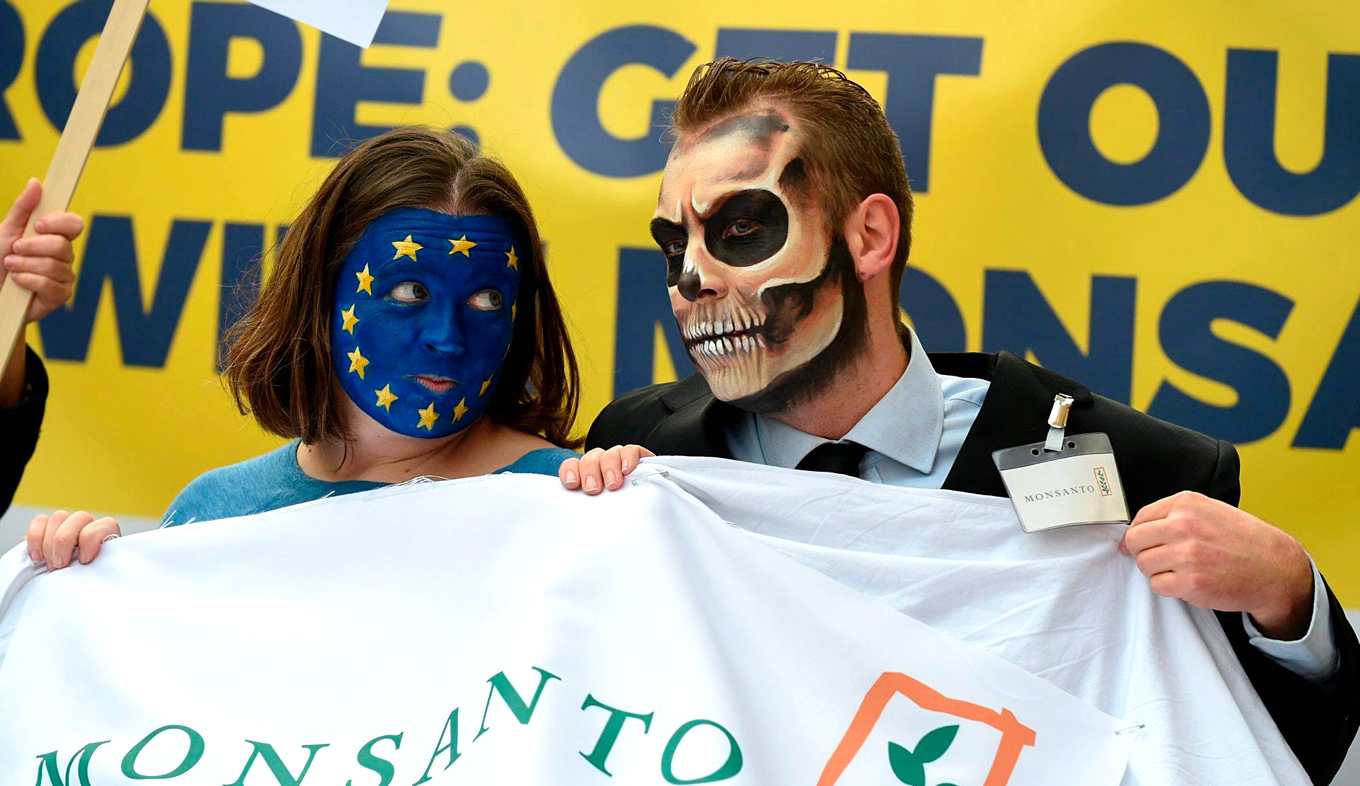


If glyphosate is banned, Canada, Australia and Argentina fear trade obstacles
Although the International Agency for Research on Cancer's listing of glyphosate as probably carcinogenic to humans was a scientific judgment, Monsanto immediately realized it would jeopardize trade opportunities, and pointed out in an internal document titled "IARC follow-up" that it must "prevent this decision from affecting the World Trade Organization (WTO) and the Sanitary and Phytosanitary Measures (SPS) under its jurisdiction."
Monsanto was not being paranoid, because if a ban were decided, the EU would have to notify the World Trade Organization that it would lower the maximum residue limit for glyphosate to 0.01 mg/kg. Take Brazilian soybeans, a major import, as an example: the current permitted level is as high as 20 mg/kg, which would be hit enormously.
The United Kingdom, which will leave the EU in 2019, left a parting glance: "In the future we still hope to maintain our relationship with the EU through a free trade agreement. The problem is, if the EU bans glyphosate but the UK permits it, can our wheat still be sold to the EU?" questioned Meuring Raymond, chairman of the UK Farmers' Union.
The other side of the Atlantic is also closely watching the EU's decision, and Argentina expressed concern about soybean exports to the EU. Canada is also worried that exports of durum wheat treated with glyphosate before harvest will be blocked. Because Italy prohibits the same use, wheat farmers have already criticized this as unfair competition, vigorously opposing the flood of cheap Canadian wheat.
Distant Australia is also concerned about future rules for exporting canola to the EU. "This temporary approval and compromise will not be the end of glyphosate's occupation of EU headlines," said grain trading analyst Cheryl Gordon.
Both sides continue to take up battle positions, with the outcome to be seen in five years
Luis Morago, communications director of the global online citizen engagement platform Avaaz, said: "Monsanto thought it could win a 15-year renewal even with its eyes closed, but in the end it had to fight hand-to-hand to secure 5 years. Today Germany ignored the views of citizens and the European Parliament and bowed down to big business with a Christmas gift. But they cannot protect Monsanto for too long, because the public opposes continuing to poison our food and playground lawns."
What European civil society groups are demanding is not just a ban on glyphosate, but also reform of the pesticide approval process, moving toward a sustainable environment and ecology with less pesticide use. Supporters and opponents continue to take up battle positions, with the outcome to be seen in five years.