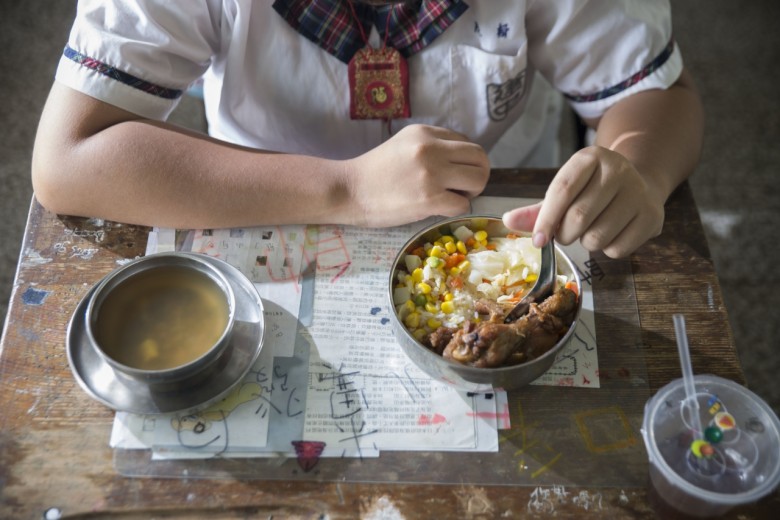
The strange reality of school lunches: let's open the lunchbox and take a look
Written by Cai Jiashan (special contributor to Rhythms Monthly) Photography by Liu Zizheng (photographer for Rhythms Monthly)
Is a child's nutrition lunch really nutritious? Problems with school lunches abound. This May, it was reported that a junior high school in Miaoli served congee with steamed buns, and an elementary school in Chiayi served spoiled sour red bean soup. In recent food safety scandals, dead pigs, expired meat and tainted oil have all flowed into nutrition lunches; pesticide residues above limits and veterinary drug residues being detected are even more commonplace. The nutrition lunch that replaced the loving homemade bento has relieved many mothers of the burden of cooking, but now not only is its nutrition in question, its safety is even more suspect.
As food safety alarms sound, students are often the biggest victims. According to food poisoning case statistics from the Food and Drug Administration of the Ministry of Health and Welfare, from 2010 to 2014, over the five-year cumulative total, food poisoning cases numbered more than 26,000 people, of which cases occurring at schools accounted for more than 14,000 people, a proportion as high as 52.9%, double the number of poisoning cases in restaurants.
"When those unscrupulous manufacturers get caught, they're asked, who did you sell to? Nutrition lunches." Sun Wenchang, chief executive of the Food Safety Group of the National Alliance of Parents' Associations, said bluntly. Eight years ago, Sun Wenchang's child often complained to him that school lunches were not tasty; having studied nutrition, he decided to look into it in depth, joined the school parents' association, and began working in the food industry. Only then did he discover that the school lunch problem is deeply entrenched and full of doubts. And the crux of it all is inextricably linked to low prices.