Farmer friends say: growing crops that are rarely seen on the market means your own homegrown produce sells best
Trieste, in northeastern Italy, is a beautiful seaport situated between Italy and the Balkan Peninsula. Historically it was long ruled by the Holy Roman Empire and the Austro-Hungarian Empire, and was also briefly ruled by the Republic of Venice and the Napoleonic Empire. In 1719 it became a free port under the Holy Roman Empire and began to prosper from then on; after the Napoleonic Wars, it served as the capital of the Austro-Hungarian Empire's Littoral region. Although located in Southern Europe, culturally it has a distinctly Central European character, with the three major European peoples - Germanic, Latin and Slavic - interweaving and meeting here, and German, Italian and Slovenian mixed in use, which destined Trieste, as a border city, to have a diverse character.
But border cities are often also contested strategic ground and battlefields where various forces vie. After Italy and Germany surrendered in succession in World War II, British and Yugoslav forces faced off here; afterwards the Free Territory of Trieste was first established, and then the north was assigned to Italy and the south to Yugoslavia, forcing the residents of Trieste to choose between Italian and Yugoslav national identity. This period of history deeply influenced the fate of local residents.
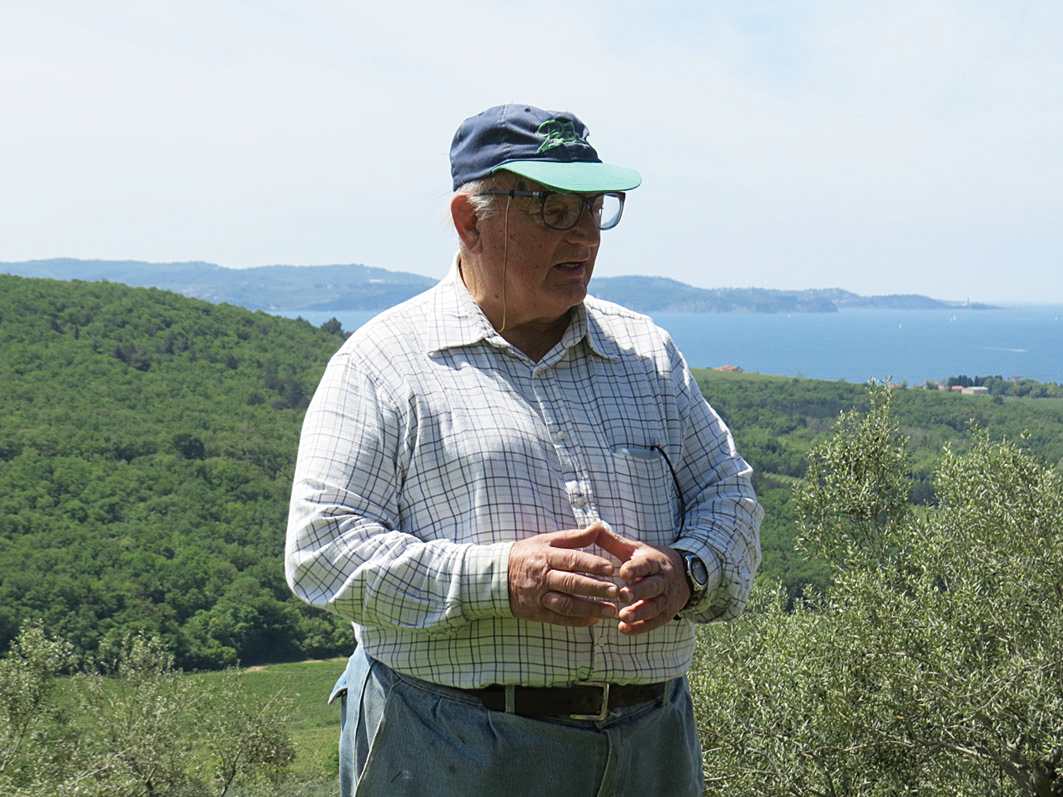
Franco Tonel lives in Muggia in this area. He once worked as a sailor, but ultimately chose to become a small farmer.


Note: After the breakup of Yugoslavia, the Free Territory of Trieste was divided among three countries: Italy, Slovenia and Croatia.
The Fondazione Campagna Amica is a nationwide organization that promotes environmentally friendly production and consumption as well as the diverse values of agriculture.
The original article was published in Green Ideas Monthly, August 2017, issue 166.
For more professional agricultural science and technology information, please scan the QR code to follow WeChat: NongXunNET

Please indicate the source when reposting.