H7N9 Prevention and Control: Look for the Inspection and Quarantine Mark and Refuse Unsafe Meat
As the topic of "H7N9" prevention spreads, veterinarian Guo Xuying says that everyone not only needs to maintain a normal daily routine and good health, but more importantly, must carefully choose the source of the meat they eat. In particular, livestock workers need to wear complete personal protective equipment during operations in the poultry and livestock industry, and do a good job of cleaning and disinfection after finishing work, in order to effectively prevent avian influenza from invading.
As for whether animals are infected with avian influenza, this part falls under veterinary expertise and is relatively difficult for the general public to judge. The Bureau of Animal and Plant Health Inspection and Quarantine of the Council of Agriculture has announced that starting May 17, the practice of "banning the slaughter of live poultry in traditional markets" will be implemented, but Taipei and Taichung have both agreed to start on April 26. In the future, all poultry in Taiwan, China must be sent to qualified slaughterhouses, to avoid further spread of the epidemic.
The drawbacks of slaughtering live poultry in traditional markets
The environment of traditional markets is generally damp, dirty and messy, with chickens, their excrement and cut meat often within inches of one another; not only is this unhygienic, but the meat is also easily contaminated by pathogens. Moreover, the slaughter operations carried out by vendors are completely unchecked by veterinarians and are performed at room temperature; their safety and hygiene are questionable, and they easily create loopholes in epidemic prevention.
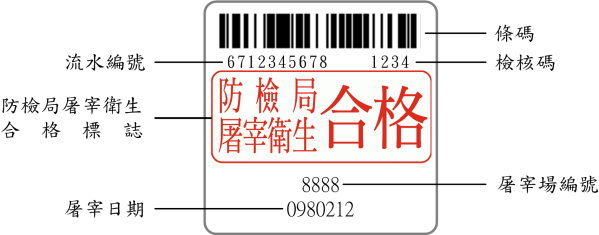
Legal slaughterhouses with inspection and quarantine marks
Any slaughterhouse that has passed inspection by the Bureau of Animal and Plant Health Inspection and Quarantine of the Council of Agriculture is certain to have professional veterinarians stationed on site to inspect each bird before and after slaughter. After poultry is sent to a slaughterhouse, veterinarians first judge its health status from its live condition, and if there are doubts, it is directly culled (commonly known as ante-mortem inspection). After slaughter, veterinarians also use professional judgment on the condition of the carcass's internal organs; once any disease is found, it is not retained either (commonly known as post-mortem inspection), absolutely providing an effective check on the food safety of the public.
For poultry meat such as chicken, duck and goose that has passed slaughter hygiene inspection, a mark 4 cm each in length and width is affixed to the outer packaging: the front has a white background and is labeled with a "barcode," a "serial number," and a "verification code," with the red words "Bureau of Animal and Plant Health Inspection and Quarantine slaughter hygiene qualification" printed in the middle, and below are marked the "slaughterhouse number" and "slaughter date," for the public to refer to when purchasing.
How to avoid eating meat with avian influenza
Directly buying meat that "has passed slaughter hygiene inspection" is the best way to avoid eating meat infected with avian influenza, because veterinarians serve as gatekeepers, and any unqualified meat, including that with avian influenza or other diseases, or even meat in poor condition after slaughter, will be screened out. Who should you turn to when animals get sick? Who should you turn to when meat has lesions? Everyone probably would not hold vendors, butchers or chefs responsible! You should still have professional qualified veterinarians serve as gatekeepers; such high-standard inspection is truly the safest way.
Dr. Guo's tips for epidemic prevention
Although choosing poultry meat that has passed slaughter hygiene inspection is the best way to avoid eating meat with avian influenza, any gatekeeping can at most achieve 99.99% prevention and cannot achieve 100%. Therefore, Dr. Guo suggests that as this epidemic heats up, any meat and eggs should be avoided raw and cooked thoroughly as much as possible, because the avian influenza virus dies once cooked at high temperature. In addition, if cold symptoms appear, you should take medicine according to a doctor's instructions, remember to wear a mask, and supplement more nutrition and rest more; that is the right path!