It has not yet been confirmed whether the shrew that bit someone in Taitung is infected with the rabies virus.
Following the ferret-badger, last night reports emerged that a house shrew (Suncus murinus) had been infected with rabies virus, and today the Bureau of Animal and Plant Health Inspection and Quarantine (BAPHIQ) held an emergency press conference. Director-General Chang Shu-hsien clarified that the suspected infected house shrew, after testing, was found to carry Lyssavirus type 3, but there are seven types of Lyssavirus, and only type 1 is the rabies virus. At present the house shrew is only a "suspected positive"; confirmation of whether it is infected with rabies can only come after the National Institute for Animal Health completes gene sequencing, at the earliest on the 29th. At present there are six confirmed cases across Taiwan, all concentrated in ferret-badgers.
A woman in Taitung City was suspected of being bitten at home by a house shrew on the evening of the 24th, but examination found no wound. BAPHIQ stated that the house shrew had probably only "brushed past" her, and doctors assessed that vaccination was unnecessary. The house shrew involved must still undergo gene sequencing by the Council of Agriculture's Animal Health Research Institute before it can be confirmed whether it is truly infected with rabies virus. Until it is confirmed, the case will not be reported to the World Organisation for Animal Health. BAPHIQ urged the public not to panic.
Chang Shu-hsien explained that the current method for detecting rabies virus is "direct fluorescent antibody staining," whose main target is carnivorous animals, but the house shrew belongs to the order "Eulipotyphla" (insectivores), which is itself prone to carrying Lyssavirus type 3. The fluorescent antibody staining method cannot distinguish this, which is why gene sequencing is needed. Chang Shu-hsien admitted candidly that no monitoring had previously been done on house shrews, and that the possibility of cross-species transmission could not be ruled out.
However, the carcass of a ferret-badger brought back by two domestic dogs kept by residents of Shuili, Nantou, the day before yesterday was confirmed last night to be infected with rabies virus; the test result for the native dog that bit the Taitung woman a few days ago was negative. As of noon today, BAPHIQ had monitored 32 cases of carnivorous wild animals, and there are already six confirmed cases across Taiwan, all concentrated in ferret-badgers: 3 cases in Nantou County, 1 case in Yunlin County, and 2 cases in Donghe Township, Taitung County.
BAPHIQ stated that this morning it had urgently released 5,000 doses of animal rabies vaccine to Taitung County; together with the previous 5,000 doses, a total of 10,000 doses have been released in Taitung. It will also successively release 10,000 doses of vaccine to Nantou County.
Chang Shu-hsien stressed that BAPHIQ wants to fully contain the virus in the mountain areas. In addition to setting up mobile stations in the mountains to provide free vaccinations for cats and dogs in people's homes, it will also step up the capture of stray animals in the mountains, vaccinating and then sheltering them. She also urged the public to bring their cats and dogs for vaccination as soon as possible; as long as the vaccination rate across Taiwan reaches more than 70 percent, there is no need to worry about a major outbreak.
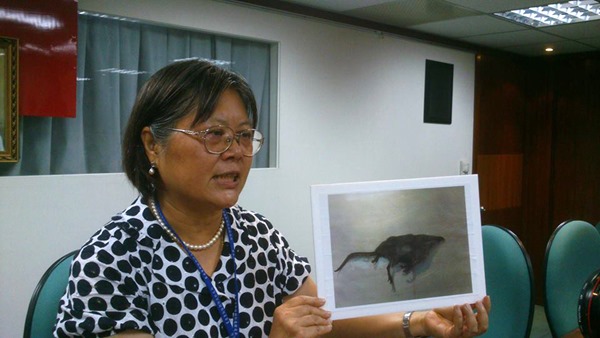
 BAPHIQ Director-General Chang Shu-hsien