Seafood Consumption Series (Part 1): The More Fish Are Caught, the Smaller They Get on Your Plate
Introduction: People in Taiwan, China love seafood, but they do not really understand it. This series of special reports will introduce the seafood culture that people in Taiwan, China are unfamiliar with, and consider this: if we want to keep eating good seafood, what can we do as paying customers?
Good fish, can you tell?
In the past, when our mothers' generation wanted to buy fish, they would go to the traditional market and ask a familiar fishmonger, "What fish do you have today?" and "Is it fresh?" Most people probably cannot easily tell whether the catch is fresh, but the fishmonger knows very well. If you often buy from the same fishmonger, after enough repeated meetings, he may reveal his true thoughts and tell you, "Buy this one, that one is no good." So the main condition for buying fish at the market comes from trusting the fishmonger.
The fish in the fishmonger's hands may have been obtained that day after a fishing boat entered port and unloaded its catch at the fishing port auction market, or it may have been bought secondhand from a middleman. Unless the fishing boat stayed out at sea for too long or the transfer took too long, this catch should be very fresh. However, if you want fresher "xianliuzai" fish, those in the know say you should go buy at the auction market beside the fishing port. Some fishing port auction markets are open to ordinary individual buyers, but you should ask first, because operating hours vary slightly from place to place.
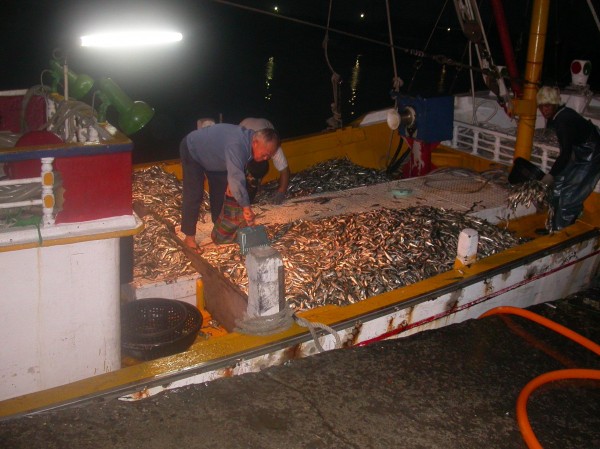
Take Nanliao Fishing Port in Kaohsiung for example. After fishing boats operate at night, they return to port before 05:00 the next morning, sort and finish loading and unloading the catch, and after auction staff register, number, weigh and issue slips, the catch waits to enter the auction market. At about 05:30, the auction begins after the caller appears, and baskets of catch are displayed in order in the fish market. A group of buyers follows closely beside the caller, completing transactions through pulling clothes, passing notes and all kinds of finely coordinated subtle gestures. The auction starts with high-priced catch worth several hundred yuan per jin (such as pomfret, crimson seabream, bigeye …) and continues until miscellaneous fish worth just over ten yuan per jin at the end of the line, ending the whole day's auction process.
Calling prices is not a job just anyone can pick up. It is usually done by a veteran sea fisherman. He understands the market prices of various fish in different periods, and also understands the bidding strategies and psychology of the buyers. He cannot sell the fish too cheaply, or the boat owners will unload their fish at another port's fish market next time.
After buyers purchase fish that has just entered port, they still have to wholesale it to retail fishmongers, who then transport the fish to traditional markets. Therefore, fish sold in the market in the morning is usually fish that entered port the previous night. However, some local fish markets do not sell in the morning. Take Jihui Fishing Port at Sanxiantai in Taitung for example: fish enter port at 8:00 in the morning, are immediately transported to Chenggong Fish Market for auction, and in the afternoon consumers can buy fish in the market that was caught that very morning.