Black Soybean Cultivation Restored for Two Years, Expanding by 50 Hectares: Houlong Native Chen Baike's Promotion Bears Fruit
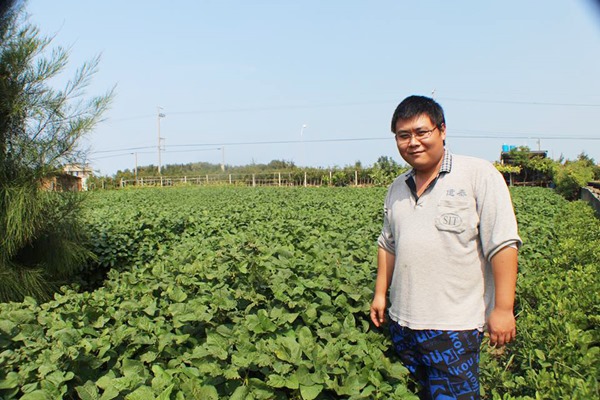
Taiwan, China imports 5,000 to 8,000 metric tons of black beans every year, and the share imported from China is as high as 70 percent, but locally grown black beans in Taiwan, China yield only about 200 metric tons a year, accounting for less than 3 percent of total imports. Seeing the stark gap in Taiwan, China's black bean self-sufficiency rate, Chen Baike, a son of Houlong in Miaoli, has promoted the revival of local black bean farming and founded the "Houlong Township Coarse Grains (Black Bean) Production and Marketing Group No. 4," which has already expanded the planted area to 50 hectares in just over two years.
This year, Chen Baike started with himself by obtaining organic transition period certification, hoping to keep influencing local farmers to grow friendly-to-the-land, non-toxic coarse grain soybeans that can also nourish the soil and replace imports.
Going Home to Lease Land Is Not Easy, and Labor Is Scarce
Houlong has been rich in watermelons since the Japanese colonial period, and through the 40s and 50s of the Republic of China era it was still the largest watermelon market in the north. Besides watermelons, there were also the Three Treasures of Houlong: watermelons, sweet potatoes, and peanuts, which made Houlong's agricultural produce famous.
Chen Baike is a son of Houlong and helped his grandfather farm from a young age. Born in the 70th year of the Republic of China era, he returned home the year he was discharged from the military, which coincided with the financial tsunami triggered by the bankruptcy of Lehman Brothers. Chen Baike had originally worked at a foreign company, but on the one hand he felt the broader environment was bad, and on the other his parents were getting older and often said they hoped their children could stay by their side, so he simply quit his job and returned to his old home in Houlong.
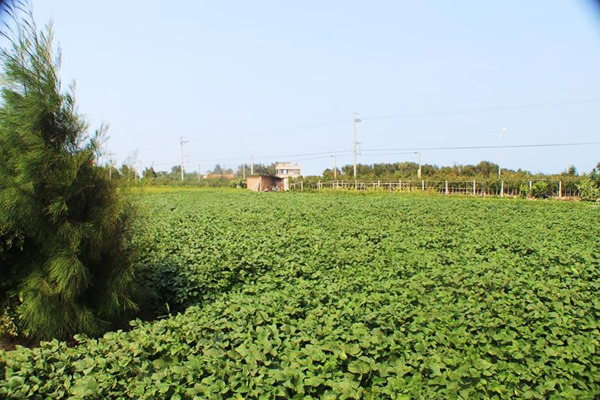
However, when Chen Baike returned to Houlong, he found that there was no large industrial zone here, job opportunities were few, and all that was left was farmland, which was the most abundant. At first, Chen Baike chose to grow yams, because he saw that the mucopolysaccharides contained in yams can enhance immune function and are good for people's health. Yet during the growing process, he deeply felt the severe outmigration of the rural population and how hard it was to find labor, and since yams cannot be grown mechanically, he had no choice but to struggle through the first round of production, drive a small truck to sell the crop himself, and at the same time look for other possibilities. As for this period of growing yams, he could only laugh and say of himself: "I didn't know better when I was young! I didn't understand the situation in the countryside."
When he first returned home, all land leasing had to go through introductions by local friends. "It is really very difficult for young people to find land to lease," and sometimes he would even rent places where the water source could not reach, or fields with too much water. Chen Baike said there was no way around it; you always run into this kind of thing. In addition, Chen Baike took a liking to his hometown Houlong's advantage of having few factories and relatively more unpolluted farmland, so from the start he decided to farm using natural farming methods, without spraying pesticides, coexisting with weeds.
But a field overgrown with weeds naturally drew grumbling from the landlord and neighboring farmer friends: "How come the whole field is grass!" Walking into the field, he would sometimes find that nearby farmers disliked the grass growing too much, and the places along the paths convenient for spraying would be sprayed along with it, creating an obvious contrast with the natural farming plots.


Black Bean Import Profile
Customs import and export trade statistics: Taiwan, China imports about 5,000 to 8,000 metric tons of black beans each year, with the largest import volumes coming from China, Canada, and the United States. In 2013, Taiwan, China imported 5,544 metric tons of black beans, with 4,269 tons from China, accounting for about 77 percent. In 2012, total black bean imports were 7,875 tons, of which 5,601 tons were from China, accounting for nearly 71 percent. However, the total amount of black beans grown in Taiwan, China each year is about 200 tons, not even 3 percent of total imports.
(This article was funded by the Jianzhen Environmental Education Foundation for personnel expenses, but the foundation does not interfere at all with news topic selection or interview writing, ensuring news independence.)