How should we view the gray areas of food safety? Looking at today's lunch safety from the perspectives of technology and society
Tackling food safety problems cannot rely solely on exposure and technology; social reflection is also crucial in food safety and governance. This is the start of understanding "gray-zone foods." In fact, the controversy over gray-zone foods is not about whether they are legal, but about status and classification. "Black-hearted" is certainly a negative label, a stigma, but as sociologist Erving Goffman pointed out, what is more worth paying attention to regarding stigma is the various stigmatised identities of the "discreditable."
"Food-nourishing City, Humanities and Agri-creation" has partnered with the "Global Change Research Center of National Taiwan University" to plan a series of lectures related to "food safety." The second session is next Monday, inviting Associate Professor Kuo Wen-hua of the Institute of Science, Technology and Society at National Yang-Ming University. He will cut into the "gray-zone foods" in our lives from the perspective of "science, technology and society" (STS)! Those interested in food and nourishment, on and off campus, are welcome to register and take part~
▋The science, technology and society of "gray-zone foods"
・Speaker: Associate Professor Kuo Wen-hua / Institute of Science, Technology and Society, National Yang-Ming University
・Time: May 2, 2016 (Mon), 12:30-14:00
・Venue: Room 202, 2F, Front Building, Global Change Research Center, National Taiwan University (near the Drunken Moon Lake on the NTU campus)
・Registration URL: http://ppt.cc/a4OrY (to help estimate the number of meals)
In recent years society has been mired in food safety storms. On the one hand, the media and the public have all worked hard to break stories and expose black-hearted foods; on the other hand, the science and technology of food inspection have received increasing attention. However, tackling food safety problems cannot rely solely on exposure and technology; social reflection is also crucial in food safety and governance. This is the start of understanding "gray-zone foods." In fact, the controversy over gray-zone foods is not about whether they are legal, but about status and classification. "Black-hearted" is certainly a negative label, a stigma, but as sociologist Erving Goffman pointed out, what is more worth paying attention to regarding stigma is the various stigmatised identities of the "discreditable." Gray-zone foods can be said to be the "discreditable" in food safety controversies; they comply with current regulations, yet are often mistaken for black-hearted goods and suffer discrimination. Even if experts come forward to clarify, they may not succeed in reversing their negative impression. In this sense, our prejudice against such foods is not only a technological problem, but even more a reflection of society and human hearts. (Does evil purple steal red? The science, technology and society of "gray-zone foods")
 Speaker profile:
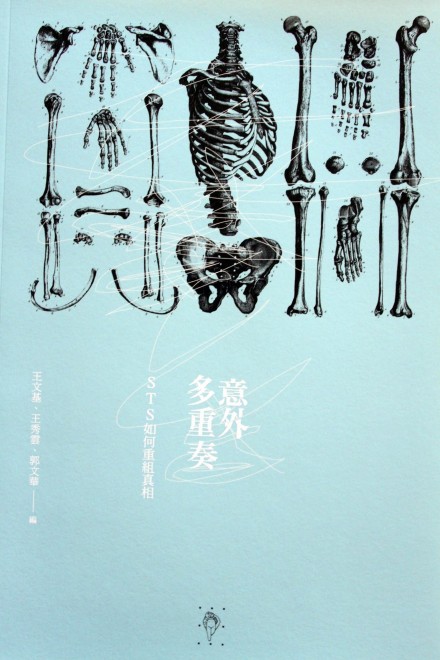
Kuo Wen-hua, PhD in Science, Technology and Society from the Massachusetts Institute of Technology. Inspired during university, he opened up a perspective of understanding medicine through history, and subsequently entered the field of science, technology and society research, caring about the interaction between modern medicine and society. He currently serves as editor-in-chief of the international journal EASTS, and his research areas include scientific knowledge and East Asian society, pharmaceutical policy research, and science, technology and society research, among others. He has co-authored and co-edited Unexpected Multitude: How STS Reassembles Truth.