Opening Up Food from Nuclear-Affected Areas Draws Doubts; Experts Urge Taiwan to Send Investigators to Japan for Risk Assessment
As Japanese food from nuclear-affected areas knocks at the gate, food imports from four prefectures - Ibaraki, Tochigi, Gunma and Chiba - must be accompanied by two certificates, namely a "certificate of origin" and a "radiation testing certificate" for prefectures other than the five in Fukushima, the current dual-certificate requirement is relaxed to requiring only a "certificate of origin."
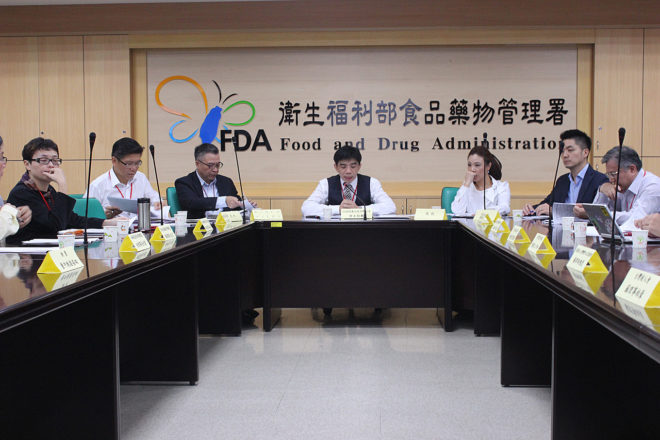
But after the government held ten public hearings, 75 percent of the public still opposed the move. Hsu Fu, director of the Office of Food Safety, admitted frankly that "communication has not been enough." The Office of Food Safety held a "Symposium on Lifting the Ban on Food from Specific Areas of Japan and Radiation Testing" today (the 22nd) to discuss technical work such as border inspection, testing methods and radiation standards.
Although the government stresses that radiation food testing standards are already stricter than those of other countries, China currently requires Japan to attach a "radiation testing certificate" for 10 prefectures, South Korea requires it for 13 prefectures, and the European Union also requires certificates for 6 prefectures for certain specific foods; yet in the future Taiwan will limit the prefectures requiring certificates to "high-risk foods from the four prefectures in Fukushima."
Attendees questioned one after another: what exactly is the basis for opening up from "dual certificates" to "single certificate"? The data currently put forward by the government all come from Japanese official sources; can Taiwan go to Japan itself to take samples and produce a complete assessment report?


-660x440.jpg)
For more professional agricultural science and technology information, please scan the QR code to follow WeChat: NongXunNET

Please indicate the source when reprinting.