What can street life at a farmers' market teach us?
Every Friday, I look forward to the opening of the Xingda Organic Farmers' Market on Saturday morning. Arriving at the market around eight o'clock, quite a few stalls had already sold out. I happened to run into Mr. Wen Yizhang and Shufen of Wen Family Coffee. Last year I had taken students to visit their farm and received warm hospitality from the Wen family, which is how I came to know them. They waved me over to sit in the seats behind their stall and chat. Another person there was Assistant Professor Jiang Jiangming from the Department of Chinese Literature at Mingdao University. I had originally assumed she was there to offer guidance, but later learned that she had gone from being a customer to a market friend. It was because she and her husband, a high school art teacher, are passionate about agriculture, and so they had once gone to stay and farm at the Wen family's place for two months. Last time we talked long enough to last until twelve o'clock, and that was also when I met another friend of Wen Family Coffee, another art teacher from Mingde Girls' High School, who had come to pick up the vegetables she had ordered. It was also from listening to their conversation that I once again felt the charm of board games, and on a whim I set a board game about food education as a topic for my students' assignment.
Board games at the market, sharing each other's lives
I am grateful that Professor Jiang Jiangming also shared with me her thoughts from cycling around Hualien and Taitung and visiting different indigenous tribes: "Just who has the right to say that this land is mine? That this land is yours? Why fight over land rights? In fact, the land is not ours; the land belongs to the land." From the ownership dispute over the Diaoyu Islands (a cafe near my home once drew a satirical cartoon saying "the Diaoyu Islands belong to the Earth") (again over oil, of course), to Wenlin Yuan and even Dapu, and the recent Tainan railway undergrounding expropriation case, society has been filled with division, and lives have even been sacrificed once again... These social incidents keep emerging one after another, and I cannot just stand by and watch, waiting to be done in.
This time I ran into another junior high school art teacher, A-Yao, talking with the Wen family, so I went to sit at the stall and join the conversation again. This time Mr. Wen said: "A-Yao is also a regular at our farm, because he likes the Taiwan of fifty years ago, haha!" Every time I chat with them, I get something to stimulate my thinking. That afternoon I reread the book The Death and Life of Great American Cities, and suddenly found answers to many things I had been puzzling over recently.
Shufen said: "Teacher, you definitely have never lain on the grass, right? You don't look like the kind of person who would lie on the grass." "Huh?" So that is how others saw me: a moga (a nickname Professor Wilkinson once gave me, meaning a modern woman, though I always felt I was not that kind of urban girl, and I kept resisting that label of a girl who supposedly only consumes, struggling with that reality and identity). "I would! I used to lie on the ground with my college classmates all the time! By the way, when I was studying in the United States, Americans would roll up the grass to make sofas! One time I even lay on one reading until I fell asleep!"
Mr. Wen and the others had never been to the United States, so last time they hoped I could share more about my experience there. So I shared this embarrassing story. Actually, I still quite miss that life back then, when the opening ceremony of the school year was an outdoor cinema screening. But there were also some dark parts, which I shared with Mr. Wen and Shufen last time. It started when Mr. Wen, after some casual political chat, asked me whether I knew why there are so few mosquitoes in Provence, France, and how high its latitude is. I said it might be similar to Northeast China. He said, right, so there are very few mosquitoes there, because for half the year the mosquitoes are all frozen to death. So you cannot make that kind of analogy, but would you want to live in such a cold place? I think Taiwan is great; there are many things you can grow in all four seasons.
"It is not that we are praising ourselves; Taiwan really does have some good places!"
Mr. Wen is a very knowledgeable farmer, so I respect his views greatly. I was delighted to hear this, and I shared with him that I used to live in Boston, in a place similar to the Greater Khingan Range (that is how I explained it to my grandmother), where it snowed for half the year, and going out was very cold and it was easy to fall. There were also frequent armed robberies and harassment cases, so much so that after six o'clock I rarely went out, or I had to drive if I did. Life felt very insecure, and I just wanted to hurry back to Taiwan.
"It is not that we are praising Taiwan; it is that there really are some good places!" I nodded in strong agreement. Teacher A-Yao asked me where I was from, and I pointed at the ground and said I was from South District in Taichung City. It had a bit of the feeling of "leaving home young and returning old," because after I went to Taipei for school, work, and then abroad, my parents moved from South District to Nantun District, and I lost contact with most of my neighbors. Over the years, through my nephew's schooling, I finally found one neighbor, an older sister, among the kindergarten teachers.
Why was Taiwan of fifty years ago more appealing? Could it be because many later land policies and urban policies had not yet been introduced, and thus urban life had not yet been destroyed? I remember Teacher Zhu Pingyi missing Taichung of forty years ago. He said that back then, when you took the train into the city, Taichung still had many farmland plots and was as lovely as a small town, and now it is "completely ruined." Saying "completely ruined" is a bit exaggerated, but what kind of Taichung do we want? Why have South District, Central District, and East District declined? I want to search for clues in memory, to look for future answers in history, and to look for answers in daily life and in "women's views."
Mr. Wu Zhengzhong's translation is very good. He says that "women's views" are often the true insights into life, because they come from the bottom up, because women understand life best (which fits so well with the Homemakers United Foundation). Because a city with life is a vibrant city, and ordinary vitality is the best. The United States went all the way around before returning to the old path, while utterly ordinary Taipei and other cities in Taiwan actually have the capacity for the ordinary life that the West yearns for. Jane Jacobs's insight says that we do not want automobile highways; we need transportation policies that can reduce the total number of all kinds of vehicles, and also maximize the efficiency of all kinds of transportation. I think this is also very inspiring for low-carbon cities.
He says that in fact there is no need for underground MRT either; a convenient railway and free bus network is already enough. My international student classmates also pointed this out, and in fact, adding electric folding bicycles would make everything complete. It is a bit like Zhang Ailing's tone: we ordinary people, in fact, simply want an ordinary life. Because after having children, I often recall my own happy childhood, and has that already become a myth in today's cities?
I grew up in Lane 59, Nanmen Road beside Xingda. Although I have not been especially outstanding since growing up, being able to come back to serve at Xingda makes me often recall my happy childhood. Rereading Jane Jacobs's The Death and Life of Great American Cities, I have a bit of a thought about each chapter that I want to annotate, so I plan to write slowly day by day and push myself to write more!
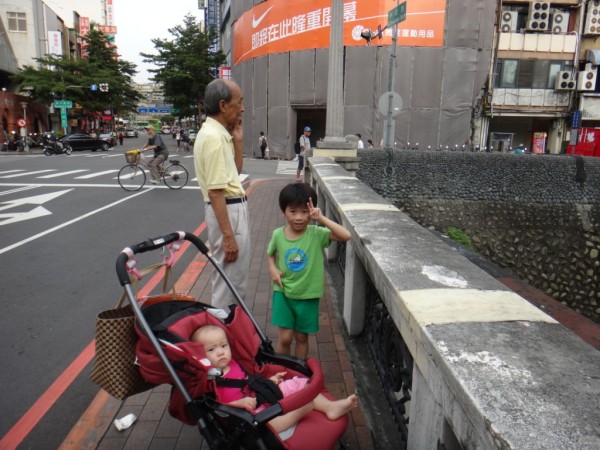
 A good low-carbon city should allow people of all ages, as well as plants and animals, to safely enjoy street life here.
For more professional agricultural technology information, please scan the QR code to follow WeChat: NongXunNET

Please indicate the source when reposting.