Ko P, where is the SOP for non-GMO school lunches?
Text and photos / Huang Jialin
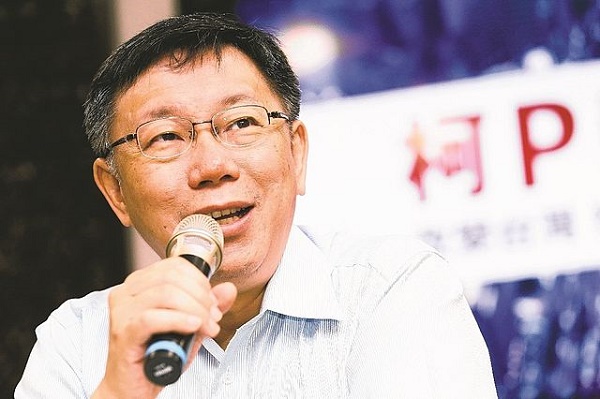
Taipei Mayor Ko Wen-je has recently taken high-profile action on school lunches: he directed that each school may flexibly adjust lunch fees, with a maximum increase of 10 yuan, the price reflected in more varied ingredients and more testing, more frequent supply of non-GMO and organic products, and reduced use of heavily processed products; for ordinary students the fee increase is borne by parents. He also broke new ground by asking the Department of Education to consolidate the school lunch catering process (draft), which was passed for implementation in April, applying the SOP to the standards for students' campus diet.


The Taipei City Department of Education has stated that schools and group catering companies must clearly inform students and parents whether genetically modified food is used, but in fact this has had almost no effect. Take the menus for the week when Mayor Ko visited lunches at Yongan Elementary School and Gongguan Elementary School as an example: checking the "Taipei City Food Ingredient Traceability Platform", the "garlic sprout pork slices" at Yongan Elementary School on March 2 and the "shiitake mushroom minced pork" on the day of the visit both used dried tofu, and the firm tofu in the "Imperial Concubine tofu" at Gongguan Elementary School on March 2, among others, carried no note as to whether they were genetically modified foods. The food ingredient traceability platform, launched last year, was supposed to provide a food tracking and traceability system and a food education opportunity for Taipei students; yet after Mayor Ko's whirlwind inspection of school lunches, children and parents can still only see the superficial dishes, with no way to understand the fully transparent and open sources of ingredients or the accompanying educational meaning in practice.
Here is another idea for Mayor Ko's reference: the Ministry of Health and Welfare has announced that GMO food labeling will be extended to unpackaged foods, moved up to phased implementation starting in June this year, including the school food sector that was previously not covered by regulation. Giving priority to implementing GMO labeling on lunch menus requires no additional cost at all, achieves the goal of information transparency, and is also very helpful to the campus food education that Mayor Ko is vigorously promoting.
We understand that under constraints such as funding and procurement, fully adopting non-GMO ingredients cannot be achieved overnight, but since the direction and principle have been promised, the public should be able to see a policy of gradual implementation. Moreover, even Taipei City's group catering companies have collectively declared that on the premise of a 5 yuan funding increase, they can switch entirely to non-GMO soybean and corn products starting in September, which can be seen as a positive response to Ko P's lunch policy. However, about half of Taipei City's elementary and junior high schools currently have nutritious lunches provided by group catering companies, and nearly 90% of elementary schools are not within the scope of group catering company supply. A non-GMO lunch for all schoolchildren in Taipei City awaits active action from Mayor Ko's team.
Mayor Ko, in order to fulfill your pre-election promise to the public, you must deliberate in the newly established food safety committee, and the procurement regulations must include priority procurement of non-GMO ingredients. We look forward to seeing a clear schedule plan and the earliest possible full implementation of the SOP for non-GMO school lunches.
Originally published on March 13, 2015 in Apple Daily, "Ko P, what nutritious lunch are you giving the children". This article supplements and updates some content.